 Seattle Siding
 Siding Installation Built for Ballard's Weather, Not Just "Seattle Weather"
Ballard sits close enough to Puget Sound that its siding takes a different kind of beating than a house a few miles inland in King County. It's not just rain — it's salt-laden air off the water, wind-driven rain that hits walls sideways instead of falling straight down, and a moss season that can run from early fall into late spring. A siding installation that would hold up fine in a drier part of the region can fail early here if it wasn't planned around these specific conditions. That's the lens we use on every Ballard project: what does this particular wall, on this particular house, need to survive this particular exposure.
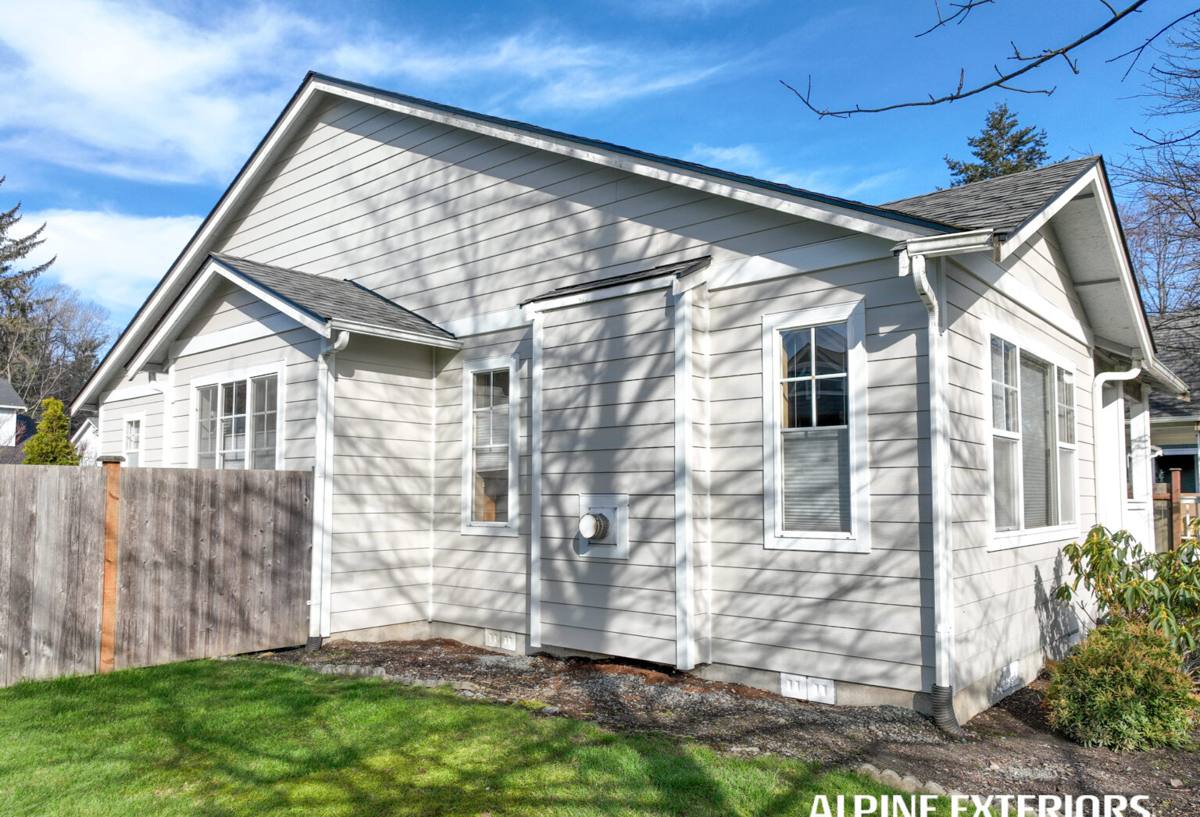
What Ballard's Climate Actually Does to Siding Over Time
Understanding the failure modes is the first step to avoiding them. Three factors do most of the damage to siding in this part of Seattle.
Salt Air and Corrosion
Homes closer to the water pick up airborne salt that settles on exterior surfaces and accelerates corrosion of anything metal — fasteners, flashing, trim screws, even some paint systems break down faster under repeated salt exposure. Siding itself doesn't corrode, but the hardware holding it up and the flashing directing water away from it absolutely can. A siding job that ignores this and uses standard-grade fasteners or flashing is setting up a slow failure that won't show up for a few years, by which point water has usually found its way behind the cladding.
Driving Rain and Wall Assembly
Seattle's rain isn't usually a downpour — it's persistent, and in Ballard's more exposed spots it often comes in at an angle driven by wind off the Sound. That matters because siding isn't actually the primary thing keeping water out of a wall; the drainage plane and flashing details behind it are. Driving rain finds every gap in a lap joint, every under-flashed window, every place where the water-resistive barrier wasn't lapped correctly. Vertical rain is forgiving of small mistakes. Driving rain is not.
The Long Moss Season
King County's wet season stretches long enough that north-facing and shaded walls stay damp for extended stretches, which is exactly what moss and algae need to take hold. Once organic growth establishes on a wall, it holds moisture against the surface, which shortens the life of paint finishes and, on some siding materials, promotes the kind of moisture cycling that leads to swelling, delamination, or rot underneath. Siding material and finish matter here as much as installation quality.
Why We Install Only James Hardie Fiber Cement in Ballard
We standardized on James Hardie fiber cement and don't install vinyl, LP SmartSide, primed wood, or other fiber cement brands — not because those products can't be installed correctly somewhere, but because Ballard's combination of salt air, driving rain, and extended damp periods is a tough environment to hedge in. Fiber cement is non-combustible and dimensionally stable — it doesn't expand and contract with moisture the way wood-based products do, which matters when a wall assembly is wet more often than it's dry. Hardie's ColorPlus factory finish is baked on under controlled conditions rather than field-painted, which gives it better resistance to the fading and peeling that shaded, damp walls in this climate tend to cause. And Hardie's HZ5 product line is engineered specifically for climates like ours — wet, moderate-temperature, with real freeze-thaw cycling in the surrounding region. That's the product we put behind our name on every job.
What a Correct Siding Installation Actually Involves
The siding boards themselves are the visible 20% of the job. The other 80% — the part nobody sees once it's done — is what determines whether the installation lasts 30-plus years or starts showing problems in five. On a Ballard home, that includes:
- A continuous, correctly lapped water-resistive barrier behind the siding, with all penetrations sealed
- Properly integrated flashing at windows, doors, and any roof-to-wall transitions, installed so water sheds outward, not into the wall
- Correct fastener type, spacing, and embedment per Hardie's published installation specs — this is what protects the manufacturer warranty
- Proper clearance between the bottom of the siding and grade, decks, patios, and roof lines, so splashback and standing water don't wick into the material
- Caulking and sealant only where Hardie's install guide calls for it — over-caulking traps moisture just as often as under-caulking lets it in
- Correctly primed and painted cut edges, since factory finish only covers the face and edges as manufactured
Skipping or rushing any one of these doesn't usually cause an immediate problem. It shows up two, five, or ten years later as a soft spot, a stain, or paint that's failing in one specific area — almost always tracing back to a detail that was missed during install, not a flaw in the siding itself.
Our Process for a Ballard Siding Project
1. On-Site Assessment
We walk the house, check the current siding and sheathing condition, look at grade clearances, roof-wall intersections, and window/door flashing, and note anything the wet climate has already affected — soft trim, moss buildup, staining patterns that hint at where water is getting in.
2. Scope and Product Plan
We spec the right Hardie profile and HZ product line for the exposure, plan trim and flashing details around the specific problem areas we found, and give a written scope so you know exactly what's being done and why.
3. Tear-Off and Sheathing Check
Once old siding is off, we inspect the sheathing underneath. This is the point where hidden moisture damage from years of driving rain or poor flashing gets found and dealt with before new siding goes over it — covering up a wet or damaged wall is how problems get worse, not better.
4. Weather Barrier, Flashing, and Install
Barrier and flashing go in first, following manufacturer lap and sealing requirements, then the Hardie siding goes on to spec — correct fastening, correct clearances, correctly finished cut edges.
5. Final Walkthrough
We review the finished job with you, point out anything you should keep an eye on, and make sure you know what routine upkeep this specific siding job needs going forward.
Matching the Job to Ballard's Housing Stock
Ballard has a real mix of older craftsman and bungalow-era homes alongside newer construction, and the two present different challenges. Older homes often have original sheathing and trim details that need careful assessment before new siding goes over them — sometimes that means addressing old moisture damage first. Newer builds are usually starting from a cleaner base but still need the same attention to flashing and drainage details, since a mis-flashed window on a five-year-old house fails the same way as one on a fifty-year-old house. We treat every home on its own merits rather than assuming one approach fits the whole neighborhood.
What Ballard Siding Installation Typically Costs
Every project is different, but these are the main factors that move the price on a Ballard siding job:
| Factor | Why It Matters |
|---|---|
| House size and wall complexity | More corners, gables, and dormers mean more cutting, flashing, and labor time |
| Tear-off and sheathing condition | Moisture damage found underneath old siding adds repair scope before new siding can go on |
| Siding profile and finish | Lap width, shingle-style panels, and trim details affect material and labor cost |
| Access and exposure | Homes closer to the water or on tight lots can require more setup and protection during install |
| Trim and flashing scope | Windows, roof lines, and transitions that need full flashing replacement add time but are not optional |
We give a firm, written estimate after the on-site assessment rather than a rough number over the phone — a Ballard exposure and an inland King County exposure can call for different scopes even on similar-sized homes.
Why a Crew That Already Works Ballard Matters
A crew that's worked this neighborhood knows which walls tend to hold moss, which older homes commonly have sheathing issues once the siding comes off, and how to sequence a job around this area's weather without leaving a wall exposed longer than it should be. That's not something you get from a general contractor working here for the first time. It shows up in fewer surprises mid-project and a finished install that's built for the specific way this neighborhood's weather behaves, not a generic spec sheet.
Keeping Your Siding in Good Shape After Installation
Correctly installed Hardie siding is low-maintenance, but "low" isn't "none" — a little attention goes a long way in this climate:
- Rinse off moss, algae, or grime buildup on shaded or north-facing walls once or twice a year
- Keep gutters clear so overflow isn't running down or pooling against the siding
- Trim back plants and shrubs so siding gets airflow and isn't staying damp against foliage
- Check caulking at trim and penetrations periodically and have gaps resealed before water gets behind them
- Repaint on the manufacturer's recommended cycle if you've chosen a field-applied finish rather than factory ColorPlus
If you're weighing a siding replacement in Ballard and want a straight answer about what your home actually needs, we're happy to take a look. Fill out the form below for a free, no-pressure estimate.