 Seattle Siding
 Redmond's Climate and What It Does to Siding
Redmond sits inland from Puget Sound but still lives inside the same wet marine weather pattern that defines the whole Seattle area. Long stretches of steady, driving rain from fall through spring keep exterior walls damp for days at a time. Add in the tree cover and shaded lots common throughout Redmond's neighborhoods, and you get siding that dries slowly, stays cooler and wetter longer than it should, and becomes a magnet for moss and algae growth on north-facing and shaded walls. Even this far from open water, the region's marine air carries enough moisture and salinity to accelerate corrosion on fasteners, flashing, and trim over the decades — it's a slower process than you'd see right on the shoreline, but it adds up over a 20 or 30 year siding life.
None of that is exotic weather. It's just persistent. The problem with siding failure in this climate is rarely one big storm — it's years of small moisture events that a home's siding either sheds correctly or slowly absorbs. That's the lens we use on every Redmond job: what will this wall assembly be doing on the wet Tuesday in February that nobody notices, not just the one dry photo-op day in August.
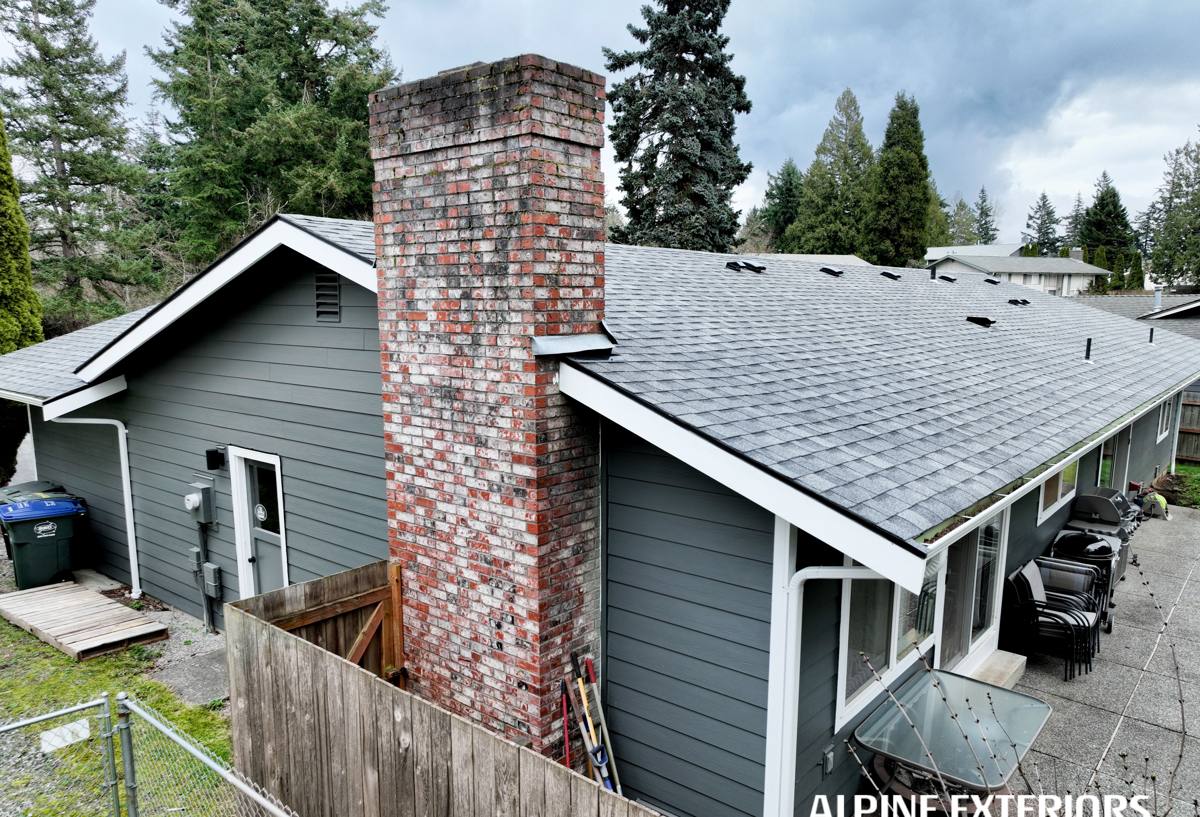
Signs Your Redmond Home Needs Siding Replacement
Most siding doesn't fail all at once. It shows warning signs first, and catching them early is the difference between a straightforward replacement and a job that also has to deal with rotted sheathing underneath.
- Soft or spongy spots when you press on the siding, especially near the bottom courses or below windows
- Persistent black or green streaking that comes back within weeks of being cleaned
- Visible cracking, warping, or delamination — common on aging wood-composite and older LP-style products
- Paint that's failing every few years no matter how good the paint job was
- Gaps opening up at seams, corners, or trim boards
- A musty smell in rooms along an exterior wall, which can point to moisture already behind the siding
- Visible moss colonies on shaded walls or under eaves that never get direct sun
If you're seeing two or more of these, it's worth a full evaluation rather than a spot repair. Localized fixes on old siding often just delay a bigger tear-off a year or two down the road, and by then the sheathing damage tends to be worse.
Why Shaded Lots Age Siding Faster
Redmond has plenty of mature trees and homes built close together, which means many walls stay in shadow most of the day. Shade keeps humidity trapped against the siding surface and slows evaporation after rain — exactly the conditions moss, algae, and mold need to establish. It's not a defect in the home; it's the site. But it does mean the siding material and the installation details matter more here than they would on a wide-open, full-sun lot.
What a Correct Siding Replacement Actually Involves
Siding replacement isn't just pulling off old panels and nailing up new ones. The siding itself is the visible layer — the water management system behind it is what actually protects the house. A correct job in this climate includes:
- Full tear-off and inspection of the sheathing underneath, not just a look at what's easy to reach
- Repair or replacement of any rotted or compromised sheathing before anything new goes up
- A continuous water-resistive barrier installed and lapped correctly, shingle-style, so water is directed out and down, never trapped
- Properly flashed windows, doors, and penetrations — the majority of moisture intrusion we find starts at these transition points, not the field of the wall
- Correct fastening for the specific siding product, at the manufacturer's specified pattern and depth — over- or under-driven fasteners are a leading cause of early siding failure
- Proper clearance at the foundation, roofline, and any horizontal trim so siding isn't sitting in standing water or snow
Skip any of these steps and the new siding may look fine for a few years while the same moisture problems that damaged the old siding quietly start again behind it.
Material Comparison for This Climate
Homeowners in Redmond often ask us to weigh in on siding options they've been quoted elsewhere. Here's an honest comparison based on how each material actually behaves in a wet, shaded Puget Sound climate over the long run — not just how it looks on day one.
| Material | Moisture Behavior | Moss/Algae Resistance | Long-Term Maintenance |
|---|---|---|---|
| James Hardie fiber cement | Non-combustible, engineered for wet climates, doesn't swell or rot from moisture exposure | Factory ColorPlus finish resists staining better than paint-grade wood products | Periodic washing; no repainting needed with ColorPlus finish |
| LP SmartSide / engineered wood | Wood-based core; can swell, delaminate, or degrade at cut edges and fastener points if moisture gets in | Prone to algae and moss growth on shaded elevations over time | Repainting and edge sealing required to keep warranty intact |
| Vinyl siding | Doesn't rot, but can warp or buckle with temperature swings; seams are a moisture entry point | Can develop surface algae; color is baked in, not paintable to refresh | Low upkeep but limited lifespan and repair options if damaged |
| Primed cedar / spruce | Natural wood; absorbs and releases moisture constantly, which drives cracking and cupping | Most susceptible of the group to moss, mildew, and rot in shaded, wet spots | Frequent repainting and sealing; highest long-term labor cost |
We install James Hardie fiber cement exclusively. We don't install LP SmartSide, vinyl, Cemplank, Allura, primed spruce, or cedar. That's not a marketing position — it's a standard we've settled on after years of seeing which products actually hold up on Puget Sound-area homes and which ones create recurring maintenance calls. Hardie's fiber cement core doesn't rot, doesn't feed moss the way wood-based products can, and the ColorPlus factory finish is engineered to resist the fading and staining that plague repainted siding in a climate this wet.
Our Siding Replacement Process
- On-site evaluation — we inspect the current siding, sheathing condition, flashing details, and any problem areas specific to your home's exposure and shade pattern
- Written scope and estimate — clear breakdown of tear-off, sheathing repair allowances, water barrier system, Hardie product line and profile, and trim work
- Tear-off and sheathing repair — old siding removed, sheathing inspected and repaired as needed before anything else proceeds
- Water-resistive barrier and flashing installation — the part of the job that determines whether the siding lasts 10 years or 40
- Hardie siding installation — installed to manufacturer fastening and clearance specs, not shortcuts
- Trim, caulking, and final detailing — the finish work that keeps water out of seams and corners
- Final walkthrough — we go over the finished job with you before calling it done
Why a Crew That Already Works Redmond Matters
Siding work in a climate like this isn't just about following a manufacturer's install manual — it's about knowing how a specific neighborhood's shade pattern, tree cover, and exposure tend to behave. A crew that regularly works Redmond has already seen which elevations on which style of home hold moisture longest, where moss tends to establish first, and how the local permitting and inspection process works for exterior replacement. That familiarity shows up in fewer surprises mid-project and a finished install that's tuned to how this specific climate treats a house, not a generic install done the same way everywhere.
It also matters for accountability. A local crew is answerable to the same community they're working in — if a flashing detail was missed or a seam opens up two winters later, they're not a name on an invoice from somewhere else, they're a phone call away.
Cost Factors for Redmond Siding Replacement
Every home is different, so we won't publish a number that doesn't mean anything for your specific project. What we can do is walk through what actually drives the cost up or down.
| Factor | Why It Matters |
|---|---|
| Sheathing condition | Rot or moisture damage found during tear-off adds repair scope before new siding goes up |
| Home size and complexity | Multiple gables, dormers, and trim details take more labor per square foot than a simple rectangular elevation |
| Siding profile and accessories | Lap siding, shingle-style panels, and trim board choices carry different material and labor costs |
| Access and site conditions | Steep lots, tight side yards, and mature landscaping close to the house can slow the work |
| Current layer count | Removing multiple layers of old siding takes more time than a single-layer tear-off |
A written, itemized estimate after an on-site look is the only way to get a real number — we're glad to provide one.
Choosing Colors and Profiles That Fit Redmond Homes
Redmond's housing stock spans a wide range of styles, and Hardie's HZ product lines and ColorPlus palette give homeowners real flexibility without stepping away from a durable, non-combustible material. Whether a home calls for a traditional lap profile, a shingle-style accent, or a mix of the two, the goal is a look that fits the house and the street it's on — not a one-size-fits-all answer. We'll walk through options during the estimate rather than pushing a single default.
If your Redmond home's siding is showing its age or you're planning ahead of a problem rather than reacting to one, we're happy to take a look. The estimate is free, there's no pressure attached to it, and you'll walk away with a clear, written picture of what your home actually needs — just fill out the form below to get started.