 Seattle Siding
 Bellevue's Weather Is Harder on Roofs Than It Looks
Bellevue doesn't get the dramatic storms you'd see in other parts of the country, and that's exactly why storm damage here so often goes unnoticed until it's a real problem. What Bellevue roofs deal with instead is a slow grind: months of driving rain pushed sideways by wind off Lake Washington and the surrounding hills, a moss season that can run from fall through spring, and the occasional windstorm that snaps a limb loose from a mature Douglas fir or bigleaf maple onto a roof plane nobody's looked at closely in years. None of that shows up as a dramatic hole in the roof. It shows up as a lifted shingle tab, a bent flashing edge, a soft spot in the decking you can't see from the ground.
We work roofs across King County, and Bellevue's mix of wooded lots, lake-adjacent humidity, and older roofing stock means storm damage here tends to be quieter and more likely to be missed than in drier climates. That's the gap we're built to close — catching it early, fixing it correctly, and not overselling work that isn't needed.
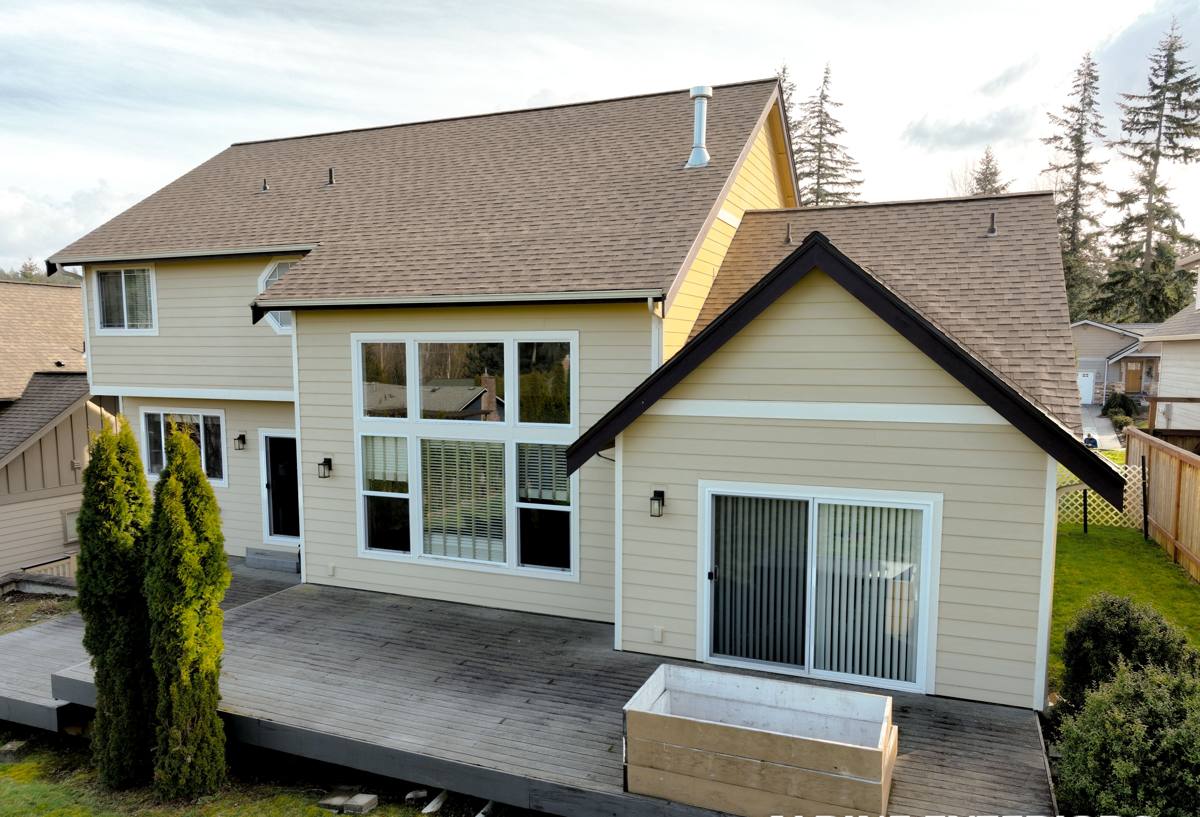
What We Mean by "Storm Damage"
When people hear "storm damage," they usually picture a tree through the roof. That happens, but it's the minority of what we actually see. Around Bellevue, storm damage more often looks like:
- Wind-lifted or creased shingles where a gust got under the tab edge and broke the seal
- Wind-driven rain forced up under shingles or flashing during a sideways storm, rather than dripping straight down
- Small branches or debris impact that cracks a shingle or dents a metal panel without an obvious hole
- Flashing pulled loose or bent around chimneys, skylights, and roof-to-wall transitions
- Granule loss from repeated wind and rain exposure, which thins a shingle's protection over time
- Ice dam damage from the occasional hard freeze, where meltwater backs up under shingles at the eaves
Any one of these can let water into the roof deck. Once that happens, the damage keeps working even after the weather clears, which is why a proper inspection after a windstorm or heavy rain event matters more than it seems like it should.
Signs Your Roof Needs a Storm Damage Inspection
Most homeowners don't get on their own roof after a storm, and they shouldn't — a wet, moss-covered roof is not a safe place to be walking around. Instead, watch for these signs from the ground and inside the house:
- Shingles visible in the yard or gutters after a windy night
- A new or worsening water stain on a ceiling or in the attic
- Visible sagging or an uneven roof line on any plane
- Granules collecting at the bottom of downspouts
- Daylight visible through the roof deck from inside the attic
- Flashing that looks bent, lifted, or missing around a chimney or vent
- A tree limb that came down anywhere near the roof, even if it doesn't look like it made contact
If you see any of these, the right move is a professional look before the next storm rolls through, not after. A small, unaddressed leak point in Bellevue's wet season can turn into decking rot within a single winter.
What a Correct Storm Repair Involves
Emergency Tarping and Water Stop
If a roof has active or likely water intrusion, the first job is stopping water from getting further into the structure — not scheduling the full repair three weeks out. That means a proper tarp-down secured against wind, not a quick sheet of plastic that tears loose in the next gust.
Full Roof Assessment, Not Just the Obvious Spot
A branch strike or wind event rarely damages just one shingle. We check the full roof plane, the surrounding courses, the flashing details, and the attic side for moisture — because the point where water is entering is often several feet from where the ceiling stain shows up.
Matching Materials and Proper Flashing
A patch that doesn't match the existing shingle profile, color, or exposure will fail faster and look wrong. Just as important is getting flashing details right at every transition — step flashing, counter-flashing, valley metal — since most roof leaks that come back after a "repair" trace to flashing that was reused or reinstalled incorrectly rather than the shingles themselves.
Our Storm Damage Repair Process
Inspection and Documentation
We start with a full inspection of the affected area and the roof overall, and we document what we find with photos — both for your records and for any insurance claim you may file.
Temporary Protection
If there's active water intrusion, we get the roof watertight the same visit whenever possible, before we ever discuss the permanent repair scope.
Repair Plan and Written Scope
You get a clear, written explanation of what's damaged, what needs to be repaired versus what can be left alone, and why. We don't pad a scope with work the storm didn't cause.
Working With Your Insurance Claim
We're not a public adjuster and we won't act as one, but we can provide documentation, photos, and a written repair estimate that supports your claim. What your policy covers and how your adjuster values the damage is between you and your insurer — we'll give you the facts about the roof to help that conversation go smoothly.
Final Walkthrough
Once the repair is complete, we walk the work with you so you can see exactly what was done and ask questions before we consider the job finished.
Repair or Replace? What Actually Drives the Decision
Not every storm-damaged roof needs full replacement, and not every roof can be safely patched. The honest answer depends on a handful of factors we weigh together, not any single one:
| Factor | Favors Repair | Favors Replacement |
|---|---|---|
| Roof age | Under roughly 12-15 years | Near or past expected service life |
| Extent of damage | Isolated to one area or plane | Spread across multiple planes |
| Decking condition | Solid, no soft spots | Soft, rotted, or delaminated |
| Shingle availability | Matching product still available | Discontinued or badly weathered mismatch |
| Moss/moisture history | Well-maintained, treated regularly | Long-term moss buildup or repeat leaks |
| Insurance scope | Claim covers targeted repair | Claim recognizes full-slope or full-roof loss |
A straightforward patch repair after a limb strike or a single lifted section is typically a modest, contained cost. A repair involving a full slope of matching, torn-off decking, or extensive flashing work naturally runs higher, and a full replacement is a different budget conversation entirely. We'll tell you plainly which category your roof falls into rather than defaulting to the most expensive option.
Roofing Materials That Hold Up to Bellevue's Climate
Storm repairs are also a natural point to talk about whether the roof's existing materials are actually suited to the Puget Sound climate, or whether they've been fighting it the whole time. A few things we consider on every Bellevue roof:
- Algae- and moss-resistant shingles hold up better under Bellevue's long wet season than standard shingles, since they resist the organic growth that traps moisture against the roof surface.
- Proper ventilation matters as much as the shingle itself — a roof deck that can't dry out between rain events stays damp longer and is more vulnerable to rot after storm intrusion.
- Metal flashing gauge and fastening needs to account for our wind-driven rain pattern, not just vertical rainfall, especially on roofs shaded by tree cover that stay damp longer after a storm passes.
- Underlayment quality is the difference between a shingle that gets damaged and a roof that actually leaks — a synthetic underlayment in good condition can buy time even when the top layer takes storm damage.
We don't push a specific brand as the only option. We tell you honestly what tends to perform well under Bellevue's rain-and-moss cycle versus what tends to need more attention, and let you weigh that against cost and appearance.
Why It Matters to Hire a Crew That Already Works in Bellevue
Storm damage repair isn't just a technical skill — it's a local one. Crews who work Bellevue regularly know which neighborhoods sit under heavy tree canopy and see more limb-strike damage, which lots hold moisture longer because of slope and drainage, and what King County permitting and inspection expects for roofing work. That familiarity shows up in faster, more accurate assessments and fewer surprises mid-repair.
It also matters for response time. After a regional windstorm, roofing crews get busy fast, and a company with an established route through the Eastside can usually get a tarp on your roof sooner than one dispatching from farther out. When water is actively getting into your home, that difference is not academic.
If you've got storm damage, suspect you might, or just want a roof looked at before the next system rolls through, we're glad to come take an honest look. The estimate is free, there's no pressure to act on it immediately, and you'll get a straight answer about what the roof actually needs — use the form below to get started.