 Seattle Siding
 University District's Climate Is Harder on Siding Than It Looks
University District sits inside one of the wettest, greyest stretches of the year-round Pacific Northwest climate, and that shows up on the outside of a house long before it shows up anywhere else. Seattle's marine air keeps humidity high for months at a stretch, King County's fall and winter storms bring driving, wind-pushed rain rather than gentle vertical rainfall, and the salt-laced air that moves in off the Sound settles on exterior surfaces day after day. Add in the shade from mature street trees common to older U-District blocks, and you get siding that rarely gets a full day to dry out between weather events. That combination — constant moisture, salt exposure, and low light — is exactly the environment that separates siding materials that hold up for decades from siding materials that start failing quietly within the first five to ten years.
Most homeowners don't notice the damage until it's already serious, because the early stages look cosmetic: a greenish cast on the north wall, a slightly soft spot near a window sill, paint that needs recoating sooner than it should. By the time those signs are obvious, moisture has often already gotten past the surface. Understanding what this specific climate does to siding materials — and why we've standardized on one product to handle it — is the whole point of this page.
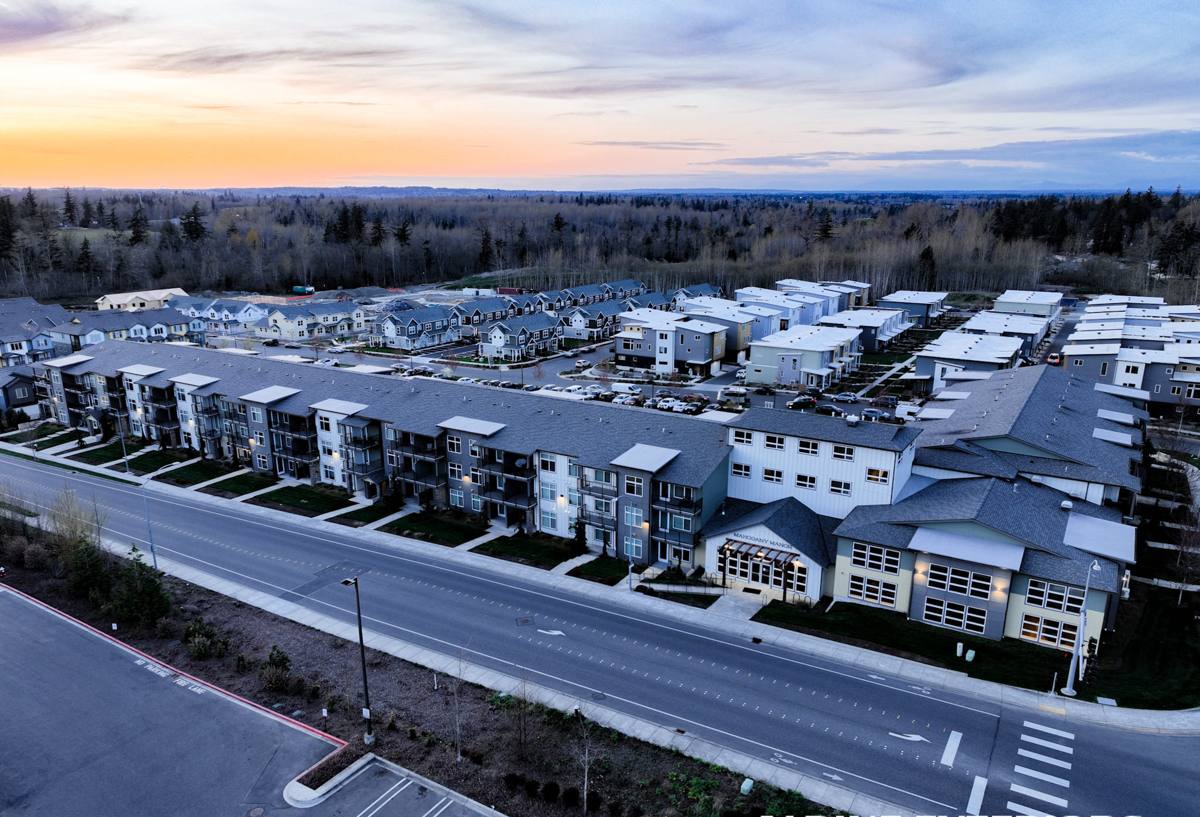
What Driving Rain, Salt Air, and a Long Moss Season Do to Common Siding Materials
Wind-driven rain doesn't just wet a wall — it forces water sideways and upward, into laps, seams, and fastener penetrations that a material never has to deal with in a drier climate. Over a long Seattle winter, that repeated intrusion finds every weak point in a siding system. Salt air accelerates corrosion on fasteners and trim hardware that isn't rated for it, and it breaks down lower-grade coatings faster than manufacturers' published lifespans suggest. And the moss and algae that thrive in University District's shaded, moisture-retentive microclimates don't just look bad — their root structures hold water directly against the siding surface, which is worse for long-term durability than open exposure to rain.
Different materials respond to this environment very differently:
- Vinyl siding can warp, buckle, or crack in temperature swings and doesn't stop moisture from reaching the sheathing behind it if the water-resistive barrier underneath is compromised — and vinyl seams give moss and mildew plenty of places to take hold.
- Primed spruce and cedar are wood. Wood absorbs moisture, and in a climate this wet, that means ongoing risk of rot, cupping, and paint failure regardless of how well it was installed on day one.
- LP SmartSide and other engineered wood products perform better than raw wood but still rely on an intact factory coating and diligent edge-sealing to keep moisture out — a single missed seal at a cut edge becomes a long-term entry point in a climate that never really dries out.
- Cemplank and other budget fiber cement lines get the base material right but often ship with thinner factory finishes and less climate-specific engineering than the market leader.
None of these are defective products in every climate. But University District isn't a mild, dry climate — it's a demanding one, and we install accordingly.
Why We Install Only James Hardie Fiber Cement
We standardized on James Hardie siding for every home we work on, including here in University District, because it's engineered specifically for climates like this one. It's non-combustible fiber cement, which means it doesn't feed a fire the way wood-based or wood-adjacent products can, and it holds its shape and finish in sustained moisture in a way that vinyl and raw wood simply don't.
The HZ5 Product Line, Built for This Climate
James Hardie manufactures regionally engineered product lines rated for specific climate zones, and the HZ5 line is formulated for the wetter, milder climate zones that include the Pacific Northwest. That's not a marketing distinction — it affects the moisture-management performance of the board itself and gives us a product that's been engineered for exactly the driving rain and prolonged dampness King County sees.
ColorPlus Factory Finish
Most of what fails first on painted siding is the paint, not the substrate. James Hardie's ColorPlus finish is baked on at the factory in a controlled environment, which gives it more consistent coverage and better fade and moisture resistance than field-applied paint — and it comes backed by its own finish warranty separate from the product warranty on the board itself. In a climate where a wall can stay damp for days, that's a meaningful difference over the life of the siding.
What a Correct James Hardie Installation Actually Involves
The product only performs to spec if the installation matches the manufacturer's requirements — and in a climate this wet, cutting corners on installation detail is where most siding failures actually originate, not in the material itself.
Drainage Plane and Rainscreen Gap
Correct installation starts with a properly lapped water-resistive barrier behind the siding, and in a high-moisture climate like Seattle's, a rainscreen gap between that barrier and the back of the siding matters. That gap lets any water that does get past the cladding drain and evaporate instead of sitting against the sheathing, which is especially important on shaded, north-facing walls that stay damp longer.
Flashing and Fastening
Every window, door, and roofline intersection needs flashing detailed to shed water down and out, not just caulked over — caulk is a backup, not a waterproofing strategy. Fasteners need to be corrosion-resistant given the area's salt-air exposure, driven to the manufacturer's specified depth and spacing, and located where Hardie's installation guide actually calls for them, not wherever is fastest.
Clearances and Caulking
James Hardie specifies minimum clearances between the bottom of the siding and grade, roofing, decks, and patios so the board never sits in standing water or gets constant splash-back. Skipping these clearances is one of the most common installation shortcuts we see on older U-District homes that have had siding "fixed" piecemeal over the years, and it's one of the fastest ways to shorten the life of an otherwise good product.
Material Comparison for University District Homes
| Material | Moisture Performance in This Climate | Maintenance Over Time | Fire Resistance |
|---|---|---|---|
| James Hardie Fiber Cement | Engineered for wet marine climates (HZ5) | Low — factory finish, periodic wash | Non-combustible |
| Vinyl | Seams and gaps allow moisture behind panels | Low but prone to warping and fading | Combustible |
| Primed Spruce / Cedar | Absorbs moisture; rot risk in shaded areas | High — repainting, sealing, spot repair | Combustible |
| LP SmartSide | Good if edges stay sealed; edge failure risk | Moderate — edge sealing, coating upkeep | Combustible |
| Cemplank / Other Fiber Cement | Similar base material, thinner factory finish | Moderate | Non-combustible |
Our Process, Start to Finish
- Walkthrough and assessment. We look at your current siding, sheathing condition where accessible, moss and moisture patterns on each elevation, and any problem areas around windows, trim, and grade clearances.
- Honest scope and estimate. You get a clear, written estimate covering material, tear-off if needed, flashing and drainage plane work, and finish selection — no pressure, no inflated urgency.
- Prep and moisture-barrier installation. Old siding comes off, damaged sheathing gets addressed before anything new goes up, and the water-resistive barrier and rainscreen gap go in correctly the first time.
- Hardie installation to spec. Boards are cut, fastened, and flashed to James Hardie's published installation requirements — not shortcuts, not "close enough."
- Final walkthrough. We review the finished work with you, elevation by elevation, before we consider the job done.
Signs Your Current Siding Is Losing the Battle
- Green or black staining that returns quickly after washing, especially on shaded or north-facing walls
- Paint that's peeling, bubbling, or needing recoating well ahead of schedule
- Soft or spongy spots when you press near the bottom edge of the siding or below windows
- Visible warping, buckling, or gaps at the seams, especially on vinyl
- A musty smell or visible staining on interior walls that share an exterior wall with a problem area
- Caulk that's cracked or missing around windows, doors, and trim
- Siding sitting close to or touching grade, decking, or roofing with no visible gap
Why Hiring a Crew That Already Works in University District Matters
University District's housing stock is a mix of early-to-mid-century craftsman homes and denser newer construction near the University of Washington, and that mix means every job has its own quirks — older framing and sheathing that needs a careful hand during tear-off, tight lot lines and shared walls on denser lots, and permit and inspection processes specific to Seattle and King County. A crew that already works this neighborhood knows what to expect before the first board comes off the wall, which means fewer surprises, fewer change orders, and a project that moves at the pace we told you it would.
Local experience also means we know which elevations in this kind of neighborhood take the worst of the driving rain and which stay shaded and damp long enough to grow moss year-round, so we can flag those areas during the estimate instead of discovering them mid-project. That's the difference between a contractor who's installed Hardie somewhere and a contractor who's installed it here, on homes dealing with exactly this weather.
Cost Factors for a University District James Hardie Project
| Factor | Why It Affects Cost |
|---|---|
| Tear-off and sheathing condition | Hidden rot or damaged sheathing found during removal adds repair scope |
| Home size and elevation complexity | More corners, gables, and window/door openings mean more cutting, flashing, and labor |
| Siding profile and accessories | Lap width, trim style, and soffit/fascia work change material and labor totals |
| Access and lot constraints | Tight side yards or limited staging space on denser U-District lots can affect labor time |
| ColorPlus finish selection | Factory-finished color options vary in cost versus field-painted trim |
Every one of these factors gets covered in a written estimate before any work starts — we don't believe in vague ranges or surprise add-ons once a project is underway.
Get a Free, No-Pressure Estimate
If your University District home's siding is showing moss, staining, soft spots, or just isn't standing up to Seattle's weather the way it should, we're happy to take a look and give you an honest, no-pressure assessment. Fill out the form below to schedule a free estimate for James Hardie siding installed correctly, by a crew that already works in this neighborhood.