 Seattle Siding
 Siding Replacement Built for University District's Climate and Housing Stock
University District sits close to Lake Washington's Union Bay, in the shade of a heavy tree canopy that keeps much of the neighborhood cool, green, and — for siding — persistently damp. Between the mature maples and evergreens overhanging older lots and the steady parade of King County rain systems moving off Puget Sound, siding here works harder than siding in drier, more exposed parts of the city. Add in a housing stock that skews older, with a mix of single-family homes, rentals, and small multifamily buildings, and you get a neighborhood where siding problems are common but not always obvious until they've been developing for years.
We do siding replacement across Seattle, but University District jobs have a specific profile: shaded lots that stay wet longer after storms, older wall assemblies that were never built with modern moisture barriers, and a lot of rental and owner-occupied properties where the person calling us isn't always the person who's lived in the house day to day. That combination means we spend real time on inspection and prep before we ever talk about which siding panel goes up.
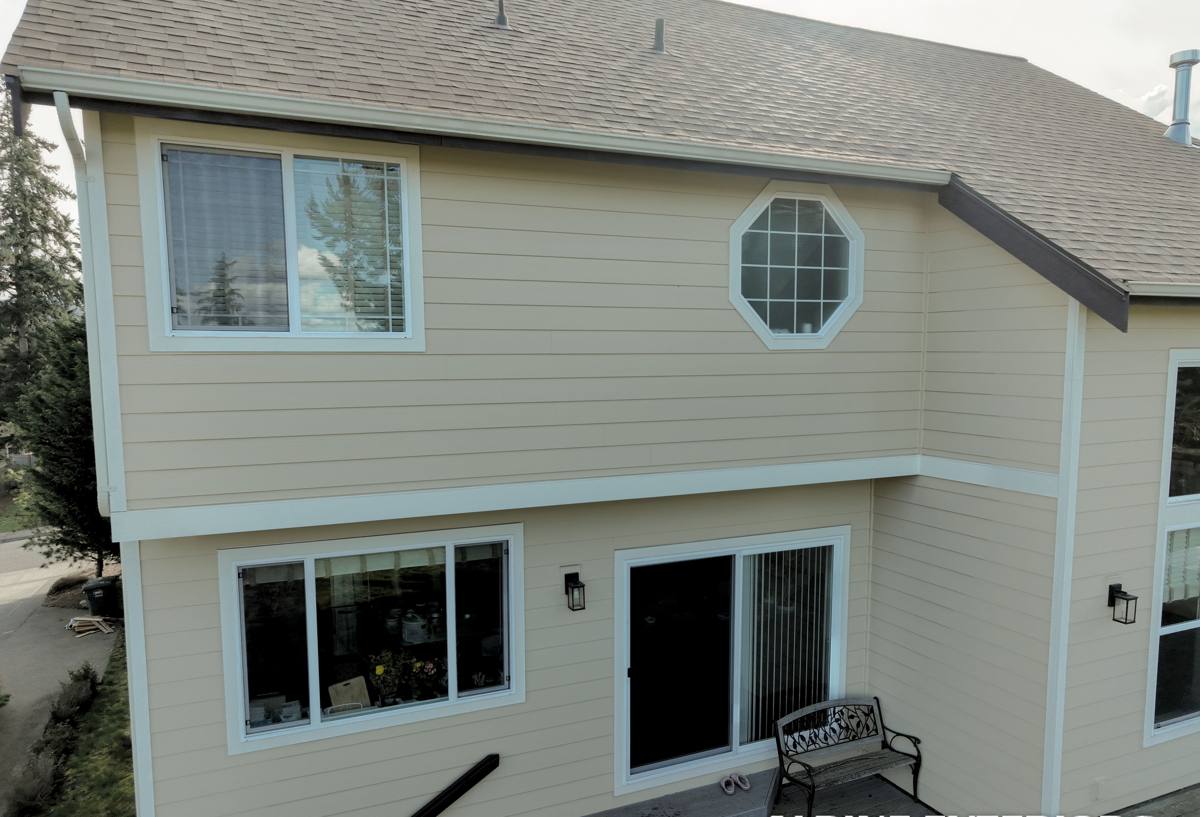
Why Salt Air, Driving Rain, and Moss Are a Tough Combination Here
Seattle's siding challenges usually come down to three things working together, and University District gets all three.
- Salt air: Proximity to Puget Sound means airborne moisture carries salt content that accelerates corrosion on fasteners, flashing, and any metal trim components over time.
- Driving rain: Wind-driven rain doesn't just wet a wall's surface — it forces water sideways into seams, laps, and butt joints, which is exactly where poor installation shows up first.
- Moss and organic growth: The long wet season here, made longer by tree shade in a lot of this neighborhood, gives moss, algae, and mildew a long runway to establish themselves on any siding surface that holds moisture or stays shaded most of the day.
Individually, any of these is manageable. Together, over years, they punish siding materials and installations that weren't specified for this exact climate. That's the root of most of the siding failures we see on University District homes — not one dramatic event, but slow, cumulative moisture exposure that eventually shows up as soft trim, stained panels, or paint that won't hold.
Signs a University District Home Needs Siding Replacement
Homeowners often wait until siding damage is visible from the sidewalk, but by then the underlying wall assembly has usually been wet for a while. Here's what we look for, and what you can check yourself.
- Soft or spongy spots when you press on siding, especially near the bottom courses and around window and door trim
- Persistent moss or dark streaking that comes back within weeks of cleaning, particularly on shaded north- and west-facing walls
- Paint that's bubbling, peeling, or failing faster than it should on a home that was painted recently
- Visible gaps, warping, or buckling in panels, especially where siding meets trim, corners, or roof lines
- Rising utility bills or noticeably drafty rooms, which can point to a compromised weather barrier behind the siding
- Interior signs — musty smells, discolored drywall, or peeling interior paint on exterior walls — that suggest moisture has already worked its way through
Any one of these on its own might be minor. Several together, especially on an older home that hasn't had its siding assessed in a decade or more, usually means it's time for a real evaluation rather than another round of caulk and paint.
What a Correct Siding Replacement Actually Involves
Siding replacement done right is not a cosmetic swap — it's a full rebuild of the wall's weather barrier system, and that's especially true in a climate like this one. A correct job includes:
Full Tear-Off and Substrate Inspection
We remove the old siding down to the sheathing so we can actually see what's underneath — rot, insect damage, or compromised framing doesn't show up until the old siding is off. Skipping this step and installing new siding over hidden problems just seals moisture damage in.
Repair Before Cover-Up
Any soft sheathing, damaged framing, or rot gets cut out and replaced before anything new goes on. This is the step that gets skipped most often by crews trying to move fast, and it's the one that determines whether your new siding lasts.
A Proper Weather-Resistive Barrier
A correctly lapped weather barrier, installed shingle-style so water is always directed outward and down, is what actually keeps wind-driven rain out of the wall — the siding itself is the second line of defense, not the first.
Flashing at Every Penetration
Windows, doors, hose bibs, vents, and light fixtures are the places water gets in. Correct flashing at each of these, integrated with the weather barrier rather than just caulked over it, is non-negotiable in a climate with this much sustained rain.
Manufacturer-Spec Installation
Fastener type and placement, proper clearance from grade and rooflines, and correct gapping for expansion all affect how the siding performs for the next several decades — and whether the manufacturer's warranty actually applies if something goes wrong later.
Why We Only Install James Hardie Fiber Cement
We made a decision as a company to install James Hardie fiber cement siding exclusively — not vinyl, not LP SmartSide, not Cemplank, not Allura, not primed spruce or cedar. That's not a marketing position; it's a reflection of what holds up against this specific combination of salt air, driving rain, and a long moss season without the maintenance burden or moisture risk that comes with the alternatives.
| Material | How It Handles Seattle-Area Moisture | Long-Term Consideration |
|---|---|---|
| James Hardie fiber cement | Non-combustible, dimensionally stable, engineered HZ product lines built for wet/humid climates | ColorPlus factory finish resists fading and chipping; strong transferable warranty |
| Vinyl siding | Doesn't rot, but can warp with heat/cold cycling and allows moisture to travel behind panels | Color isn't repaintable long-term without proper prep; seams can be a moisture path |
| LP SmartSide (engineered wood) | Wood-based core is more moisture-sensitive than fiber cement if any seam or cut edge is exposed | Requires diligent caulking and maintenance to keep water out over decades |
| Cedar or primed spruce | Natural wood absorbs moisture readily; needs consistent refinishing to resist rot and moss | Highest ongoing maintenance; most vulnerable to the exact conditions common here |
Every product on that list has legitimate uses somewhere. We simply don't think any of them are the right call for the moisture load a University District home takes on year after year, which is why we standardized on Hardie and don't install the alternatives.
Our Siding Replacement Process
- On-site assessment: We inspect the current siding, trim, and any accessible sheathing to understand what's driving the damage and what the scope of work actually is.
- Written scope and estimate: You get a clear breakdown of tear-off, repair, materials, and installation — no vague allowances.
- Tear-off and substrate repair: Old siding comes off, damaged material gets replaced, and the wall is ready for a new weather barrier.
- Weather barrier and flashing installation: This is the step that determines how the house performs for the next 30-plus years, and we don't rush it.
- Hardie installation to manufacturer spec: Correct fastening, gapping, and clearances so the product performs as designed and the warranty stays intact.
- Final walkthrough: We go over the finished work with you before we consider the job done.
Why Hiring a Crew That Already Works University District Matters
Every Seattle neighborhood has its own logistics, and University District has a few that matter for a siding job. Lot sizes and setbacks vary block to block between older single-family homes and denser multifamily construction, on-street parking near the university can be tight, and a good number of properties here are rentals where coordination has to happen with a property manager or landlord rather than a full-time resident. A crew that's worked in the area knows how to plan around all of that before the job starts, instead of losing days figuring it out mid-project.
Just as important is familiarity with how this neighborhood's older homes are actually built. Housing stock from different eras responds differently once the old siding comes off, and knowing what's typical here — and what's a red flag — comes from having done this work in the neighborhood before, not from a generic checklist.
What Siding Replacement Costs Depend On
We don't publish flat prices because every home is different, but the real cost drivers on a University District siding replacement are consistent:
| Factor | Why It Matters |
|---|---|
| Extent of hidden damage | Rot or sheathing damage found during tear-off adds repair scope that can't be quoted until the old siding is off |
| Home size and wall complexity | More corners, dormers, and trim details mean more labor and material per square foot |
| Access and site conditions | Tight lots, mature landscaping, or limited street parking can affect equipment staging and timeline |
| Trim and detail work | Window and door trim, fascia, and corner details all factor into both material and labor cost |
| Current siding removal | Some materials come off faster and cleaner than others, which affects tear-off time |
The only way to get real numbers is a site visit — anyone quoting a University District siding job over the phone without seeing the house is guessing.
Ready for an Honest Look at Your Siding?
If your University District home is showing any of the signs above, or it's simply been a long time since anyone took a close look at your siding, we're happy to come take a look. We'll tell you honestly what we see, whether replacement makes sense now or can reasonably wait, and what a correct job would involve. Fill out the form below for a free, no-pressure estimate.