 Seattle Siding
 Window Installation in the University District
The University District sits close to the water, with the kind of tree cover and moisture exposure that's typical of Seattle's older, established neighborhoods. Homes here run the gamut from early-1900s craftsman bungalows to postwar rentals and small multifamily buildings that have been converted, remodeled, and re-remodeled over the decades. What most of them have in common is original or aging window stock that was never built for the number of wet seasons it's now weathered.
Window installation in this neighborhood isn't a generic swap-and-go job. It's about understanding what King County's climate does to a window opening over time, and building the replacement so it holds up for the next few decades instead of the next few years.
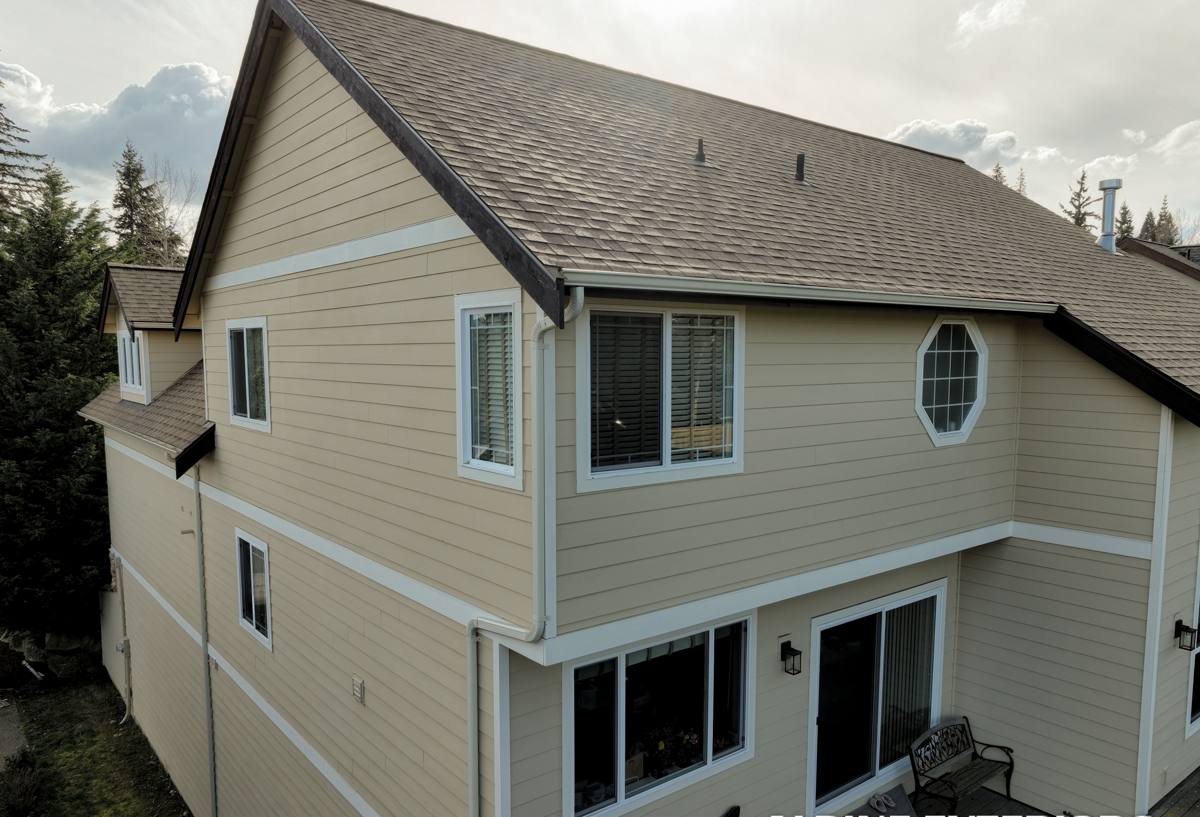
What Seattle's Climate Does to Windows
Seattle doesn't get extreme weather, but it gets steady weather, and steady is what wears windows out. A few things matter specifically for the University District and similar close-in neighborhoods:
- Driving rain: Wind-driven rain off the Sound and Lake Washington pushes water sideways into window frames, not just down onto sills. Flashing and sealant details that work fine in a dry climate can fail here.
- Salt air: Proximity to Puget Sound means a low but constant level of salt in the air, which accelerates corrosion on metal hardware, fasteners, and lower-quality frame components over time.
- Long moss season: Shaded lots and consistent moisture mean moss and algae get a foothold on sills, trim, and anywhere water sits instead of draining. Once established, it holds moisture against wood and paint longer than plain rain would.
- Minimal freeze-thaw, but constant dampness: Unlike colder climates, the bigger risk here isn't ice cracking a frame — it's wood staying damp long enough to rot, or trapped moisture behind a poorly sealed window degrading the wall assembly around it.
None of this means Seattle windows need to be exotic. It means the installation details — flashing, sealant choice, drainage paths, and material selection — need to actually match the climate instead of being treated as an afterthought.
Why Older University District Homes Need Extra Attention
A lot of the housing stock in and around the University District predates modern window flashing standards. Original single-pane wood windows are often still in place, sometimes with storm windows added later, sometimes with a prior owner's replacement windows that were installed without proper flashing or house-wrap integration. When we open up an existing window opening in this area, it's common to find:
- Wood trim and sill material that's soft or rotted from years of trapped moisture
- Little or no flashing tape or pan flashing at the sill, meaning any water that gets past the window has nowhere to go but into the wall
- Old caulk as the only water management strategy, which fails long before homeowners realize it
- Settling or slightly out-of-square openings, common in homes 70-plus years old
These aren't reasons to panic — they're normal for a neighborhood this age. But they're exactly why a correct installation matters more here than it would on a five-year-old build.
What a Correct Window Installation Actually Involves
Replacing a window is not just removing the old sash and dropping in a new unit. A proper installation, especially in a wet climate like King County's, follows a specific sequence:
- Remove the old window and inspect the opening. This is where hidden rot, missing flashing, or framing issues get found — before they're sealed behind a new window for another 20 years.
- Repair any damaged framing or sheathing. Soft or rotted wood gets cut out and replaced. Skipping this step is the single most common cause of early window failure.
- Install sill pan flashing. This creates a drainage path so any water that does get past the window sheds outward instead of pooling in the wall cavity — critical in a region with as much sustained rainfall as ours.
- Integrate flashing with the house's water-resistive barrier. The window flashing needs to overlap correctly with the existing house wrap or building paper so water is shed down and out, not trapped behind the cladding.
- Set the window plumb, level, and square. Especially important in older homes where the opening itself may have shifted slightly over the decades.
- Insulate the gap around the frame properly. Too little insulation leaves drafts and condensation points; overpacking with the wrong material can bow the frame.
- Seal and trim. Exterior sealant at the right joints only — not as a substitute for proper flashing, but as a secondary line of defense.
Any one of these steps done wrong can lead to water intrusion, wood rot, or a window that fogs, sticks, or fails years before it should.
Choosing the Right Window for This Neighborhood
There's no single "best" window material — the right choice depends on the home's age, style, and how much upkeep the homeowner wants to take on. Here's how the common options stack up for a University District home:
| Material | Moisture Performance | Maintenance | Best Fit |
|---|---|---|---|
| Vinyl | Good — won't rot, handles moisture well | Low — occasional cleaning | Rentals, budget-conscious remodels, newer additions |
| Fiberglass | Excellent — very stable in wet/dry cycles | Low | Homeowners wanting long-term durability with less upkeep |
| Wood (clad exterior) | Good if properly clad and flashed | Moderate — interior wood still needs care | Craftsman and period-appropriate homes where original character matters |
| All-wood, unclad | Requires diligent upkeep in this climate | High — repainting, sealing, moss removal | Historic restorations where authenticity is the priority |
For most University District homes, we steer people toward vinyl or fiberglass for pure performance, or clad-exterior wood when the goal is matching a craftsman or period façade. We'll walk through the trade-offs honestly rather than pushing whatever's easiest to install — a window that fights the house's style is its own kind of long-term headache, even if it performs fine.
Single-Hung, Double-Hung, and Casement — What Actually Fits
Double-hung windows remain the most common match for older Seattle homes because they preserve the traditional look and allow ventilation from the top or bottom. Casement windows seal tighter against driving rain since the sash compresses against the frame rather than sliding — worth considering on walls that catch the brunt of wind-driven storms. Sliders work well in additions or less visible elevations where matching original style matters less.
Our Process for University District Jobs
We work in this neighborhood regularly, which means we already know the kinds of openings, framing quirks, and drainage issues that come up in homes of this era. Our process:
- On-site assessment of existing windows, framing condition, and any signs of past water intrusion
- Honest recommendation on repair vs. full replacement, and which materials fit the home and budget
- Written estimate with a clear breakdown of scope — no vague line items
- Proper flashing and moisture management on every unit, not just the ones that are visibly at risk
- Cleanup and disposal of old windows and debris
- Walkthrough so the homeowner sees the finished work and understands what was done
Because we're already familiar with the housing stock in this part of Seattle, we're rarely surprised by what we find once an opening is exposed — and when we are, we explain it plainly and give options rather than pushing the most expensive fix.
Cost Factors to Expect
Exact pricing depends on window size, material, and what's found once the opening is exposed, but a few factors consistently move the number:
| Factor | Why It Affects Cost |
|---|---|
| Framing repair needed | Rot or moisture damage found during removal adds labor and material |
| Window material | Fiberglass and clad-wood cost more upfront than vinyl |
| Number of windows | Whole-house replacements typically bring a better per-unit rate than one-off swaps |
| Opening size and shape | Custom or oversized openings cost more than standard sizes |
| Trim and finish work | Matching existing interior/exterior trim adds labor, especially on period homes |
We'd rather give a realistic range after seeing the actual windows than a number over the phone that doesn't hold up once we're on-site.
Signs Your University District Home May Need New Windows
- Visible gaps, drafts, or cold spots near window frames in winter
- Condensation or fogging between panes on double-glazed units
- Wood trim that's soft, discolored, or has visible moss/algae growth
- Windows that are difficult to open, close, or lock
- Peeling paint or bubbling on interior sills — often a sign of moisture getting through
- Noticeably higher heating bills compared to similar homes nearby
Any one of these on its own isn't necessarily urgent, but a few together are usually a sign it's worth having someone take a look before a small issue becomes a framing repair.
Why a Local Crew Matters
Window installation done wrong doesn't usually show itself right away — it shows up two or three wet seasons later, as a soft spot in the sill or a stain on the interior wall. A crew that already works in the University District and similar Seattle neighborhoods has seen the specific failure patterns of this area's housing stock and King County's weather, and builds the installation to account for them from the start, rather than treating every job as a blank slate.
If you're weighing window replacement for a University District home, we're happy to take a look and give you a straightforward assessment — no pressure, no inflated urgency, just an honest read on what your windows need. Request a free estimate using the form below.