 Seattle Siding
 West Seattle Decks Take a Different Kind of Beating
A deck in West Seattle doesn't age the way a deck in a drier, inland climate does. Homes here sit close enough to Puget Sound that salt-laden air is a constant, low-grade stress on fasteners, flashing, and any metal hardware holding the structure together. Add King County's long, wet fall-through-spring stretch of driving rain, and a north-facing or shaded deck that never fully dries out between storms, and you've got the two biggest reasons decks fail early in this neighborhood: corrosion and moisture trapped where it shouldn't be.
Then there's moss. West Seattle's moss season isn't a two-week nuisance — it's most of the year on shaded decking, especially under trees or on the north side of a house. Moss holds moisture against wood fibers, keeps boards from drying, and slowly breaks down the surface even on decks that otherwise look fine from a distance. By the time a homeowner notices soft spots, cupping boards, or a railing post that flexes when leaned on, the damage is usually deeper than the surface suggests.
Replacement isn't always the answer — sometimes a deck just needs new boards or better drainage. But when the substructure, ledger connection, or footings are compromised, patching over the problem just delays a bigger repair. This page covers what a proper deck replacement looks like for a West Seattle home, and what to expect if you're getting quotes.
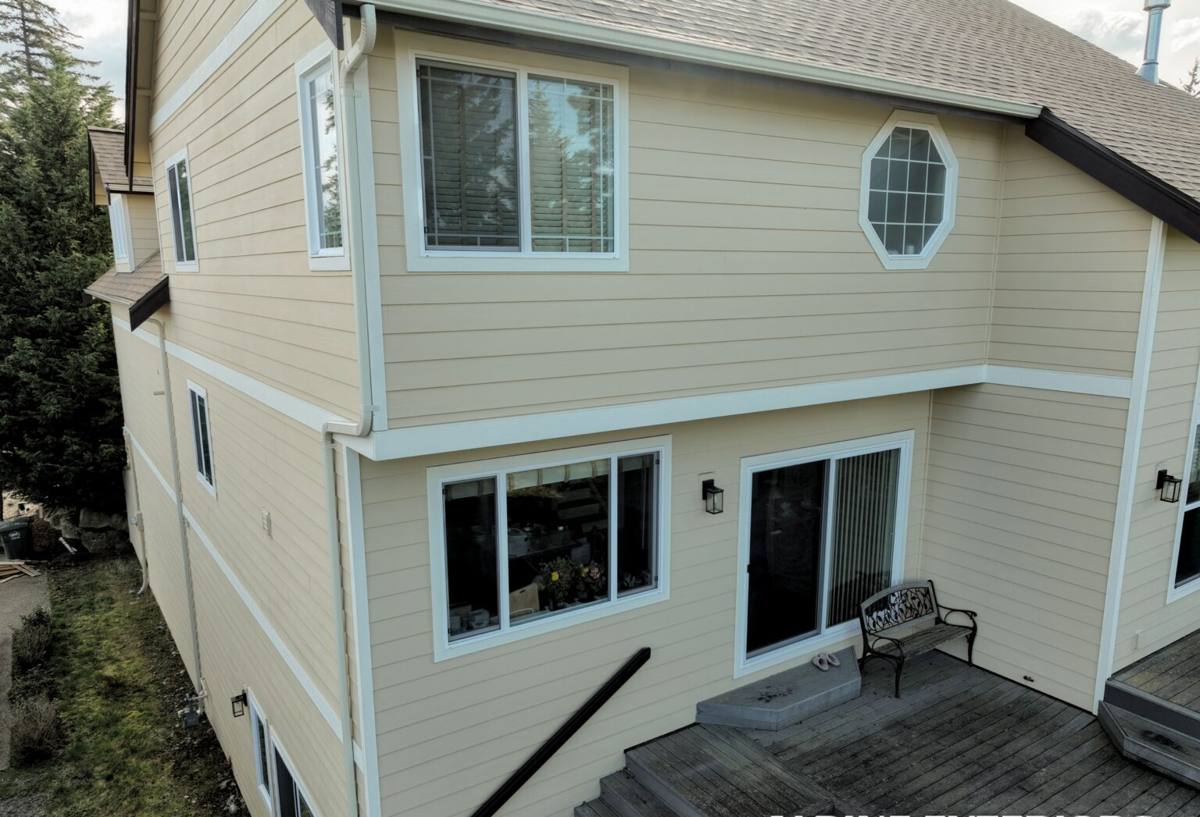
Signs a Deck Needs Replacing, Not Just Repairing
Most decks give warning signs well before they become unsafe. The trouble is that surface-level fixes — pressure washing, re-staining, swapping a few boards — can mask problems that are actually structural. Here's how to tell the difference.
- Soft or spongy decking underfoot, especially near the house or in shaded corners, usually means moisture has been sitting in the wood for a season or more.
- Rust streaks around fasteners are a sign the hardware is corroding — common near the water and accelerated by salt air — and it's often a preview of failure at connection points you can't see.
- A ledger board pulling away from the house, even slightly, is a structural red flag. This is the single most common point of catastrophic deck failure and should never be left alone.
- Persistent moss or dark staining that comes back within weeks of cleaning means the deck isn't drying properly between rains — a design or drainage issue, not a cleaning issue.
- Wobbly railings or posts often indicate rot at the base, where the post meets the deck frame or a concrete footing.
- Visible gaps, cupping, or crowning in boards that have been repeatedly wet and dry cycled.
If you're seeing two or more of these, it's worth having someone look at the framing underneath, not just the visible decking. That's usually where a repair-versus-replace decision actually gets made.
What a Correct Deck Replacement Actually Involves
A deck is only as good as what's underneath it. Replacing the surface boards without addressing the frame, flashing, and connections is a common shortcut that leads to the same failures showing up again in a few years. A full, correct replacement in this climate should include:
Ledger Board and House Connection
The ledger board — where the deck attaches to the house — is the highest-risk point for water intrusion in our climate. It needs proper flashing that directs water away from the house framing, not just caulk over lag bolts. This is the detail that separates a deck built to last from one that will need attention again in five years.
Framing and Fasteners
Joists, beams, and posts should be pressure-treated lumber rated for ground contact where relevant, and all structural hardware should be corrosion-resistant — stainless steel or coated fasteners rated for treated lumber, especially given the salt air exposure closer to the water. Mixing incompatible metals accelerates corrosion and is a mistake we see on older decks regularly.
Footings
Footings need to be sized and set to current code depth, which matters more than people expect on sloped West Seattle lots where soil drainage varies from one side of a house to the other.
Drainage and Airflow Underneath
A deck that can't breathe underneath stays wet longer after every rain. Grading, gaps, and ventilation under low decks all affect how fast the structure dries — which directly affects how fast moss and rot take hold.
Decking Material and Fastening Pattern
Board spacing, fastener type, and installation direction all affect how well a deck sheds water and resists moss buildup. This is a detail that's easy to get wrong and hard to see once the deck is finished.
Choosing a Decking Material for This Climate
There's no single "best" decking material — it depends on budget, maintenance tolerance, and how much shade and moisture the deck will see. Here's how the common options actually perform in a wet, moss-prone environment like West Seattle.
| Material | Moisture & Moss Behavior | Maintenance | Typical Lifespan |
|---|---|---|---|
| Pressure-treated wood | Absorbs water; needs to dry fully between rains or moss and mildew take hold quickly | Annual cleaning and periodic sealing/staining | 10-15 years with upkeep |
| Cedar | Naturally rot-resistant but still needs to dry out; shaded areas still grow moss | Regular sealing to maintain resistance and appearance | 15-20 years with upkeep |
| Composite decking | Doesn't absorb water into the board itself, but can still grow surface moss/algae in shaded, damp spots | Periodic washing; no staining or sealing | 25-30+ years, varies by product |
| PVC/capped polymer | Fully moisture-resistant surface; least prone to moss taking hold on the board itself | Occasional washing | 25-30+ years, varies by product |
We'll walk through the honest trade-offs for your specific deck — orientation, shade, and how much maintenance you actually want to do — rather than push one product for every job. A shaded, north-facing deck under trees is a different decision than a sunny deck with an open sightline to the water.
Permits and Code in Seattle
Deck replacement in Seattle generally requires a permit once you're rebuilding the structure — not just swapping surface boards on an otherwise sound frame. Requirements depend on the deck's height, size, and proximity to property lines, and King County and City of Seattle both have specific setback and guardrail code requirements that a deck needs to meet regardless of what was there before. Part of doing this correctly is handling that permitting process so the finished deck is actually up to current code, not just a copy of what was removed.
Our Deck Replacement Process
Every deck is different, but the sequence we follow doesn't change:
- On-site assessment — we check the ledger connection, framing condition, footings, and drainage before quoting anything, since these determine whether it's a repair or full replacement.
- Material and design conversation — decking material, railing style, and layout, matched to your budget and how the deck actually gets used.
- Permitting — we handle the permit application and inspections required for the scope of work.
- Demolition and disposal — removing the old structure without damaging siding, landscaping, or the area around the house.
- Framing and flashing — the structural work and moisture protection that determines how long the new deck lasts.
- Decking, railing, and finish work — installed to the fastening and spacing standards appropriate for the material and our climate.
- Final walkthrough — going over the finished deck and basic maintenance expectations with you before we consider the job done.
Living With a New Deck in a Wet Climate
No decking material is maintenance-free in a climate like ours — some just need less than others. A short checklist that keeps a new deck performing well through the wet season:
- Sweep debris and leaves off the deck regularly in fall — trapped organic matter holds moisture and feeds moss growth.
- Keep gutters and downspouts near the deck clear so water isn't dumping directly onto or under it.
- Check that furniture and planters aren't sitting directly on boards for months at a time without being moved, which traps moisture underneath.
- For wood decking, plan on resealing on the schedule recommended for the product — skipping a cycle in our climate shows up fast.
- Have railings and structural connections checked periodically, especially after a hard winter storm.
None of this is complicated, but it's the difference between a deck that looks good for 20-plus years and one that needs attention again in five.
Why Hire a Crew That Already Works West Seattle
Deck framing details that work fine in a drier climate — flashing choices, fastener selection, footing depth — aren't automatically right here. A crew that works West Seattle regularly already knows which details matter for homes exposed to Sound-side weather, how local soil and slope conditions affect footings, and what the permitting process actually requires from the City of Seattle and King County. That familiarity shows up in fewer surprises during the build and a deck that's actually built for the conditions it'll sit in, not a generic spec.
We're a Seattle-based siding and exteriors company, and deck replacement is part of the exterior work we do across King County — which means we're thinking about how your deck interacts with your siding, flashing, and drainage as a whole system, not as an isolated project.
If your deck is showing signs of wear, or you just want an honest opinion on whether it needs repair or full replacement, we're happy to take a look. Reach out for a free, no-pressure estimate using the form below.