 Seattle Siding
 Why Renton Roofs Age on Their Own Timeline
A roof in Renton doesn't fail the same way a roof in a dry climate does. Instead of sun-baked, brittle shingles, we see roofs that stay damp longer than they should, grow moss in the shaded valleys and north slopes, and take on water at the seams before the shingles themselves are anywhere near worn out. The culprit is the local weather pattern: long stretches of low-intensity rain, marine air moving in off Puget Sound, and short winter days that don't give a roof much chance to dry out between storms. Add in the tree cover common on King County lots, and you get roofs that hold moisture against the deck for months at a time.
None of that means asphalt shingle roofing is a poor fit for this area — it's still the most practical, cost-effective roofing material for the vast majority of homes here. It means the installation details matter more in Renton than they would somewhere drier. A shingle roof put on with shortcuts might look fine for a year or two and then start showing problems that a properly built roof simply wouldn't have.
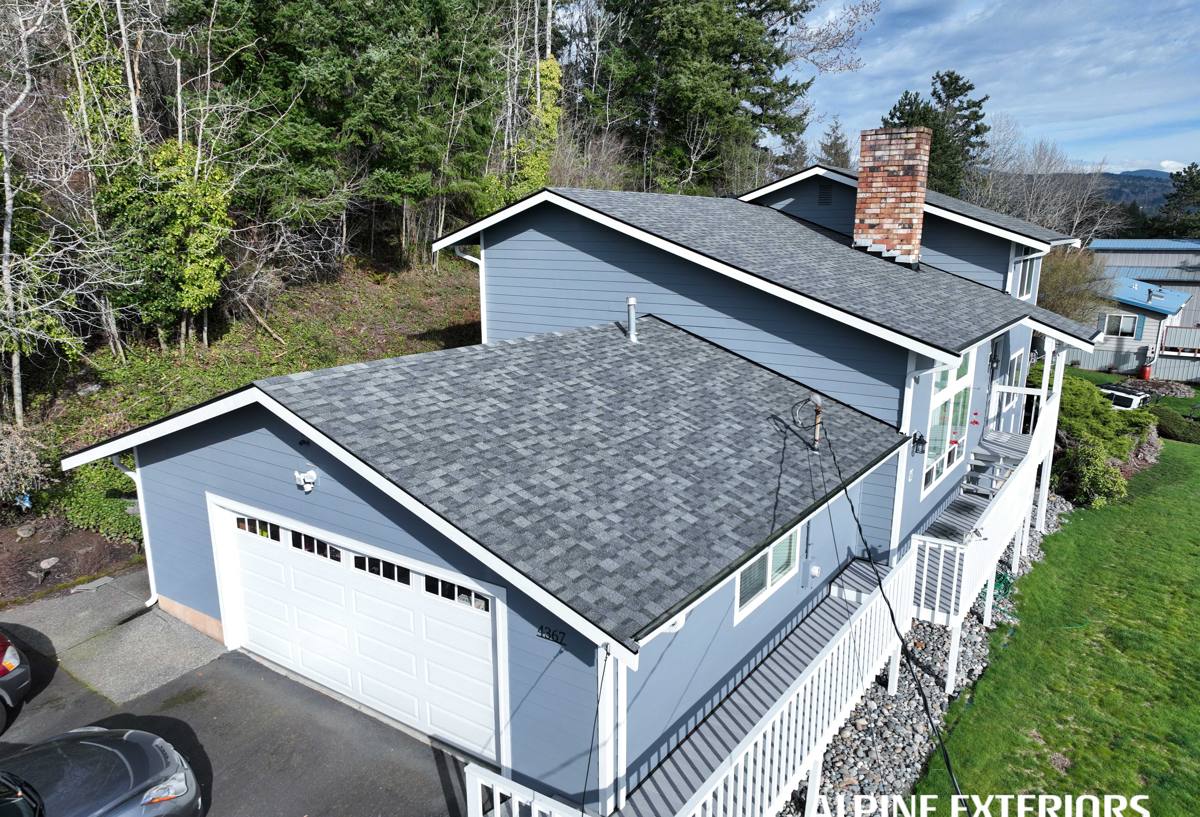
What This Climate Actually Does to a Shingle Roof
Moss and Organic Growth
Moss doesn't just sit on top of shingles looking bad — it holds moisture against the granule surface, works its way under shingle tabs as it grows, and gradually lifts edges enough for wind-driven rain to get underneath. Roofs with heavy tree cover or north-facing slopes that don't get much direct sun are the most affected, and in this region that describes a large share of residential roofs. A roof with a long moss season needs shingles and installation details that account for it, not just a one-time cleaning after the fact.
Driving Rain and Wind
Rain here rarely falls straight down. Storms moving through the Puget Sound lowlands regularly push rain sideways, which means water gets tested at every seam, valley, and penetration on a roof — not just the open field of shingles. A roof that would pass in a calmer climate with looser flashing or fewer fasteners can leak here specifically because of that wind-driven component.
Temperature Swings and Freeze-Thaw
Renton doesn't see extreme cold for long stretches, but it does get enough freeze-thaw cycling in winter that trapped moisture in a roof assembly can do real damage over a season — swelling wood sheathing, degrading underlayment, and accelerating rot in areas that stay wet. This is a slower, quieter form of damage than a dramatic leak, and it's the kind that shows up as soft decking years after the roof was installed.
Choosing the Right Shingle for a Renton Roof
Not every asphalt shingle product is built the same way, and the differences matter more here than in a dry climate. We generally steer homeowners toward algae-resistant (AR) shingles as a baseline, since the copper- or zinc-infused granules help slow the biological growth this area is known for. Beyond that, the choice usually comes down to budget, expected lifespan, and how much wind exposure the roof sees.
| Shingle Type | Typical Lifespan | Best Fit For |
|---|---|---|
| 3-tab (strip) shingles | 15-20 years | Budget-conscious reroofs, simple roof shapes, rental or resale-focused projects |
| Architectural (dimensional) shingles | 25-30 years | Most Renton homes — better wind rating and thicker profile for driving rain |
| Premium/designer shingles | 30+ years | Steep-slope or highly visible roofs, homeowners prioritizing curb appeal and longevity |
We don't push a single manufacturer on every job. What we do insist on is matching the shingle's wind rating and warranty structure to how exposed the roof actually is, and being upfront when a cheaper product will cost more in maintenance and reroofing frequency over time than it saves upfront.
What a Properly Installed Asphalt Shingle Roof Involves
The shingle itself is often the least important variable in how long a roof lasts here. What's underneath it, and how carefully it's installed, matters more. A correct installation in this climate includes:
- Full tear-off to bare decking rather than layering over old shingles, so we can actually inspect and repair the sheathing underneath
- Ice and water shield membrane at eaves, valleys, and around every penetration — the areas most exposed to wind-driven rain
- Synthetic underlayment across the full roof deck as a secondary water barrier, not just felt paper
- Proper nailing pattern and fastener count matched to the shingle's wind rating, not just the manufacturer's minimum
- New flashing at chimneys, skylights, walls, and roof-to-wall transitions rather than reusing old flashing
- Balanced intake and exhaust ventilation so the attic can actually dry out between storms
- Drip edge at eaves and rakes to direct water away from the fascia and into the gutters
Skipping any one of these doesn't necessarily cause a problem the first year. It shows up two, five, or ten years later, usually as a leak that seems to come from nowhere because the actual failure point is hidden under the shingles.
Ventilation: The Part Homeowners Never See
Attic ventilation gets less attention than shingle color, but it has an outsized effect on how a roof performs in a wet, mild climate. A poorly ventilated attic traps warm, moist air against the underside of the roof deck. In winter, that trapped heat can cause snow or frost to melt unevenly and refreeze at the eaves, contributing to ice damming even in a climate that doesn't get heavy, sustained snowfall. Year-round, poor ventilation keeps the deck itself damper than it should be, which shortens the life of both the sheathing and the shingles above it — and gives moss and mildew more to work with. When we reroof a house, we evaluate the existing intake and exhaust balance and correct it as part of the job rather than treating it as a separate upsell.
How Our Process Works
We keep the process straightforward and try to remove the guesswork for homeowners who haven't been through a reroof before.
- On-site inspection. We look at the roof from the ground and, where safe and useful, up close — checking shingle condition, flashing, ventilation, and signs of moisture at the deck level.
- Written estimate. You get a clear scope of work and price, including shingle options, so you're comparing real numbers rather than guessing what's included.
- Scheduling around the weather. Roofing in this region means working around rain windows. We plan tear-off and dry-in carefully so your home isn't left exposed longer than necessary.
- Tear-off and deck inspection. Old material comes off, and we inspect the sheathing for soft spots or rot before anything new goes down.
- Installation. Underlayment, flashing, ventilation components, and shingles go in following the sequence above — not shortcuts based on what's fastest.
- Cleanup and walkthrough. We clear debris, run a magnetic sweep for stray nails, and walk the finished roof with you before calling the job done.
Maintenance That Actually Extends a Roof's Life Here
Asphalt shingle roofs in this climate benefit from a bit more upkeep than the same roof would need somewhere drier, but it doesn't need to be complicated:
| Task | Why It Matters Here | Rough Frequency |
|---|---|---|
| Gutter clearing | Clogged gutters back water up under the eaves, which is exactly where ice and water shield matters most | 1-2x per year, more under heavy tree cover |
| Moss treatment | Slows regrowth on shaded slopes and reduces the chance of lifted shingle tabs | Annually, or as moss reappears |
| Visual inspection | Catches lifted shingles, damaged flashing, or granule loss before they become leaks | Once a year, and after major windstorms |
| Attic check | Confirms ventilation is working and there's no hidden moisture at the deck | Annually |
None of this replaces professional inspection. A homeowner can spot obvious moss or a missing shingle from the ground, but early flashing failures and ventilation problems are much easier to catch for a crew that knows what a healthy roof in this climate is supposed to look like.
Why It Matters That We Already Work in Renton
A roofing crew that mostly works in a different climate can still install a technically correct roof on paper and still get the details wrong for this area — under-specifying ice and water shield, skipping ventilation corrections, or not accounting for how much shade and moss a particular lot will see. Working across Renton and the wider King County area day in and day out means we're not guessing at how a roof will actually perform here; we're building on what we've already seen hold up and what hasn't. It also means straightforward logistics — scheduling around local weather windows, sourcing materials without long delays, and being reachable if a question comes up after the job is done, not just during it.
Signs Your Renton Roof May Need Attention
A few warning signs are worth taking seriously rather than waiting on:
- Moss or dark streaking concentrated on shaded or north-facing slopes
- Granules collecting in gutters or at downspout outlets
- Shingle edges that look lifted or curled, especially after a windy stretch
- Daylight visible through the roof deck from inside the attic
- Musty smell or visible moisture staining on attic sheathing or insulation
- A roof that's approaching or past 20 years old and hasn't been fully inspected recently
Catching these early is usually the difference between a targeted repair and a full reroof.
If you're weighing repair versus replacement, or just want an honest read on where your roof stands, we're happy to take a look. Use the form below to request a free, no-pressure estimate — we'll walk the roof, explain what we find in plain terms, and give you real options and pricing before any work begins.