 Seattle Siding
 Custom Decks Built for Capitol Hill's Climate, Not Just Its Look
Capitol Hill is one of Seattle's oldest and most densely built neighborhoods, and that history shows up in the housing stock: older single-family homes on narrow lots, converted duplexes, and plenty of properties where a deck has to do a lot of work in a small footprint. When we build a custom deck here, we're not just designing for how it looks the day it's finished. We're designing for how it performs through a decade of King County winters — driving rain off the Sound, long stretches of gray damp weather, and a moss season that seems to start earlier every year.
A deck that's built the same way you'd build one in a dry climate will show it within a few seasons: soft spots near the ledger board, black streaking on the boards, moss creeping across shaded sections, and fasteners that bleed rust into the wood. A deck built for this specific climate — correct drainage, the right fasteners, the right gap spacing — holds up the way it should. That's the difference we focus on.
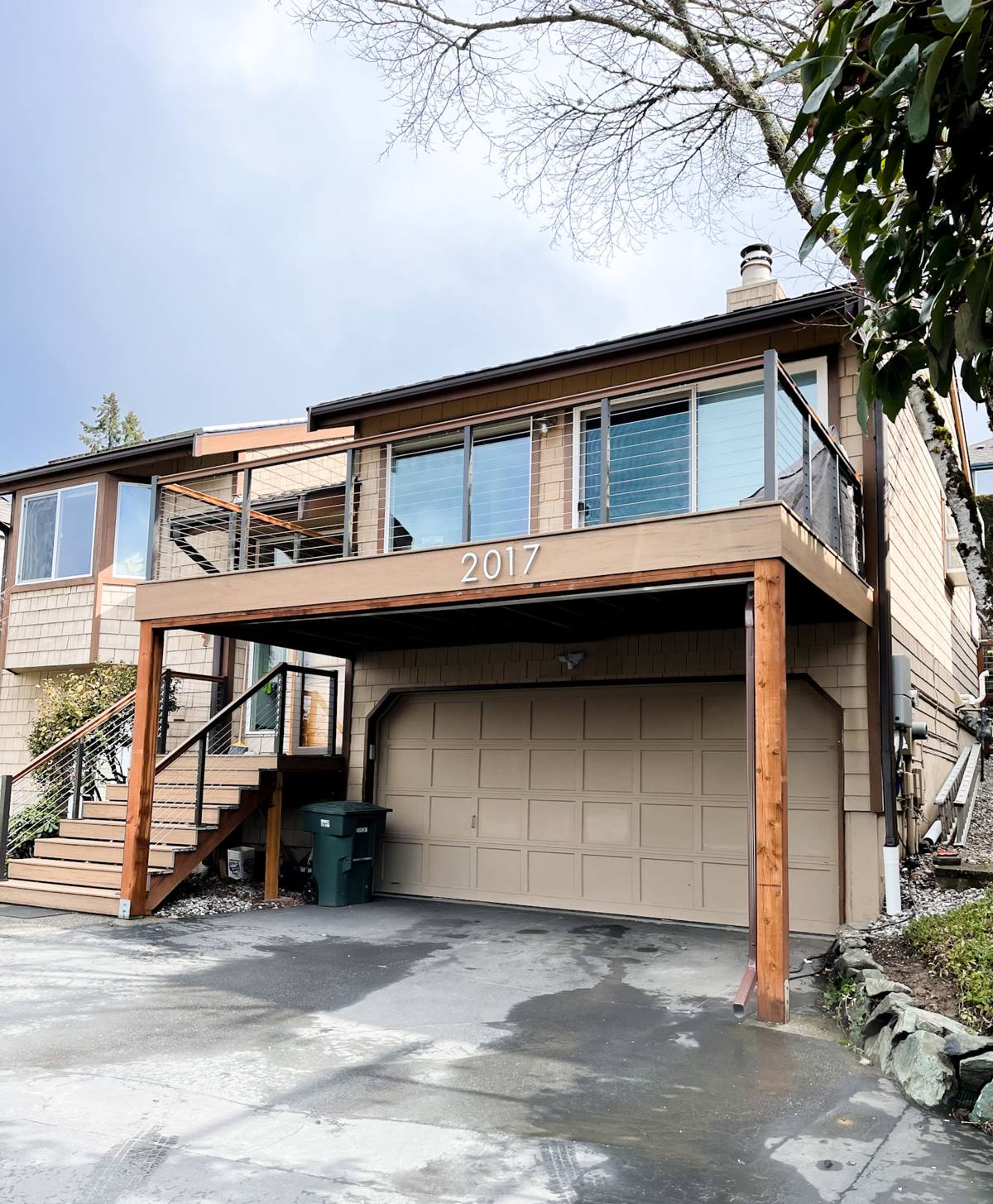
What Capitol Hill Homes Actually Need From a Deck
Every neighborhood has its own quirks, and Capitol Hill has a few that matter for deck design:
- Shade and tree cover. Mature trees are common on Capitol Hill's older streets, which means many decks sit in partial shade most of the day. Shade plus Seattle's rainfall is exactly the combination that grows moss and algae fastest.
- Small, tight lots. Many Capitol Hill properties are narrow with limited side-yard access, which changes how we stage materials, where footings can go, and sometimes how a deck has to be framed to fit the space efficiently.
- Older homes, older ledgers. A lot of the housing stock predates current attachment and flashing standards. Tying a new deck into an older house correctly — without creating a hidden moisture path into the siding or rim joist — takes more care than a straightforward new-construction attachment.
- Slope. Capitol Hill has real topography. Backyards and side yards are frequently sloped, which affects footing depth, post height, and whether a deck needs a taller substructure or a stepped design.
Choosing a Decking Material That Fits This Climate
There's no single "best" decking material — there's a best material for your budget, your maintenance appetite, and how much sun or shade your deck gets. Here's how the common options compare for a Seattle-area build:
| Material | Upfront Cost | Maintenance | Moisture & Moss Resistance | Typical Lifespan |
|---|---|---|---|---|
| Pressure-treated wood | Lowest | Annual cleaning, periodic sealing/staining | Fair — needs upkeep to resist moss and rot | 10-15 years |
| Cedar | Moderate | Regular sealing to hold color and resist checking | Good natural resistance, but still needs care in shade | 15-20 years |
| Composite decking | Higher | Occasional washing, no staining or sealing | Very good — resists rot, but surface can still grow moss if never cleaned | 25-30 years |
| PVC decking | Highest | Lowest — wash as needed | Excellent — fully moisture-sealed, no organic material for moss to grip | 30+ years |
In a shaded, damp neighborhood like Capitol Hill, we lean toward recommending composite or PVC for anyone who wants to minimize upkeep, and wood for homeowners who like the natural look and don't mind the maintenance schedule. Neither choice is wrong — it's about matching the material to how much time you want to spend on deck care each year.
Why We're Selective About Wood Species and Grades
Not all pressure-treated lumber is equal. We choose framing lumber and decking boards rated for ground contact where relevant, and we're careful about board selection — avoiding lumber with excess wane, checking, or wet pockets that will warp or cup once the boards dry out on the job. Cutting corners on lumber grade is one of the most common ways a wood deck ends up looking rough within a couple of years.
The Structural Details That Actually Determine How Long a Deck Lasts
The decking boards get the attention, but the parts nobody sees are what actually determine whether a deck lasts 10 years or 30.
Ledger Attachment and Flashing
Where a deck attaches to the house is the single most common source of long-term water damage. We flash the ledger board correctly — with proper weather-resistant barrier integration and metal flashing that sheds water away from the house, not into it — every time, no shortcuts. On older Capitol Hill homes, this sometimes means correcting or replacing siding or trim details around the attachment point to do the job right.
Footings and Posts
Footings need to be sized and set to local frost depth and soil conditions, and on sloped lots, post heights and bracing need to account for the extra lateral load. We use hardware and post bases rated for exterior, wet-climate exposure — not standard interior-rated fasteners that will corrode and stain the wood around them within a few seasons.
Board Spacing and Airflow
Gap spacing between boards, and airflow underneath the deck, both affect how fast wood dries out after rain. Too tight, and boards trap moisture and grow moss between them. Too loose, and you lose structural feel and drop things through the gaps. We set spacing based on the specific material and expected seasonal movement, not a one-size-fits-all number.
Our Process, From First Conversation to Final Walkthrough
- On-site assessment. We look at your lot's slope, shade, existing structure (if replacing a deck), and how the space is used before recommending a design.
- Design and material selection. We walk through layout options and decking materials with real cost and maintenance trade-offs, not just what looks best in a photo.
- Permitting. Deck projects in Seattle often require a permit depending on size, height, and attachment method. We handle that process rather than leaving it to the homeowner.
- Framing and structural work. Footings, posts, beams, ledger flashing — the parts that determine longevity get built first and inspected before decking goes down.
- Decking, railing, and finish work. Boards, railings, stairs, and any lighting or built-in features are installed and finish-checked for gaps, fastener placement, and level.
- Final walkthrough. We go over the finished deck with you, including a basic maintenance rundown so you know what to expect season to season.
Permits and Working Within Capitol Hill's Lot Realities
Seattle and King County have permitting requirements that vary by deck height, size, and proximity to property lines — a deck attached to the house and more than 18 inches off grade typically needs a permit, and setback rules apply on top of that. On Capitol Hill's narrower lots, setback and lot-coverage rules can meaningfully shape what size and shape of deck is actually buildable, which is why we look at those constraints early rather than designing something that has to be scaled back later. We manage the permit application and inspection process as part of the build.
Maintaining a Deck Through Seattle's Wet Season
Whatever material you choose, a little seasonal maintenance goes a long way in this climate. A simple yearly routine:
- Sweep leaves and debris off the deck surface and out from between boards regularly through fall — trapped organic matter is what feeds moss growth.
- Wash the deck surface at least once a year with a deck-safe cleaner to remove algae and moss film before it takes hold, especially in shaded sections.
- Check and re-seal wood decking on the manufacturer's recommended schedule — typically every 1-2 years for cedar or pressure-treated lumber.
- Inspect railings, stair connections, and ledger flashing once a year for loosening, corrosion, or gaps.
- Keep gutters and downspouts near the deck clear so runoff isn't dumping extra water directly onto or under the structure.
- Trim back overhanging branches where practical to reduce shade and debris buildup on the deck surface.
Why It Matters to Hire a Crew That Already Works Capitol Hill
A contractor who works Capitol Hill regularly already understands the practical realities of the neighborhood — the narrow lot access, the older home attachment points, the slope patterns, and which permit questions come up most often in this part of Seattle. That familiarity shows up in fewer surprises during the project: fewer redesigns because of a setback issue nobody caught, fewer access problems on move-in day, and a build that accounts for shade and drainage from the start instead of after the moss shows up.
It also means a crew that's seen how different materials actually perform here over years, not just on a spec sheet. That's the kind of judgment that comes from doing this work in this specific climate, on this specific kind of lot, repeatedly.
Ready to Talk Through Your Deck Project?
If you're planning a new custom deck or replacing one that's showing its age, we're happy to come take a look, talk through material options for your lot's sun and shade conditions, and give you a straightforward estimate — no pressure, no obligation. Use the form below to get started.