 Seattle Siding
 Ballard's Climate Puts Real Stress on Exterior Walls
Ballard sits close to Salmon Bay and the wider waters of Puget Sound, and that proximity shapes what siding has to deal with year-round. Salt-laden air moves through the neighborhood on a regular basis, driving rain comes in sideways during winter storms, and the tree cover and dampness that define this part of King County create a long moss season that can run from fall through late spring. None of this is unusual for the Seattle area, but Ballard gets a concentrated version of it because of how close many homes sit to open water and mature landscaping.
Siding here isn't just a cosmetic layer. It's the first line of defense against moisture intrusion, and over years of exposure, the wrong material or a sloppy installation shows it — fading, swelling, soft spots, or a green film that keeps coming back no matter how often it's washed off. Understanding what the climate actually does to a wall assembly is the starting point for choosing the right product and installing it correctly.
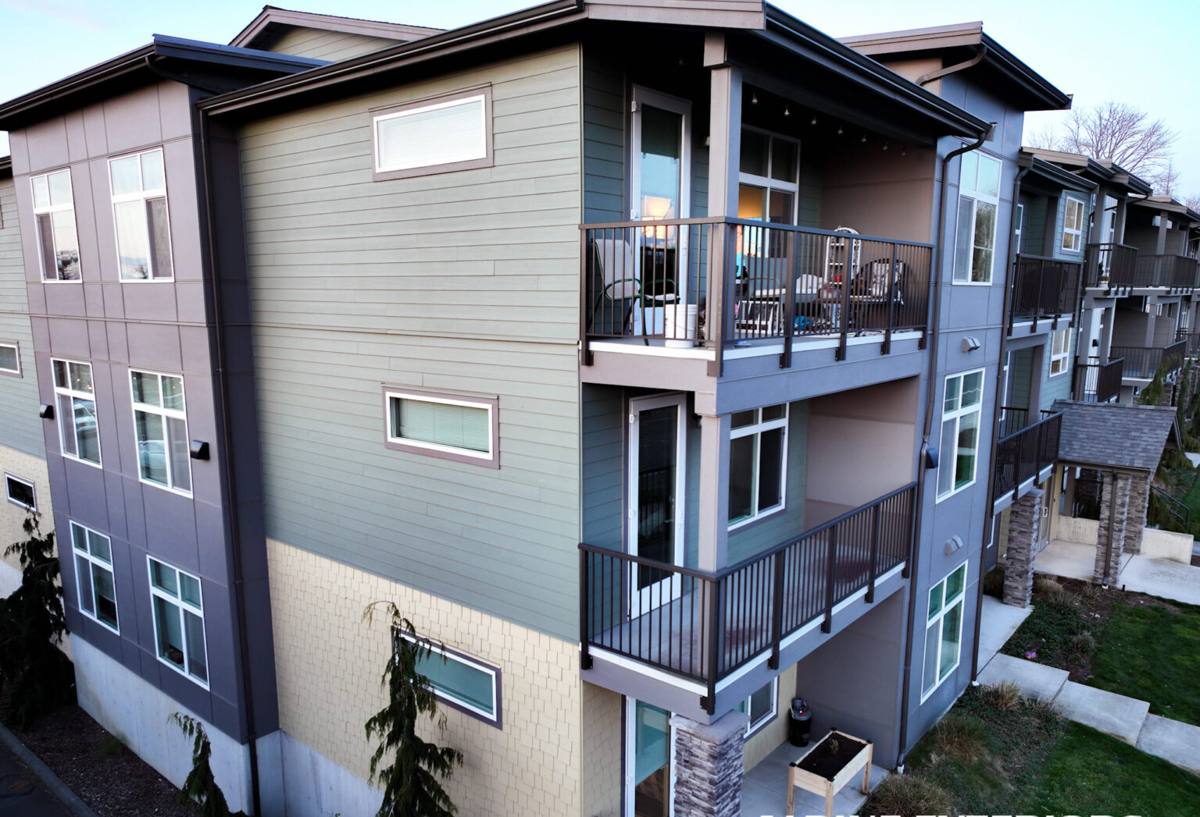
What Salt Air, Driving Rain, and Moss Actually Do to Siding
Salt Air
Airborne salt is corrosive to fasteners, trim flashing, and any exposed metal components. It also accelerates the breakdown of coatings that aren't built to handle it, leading to chalking, fading, and premature finish failure on lower-grade products. A siding system that wasn't engineered with coastal-adjacent exposure in mind will show wear faster in Ballard than it would twenty miles inland.
Driving Rain
Wind off the water pushes rain horizontally into walls rather than letting it simply run down the surface. That means laps, joints, and butt seams take on more water pressure than they would in a calmer climate. Any gap in flashing, caulking, or panel overlap becomes an entry point, and once water gets behind the siding, it doesn't dry out quickly in our humidity.
Moss Season
Shade from mature trees, combined with near-constant dampness for months at a time, is exactly the environment moss and algae need to take hold. Porous or absorbent siding materials hold onto that moisture at the surface, giving organic growth a foothold. Once moss establishes itself on a wall, it holds water against the substrate underneath, which compounds any existing moisture problem.
Why We Only Install James Hardie Fiber Cement Here
We've made James Hardie our standard for every home we side, and Ballard's climate is a good example of why. Fiber cement is non-combustible and dimensionally stable — it doesn't swell, warp, or rot the way wood-based products can when they take on repeated moisture. It also doesn't feed organic growth the way absorbent materials do, which matters directly in a neighborhood with a long moss season.
James Hardie's ColorPlus factory-applied finish is baked on and cured under controlled conditions, so it resists the fading and chalking that field-applied paint struggles with under UV and salt exposure. That's a meaningful difference on a home that gets steady sun off the water combined with salt air — you're not relying on a coat of paint applied on-site to hold up to both at once.
We don't install vinyl, LP SmartSide, Cemplank, Allura, primed spruce, or cedar. Each of those has a place in the market, but none of them combine fire performance, moisture resilience, and finish durability the way Hardie does, and we'd rather stand behind one system we know inside and out than offer several we have reservations about.
Choosing the Right HZ Product Line for This Neighborhood
James Hardie engineers its siding in HZ (HardieZone) formulations matched to regional climate demands. For the Pacific Northwest, that means a formulation designed around sustained moisture exposure rather than extreme heat or freeze-thaw cycling. Getting this right matters more in Ballard than in a drier inland suburb, because the product needs to perform through a genuinely wet climate for decades, not just survive it.
| Product | Common Use on Ballard Homes | Why It Fits |
|---|---|---|
| HardiePlank lap siding | Primary wall cladding on most homes | Traditional lap profile, engineered finish holds up to salt air and rain exposure |
| HardieShingle | Accent gables, dormers, craftsman-style detailing | Matches the shingle-style detailing common on older Ballard homes without the moisture issues of wood shingle |
| HardieTrim | Corners, window and door casing, fascia | Won't rot at the joints where driving rain concentrates |
| HardiePanel | Modern flat-panel exteriors on newer builds | Clean look for contemporary infill construction, same core moisture resistance |
What a Correct Installation Actually Involves
The siding material is only half the equation. A huge share of siding failures we get called out to inspect — regardless of brand — trace back to installation shortcuts, not the product itself. In a climate like Ballard's, the details below aren't optional extras; they're what determines whether the wall stays dry for the next 30 years.
- A weather-resistive barrier installed correctly behind the siding, lapped shingle-style so water sheds outward, not into the wall
- Proper flashing at every window, door, and roof-to-wall intersection, since these are the spots driving rain finds first
- Correct fastener type and placement — Hardie specifies exact nailing patterns, and getting this wrong voids the manufacturer's warranty
- Manufacturer-specified clearances between siding and grade, roof lines, decks, and other flatwork to prevent wicking
- Factory-cut and factory-primed edges kept intact wherever possible; any field cuts sealed per Hardie's instructions
- Caulking used only where Hardie's install guide calls for it — over-caulking traps moisture instead of shedding it
Skipping any one of these doesn't necessarily cause an immediate problem, but a long, wet Ballard winter has a way of finding every shortcut eventually.
Our Process on a Ballard Siding Project
1. On-Site Assessment
We walk the exterior with you, note existing moisture damage, trim condition, and any areas where past work was done incorrectly. This is also where we check for the kind of tight-lot access and mature landscaping that's common in Ballard, since it affects staging and protection of plantings.
2. Product and Color Selection
We go through the relevant HardiePlank, HardieShingle, and trim options together, including ColorPlus factory finishes suited to the neighborhood's mix of craftsman-era homes and newer construction.
3. Tear-Off and Substrate Check
Old siding comes off, and we inspect the sheathing underneath for rot or existing moisture damage before anything new goes up. Any compromised sheathing gets addressed before the weather barrier is installed — covering up a wet wall is how problems get sealed in rather than solved.
4. Weather Barrier and Flashing
This is the step that matters most for Ballard's rain exposure, and we don't rush it. Every penetration, window, and transition gets flashed before a single piece of siding goes up.
5. Installation to Manufacturer Spec
Fastening, clearances, and joint treatment follow James Hardie's published installation guidelines, which keeps the manufacturer's warranty intact and gives you a wall built to perform in this climate specifically.
6. Final Walkthrough
We review the finished work with you, including care and cleaning guidance suited to a moss-prone environment.
Cost Factors Specific to a Ballard Job
| Factor | Why It Affects Ballard Projects |
|---|---|
| Home age and siding removal | Older homes often require full tear-off and sheathing repair, which older wood siding in a wet climate makes more likely |
| Lot access | Narrow lots and mature trees common in the neighborhood can affect staging, scaffolding, and material delivery |
| Trim complexity | Craftsman detailing with gables, shingle accents, and multiple trim profiles adds labor versus a simple flat wall |
| Existing moisture damage | Rot repair found during tear-off is priced separately since it isn't visible until the old siding comes off |
| Product selection | HardieShingle accents and premium ColorPlus finishes cost more per square foot than standard HardiePlank |
We give you a written, itemized quote before any work starts, and we flag anything found mid-project — like unexpected rot — before doing the repair, not after.
Living With Hardie Siding in a Wet, Salty Climate
One advantage of fiber cement here is how little upkeep it demands compared to wood-based siding. It won't need repainting on the schedule cedar or primed spruce would in this climate, and it doesn't provide the same foothold for moss and algae. That said, a few habits go a long way toward keeping any exterior looking good through Ballard's wet season:
- Rinse the exterior with a garden hose once or twice a year to clear salt residue and organic buildup before it establishes
- Keep gutters clear so overflow doesn't run down the face of the siding during heavy rain events
- Trim back branches and shrubs that keep sections of the wall shaded and damp longer than the rest of the house
- Inspect caulking at trim joints every year or two, since even good sealant has a service life
- Address any small paint chips or exposed edges promptly to prevent moisture from getting behind the finish
Why It Matters to Hire a Crew That Already Works This Neighborhood
Siding installation isn't identical from one part of King County to another. A crew that mostly works drier, inland areas may not think twice about flashing details or clearance heights that are non-negotiable this close to the water. We've worked on homes throughout Seattle and understand what Ballard's exposure to Salmon Bay and the Sound actually demands from a wall assembly — not in the abstract, but from having done the work here. That local familiarity shows up in the small decisions made on-site: how flashing gets lapped, where extra attention goes on a shaded north wall, and which details simply can't be skipped in a climate this wet.
If you're planning a siding project in Ballard, we're happy to walk your home, answer questions honestly, and give you a clear picture of what correct James Hardie installation looks like for your specific house. Reach out for a free, no-pressure estimate using the form below.