 Seattle Siding
 Ballard's Marine Climate Asks More of a Roof Than People Expect
Ballard sits close to the water — Salmon Bay, the ship canal, and Puget Sound all sit within a few minutes of most homes in the neighborhood. That proximity is part of what makes the area, but it's also why roofs here take a different kind of beating than roofs ten miles inland. Salt-laden air moves off the water and settles on exposed metal, gutters, and fasteners year-round, quietly accelerating corrosion on anything that wasn't specified for a marine environment. Layer on Seattle's long, wet fall-through-spring stretch — driving rain that comes in at an angle, not just straight down — and you've got a roof that needs to shed water fast and seal well at every edge, valley, and penetration.
Then there's moss. King County's tree canopy, combined with months of shade and moisture, gives moss and algae exactly what they need to take hold on a roof surface. On older comp shingle or wood shake roofs in Ballard, that shows up as dark streaking, lifted shingle edges, and slow rot at the north-facing slopes that never fully dry out. None of this is unusual for the area — it's just the baseline a roof has to work against here, and it's why the right metal roofing system, installed correctly, tends to outperform other options on this kind of lot.
What Metal Roofing Actually Solves — and What It Doesn't
Metal roofing gives moss and algae almost nothing to grip onto. There's no granule texture, no organic wood fiber, and no shingle tab edges for spores and debris to collect in. Combined with a slick, hard surface and steep enough pitch, most metal roofs stay markedly cleaner through a Seattle wet season than a comp or shake roof on the same lot. Metal also sheds driving rain well when the panels and flashing details are done right — water moves off the surface quickly instead of working its way under lifted edges.
What metal roofing doesn't do is fix a roof that has bad ventilation, inadequate underlayment, or poor flashing to begin with. A metal roof installed over a deck with trapped moisture, or without proper venting, can trap condensation underneath the panels just as easily as any other roofing material — sometimes worse, since metal doesn't breathe the way some other surfaces do. The material itself is only half the equation. The other half is installation detail, which is where a lot of the difference between a 15-year roof and a 40-year roof actually comes from.
Panel Profiles We Install and How We Choose Between Them
Standing Seam
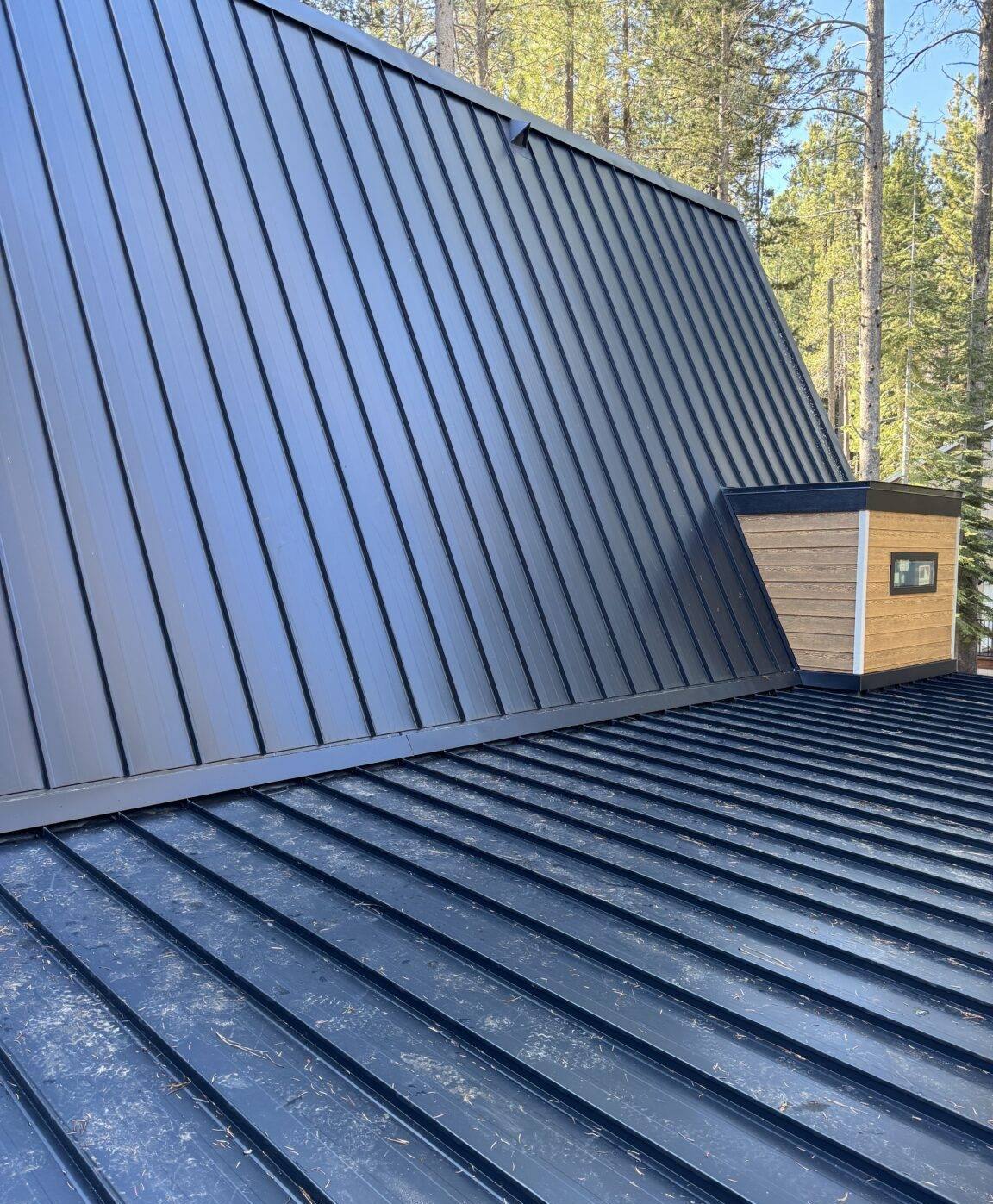
Standing seam panels use raised, interlocking seams with fasteners hidden underneath — nothing punches through the exposed face of the panel. That matters a lot in a salt-air environment, because exposed fastener heads are usually the first thing to show corrosion, years before the panel field does. Standing seam also tends to handle wind-driven rain better, since there's no exposed screw hole for water to work into over time. It costs more up front but it's what we recommend for most full roof replacements in Ballard, especially on homes with any water exposure or wind funneling off the Sound.
Exposed Fastener (Corrugated/Ribbed) Panels
Exposed fastener panels are the more affordable metal option and work well for garages, additions, sheds, and some lower-slope sections. The trade-off is that the screws — usually neoprene-gasketed — are a maintenance item. Gaskets compress and age over time, and in a marine climate that cycle happens faster. It's a legitimate choice for the right application, but we're upfront that it comes with a re-inspection and occasional re-fastening obligation that standing seam doesn't.
| Panel Type | Fasteners | Typical Lifespan | Best Use |
|---|---|---|---|
| Standing Seam | Concealed | 40–60 years | Full roofs, higher wind/rain exposure, long-term ownership |
| Exposed Fastener Panel | Exposed, gasketed | 25–40 years | Garages, additions, budget-driven projects |
| Standing Seam Copper | Concealed | 60+ years | Accent roofs, dormers, statement sections |
Material and Finish: The Coating Matters as Much as the Metal
Steel, aluminum, and copper all show up in Seattle-area metal roofing, and each behaves differently near salt air. Galvanized or Galvalume steel is common and durable, but it depends entirely on an intact protective coating — any scratch or cut edge that exposes bare steel becomes a corrosion starting point faster near the water than it would inland. Aluminum doesn't rust, and it's a strong option for homes closer to Salmon Bay or the Sound, though it can develop surface oxidation over time if the finish is low quality. Copper is the most corrosion-resistant of the three and ages into a natural patina, but it's a premium material typically reserved for accent roofs, bay windows, or dormers rather than a full roof, given the cost.
The paint finish matters more than most homeowners expect. A PVDF finish (often sold under the name Kynar 500) holds color and resists chalking and fading far longer than a lower-grade SMP finish, especially under the UV exposure that comes with Seattle's bright summer stretch between rainy seasons. We also pay attention to fastener metallurgy — mixing incompatible metals (say, a plain steel screw against an aluminum panel) sets up galvanic corrosion that can eat through a fastener from the inside years before the roof surface shows any wear. It's a detail that's invisible on install day and expensive to ignore.
The Installation Details That Decide Whether It Lasts 15 Years or 45
Most metal roof failures we get called out to inspect trace back to a handful of installation shortcuts, not the panels themselves. These are the details we treat as non-negotiable on every job:
- Ice-and-water membrane at eaves, valleys, and penetrations — the spots where wind-driven rain is most likely to find a way under the panel
- Proper deck ventilation — so moisture doesn't get trapped between the roof deck and the underside of the metal
- Correct fastener spacing and torque — over-driven screws crush the gasket and stop sealing; under-driven ones back out over time
- Panel expansion allowance — metal expands and contracts with temperature swings, and panels need to be able to move slightly without buckling or tearing at fixed points
- Flashing detail at chimneys, skylights, and dormers — these transitions are where most leaks originate, on any roofing material
- Closure strips at ridges and hips — left out or done wrong, these become an open door for wind-driven rain and debris
None of these show up in a photo of a finished roof, which is exactly why they're worth asking about before work starts, not after.
Our Process, Start to Finish
- On-site assessment — we look at the existing roof, deck condition, ventilation, and any moss or water staining that points to underlying issues
- Tear-off vs. overlay decision — metal can sometimes go over an existing layer, but a compromised deck or heavy moss/rot means tear-off is the honest call
- Material and profile selection — matched to the roof's pitch, exposure, and your budget, walked through in plain terms
- Permitting — pulled through the City of Seattle before work begins
- Deck prep and underlayment — repairing any soft or water-damaged sheathing before anything goes down over it
- Panel installation — with attention to fastening, flashing, and closure details covered above
- Final walk-through — checking seams, flashing, and gutter integration before we call it done
What a Ballard Metal Roof Typically Costs
Pricing depends on more than square footage. The factors below move the number up or down more than most homeowners expect:
| Cost Factor | Why It Matters |
|---|---|
| Panel type | Standing seam costs more upfront than exposed-fastener panel, but needs less long-term maintenance |
| Material | Aluminum and copper run higher than coated steel; copper is a premium accent choice |
| Roof pitch and complexity | Steep pitches, multiple dormers, and valleys all add labor time and material cuts |
| Tear-off vs. overlay | Removing old shingle or shake and disposing of it adds cost but is often the right call over moss-damaged decking |
| Access | Narrow lots, tight setbacks, and limited staging area — common on older Ballard lots — can affect labor and equipment costs |
Rather than quote a number that doesn't reflect your actual roof, we walk it in person and give a written estimate broken down by these factors, so you can see exactly what's driving the cost.
Living With a Metal Roof Through Moss Season and Storm Season
A well-installed metal roof needs far less upkeep than shingle or shake, but "far less" isn't "none." A short seasonal routine keeps small issues from becoming roof-deck issues:
- Clear gutters before the fall rains start — Ballard's tree cover means leaf and needle buildup happens fast, and clogged gutters back water up under eave flashing
- Trim back overhanging branches where practical — less shade and debris on the roof surface means less moss pressure over time
- After major wind events, do a visual check (from the ground, or have us do it) for lifted flashing, loose fasteners, or debris caught in valleys
- Keep an eye on sealant and flashing around any roof penetrations — skylights, vents, chimneys — since these age faster than the panel field
- Avoid foot traffic on the roof unless it's necessary and done carefully; panel finishes can scuff and fastener seals can be disturbed
Why It Matters That We Already Work in Ballard
A lot of what makes a metal roof installation succeed or fail here isn't in a spec sheet — it's local knowledge. Knowing which older Ballard homes have deck framing that needs extra attention before a tear-off. Knowing how to stage material and equipment on the narrow lots and tight setbacks that are common in the neighborhood. Knowing the City of Seattle's permitting process well enough that it doesn't stall a project for weeks. And knowing, from having done it before, how a given roofline reads against the surrounding homes so the finished result looks like it belongs.
There's also a practical, unglamorous reason it matters: when a wind storm off the Sound lifts a piece of flashing or knocks a branch into a valley, a crew that's already working in the neighborhood can get to it faster than one dispatching from across the county. That's not a sales pitch — it's just what proximity buys you.
If you're weighing metal roofing for a home in Ballard, we're happy to come take a look, walk you through what your specific roof needs, and give you a straightforward, no-pressure estimate — no obligation, just an honest read on the job.