 Seattle Siding
 Capitol Hill's Climate Is Harder on Siding Than It Looks
Capitol Hill doesn't get hurricanes or hailstorms, and that lulls a lot of homeowners into thinking their siding has an easy job. It doesn't. What this neighborhood gets instead is worse in its own way: months of low-intensity driving rain that finds every gap, wind pushed inland off Puget Sound that carries a fine layer of salt air onto exterior walls, and long stretches of gray, damp weather that never really let a wall assembly dry out between storms. Add the shade from mature street trees and closely spaced houses, and you get a textbook environment for moss, algae, and slow-building moisture damage.
None of that is dramatic. It's cumulative. Siding on a Capitol Hill home isn't usually destroyed in one event — it's worn down year after year by moisture that never fully leaves, until paint fails, seams open up, or rot shows up somewhere a homeowner can't see until it's expensive. Installing siding correctly here means designing for that slow grind from day one, not just covering the walls with something that looks good on the day it goes up.
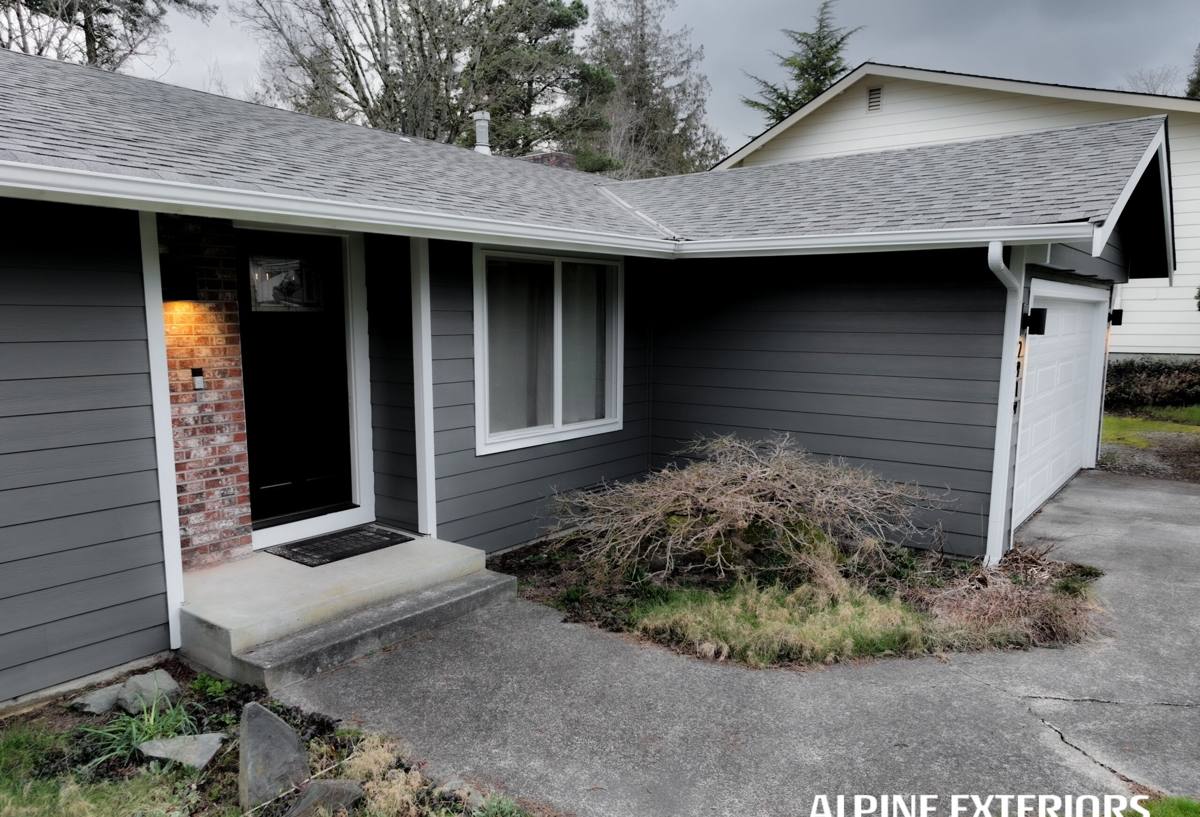
Why Capitol Hill's Housing Stock Adds Its Own Challenges
Capitol Hill is one of Seattle's older, denser neighborhoods, with a real mix of building types — early-1900s craftsman and foursquare homes, older multi-unit buildings, and newer infill construction, often sitting close together on narrow lots. That mix creates practical installation challenges that a suburban job doesn't have:
- Tight side-yard clearances that limit staging, scaffolding, and material access
- Older framing and sheathing that may need repair before new siding can go on correctly
- Existing siding layers or trim details that have to be assessed, not just covered over
- Shared walls, property lines, or setbacks that affect how work gets sequenced
- Established landscaping and trees that need protection during tear-off and install
A crew that mainly works new-construction subdivisions can be caught off guard by all of this. A crew that regularly works Capitol Hill plans around it before the first piece of old siding comes off.
Why We Only Install James Hardie Fiber Cement
We don't install vinyl, LP SmartSide, cedar, primed spruce, or other fiber cement brands. That's a deliberate standard, not a sales pitch, and it's worth explaining honestly.
Vinyl siding is affordable and low-maintenance in mild, dry climates, but it's a plastic product that expands and contracts with temperature swings, and in a wet climate like ours it doesn't handle trapped moisture behind the panel well — it can trap moisture rather than let a wall assembly dry, and prolonged damp conditions accelerate warping and fading. Wood siding, whether cedar or primed spruce, can look great, but it demands ongoing maintenance — recoating, caulking, and vigilance against rot — that a lot of homeowners underestimate until they're a few years in. LP SmartSide is an engineered wood product with real strengths, but it's still wood-based at its core, meaning it's more sensitive to sustained moisture exposure and edge damage than fiber cement, and it depends heavily on flawless field sealing to perform long-term.
James Hardie fiber cement is non-combustible, dimensionally stable, and specifically engineered in HZ (HardieZone) formulations for different climate demands — the Pacific Northwest falls into a zone Hardie engineers for damp, moderate conditions. The ColorPlus factory finish is baked on under controlled conditions rather than field-applied, which matters enormously in a region where weather rarely gives you a clean, dry stretch to paint. It comes with a strong transferable limited warranty. None of that makes James Hardie maintenance-free or install-proof — it still depends entirely on correct installation — but it gives us a product we're comfortable standing behind on King County homes for decades, not just for the first few winters.
What Correct Siding Installation Actually Involves
Siding failures in this region are rarely a materials problem. They're an installation problem — water finding a way behind the cladding through gaps, bad flashing, or fasteners driven wrong. Getting it right on a Capitol Hill home means paying attention to details that don't show up in a drive-by look at the finished wall:
Weather-Resistive Barrier and Flashing
A properly lapped weather-resistive barrier goes on before any siding, with flashing integrated at every window, door, deck ledger, and penetration so water is directed out and down, never behind the siding. This is the single most important layer of the whole assembly, and it's completely invisible once the job is done.
Clearances and Gaps
James Hardie specifies minimum clearances from grade, roof lines, decks, and other transitions, plus gaps at all butt joints and trim to allow for drying and to keep standing water from wicking into the board. Skipping these clearances is one of the most common shortcuts that shows up as damage years later.
Fastening
Correct fastener type, spacing, and placement keep panels secure without splitting the board or creating stress points where water can enter. Manufacturer-specified fastening also protects the warranty — installed wrong, that warranty can be compromised even though the product itself is sound.
Caulking and Joint Treatment
Joints and trim transitions need the right sealant, applied correctly, at the right stage of the install — not as a finishing afterthought to hide gaps. In a climate that stays damp for months, a bad caulk job is a slow leak waiting to happen.
Our Process for Capitol Hill Installations
The process is the same discipline on every job, adjusted for the site conditions Capitol Hill tends to hand us.
- On-site assessment — we look at existing siding, sheathing condition, moisture history, access constraints, and lot layout before quoting anything.
- Prep and protection — landscaping, walkways, and neighboring property lines get protected; old siding comes off carefully so we can inspect sheathing and framing underneath rather than guessing.
- Repair before cover — any rot, damaged sheathing, or compromised framing gets addressed before new material goes on. Covering a problem doesn't fix it.
- Barrier, flashing, and install — weather-resistive barrier, flashing, and James Hardie panels or planks go on to manufacturer spec, with clearances and fastening done correctly the first time.
- Final inspection and cleanup — we walk the finished job checking seams, caulking, and trim before we consider it done, and we clean the site thoroughly, including tight side yards that are easy to overlook.
Comparing Siding Options for a Capitol Hill Home
| Factor | James Hardie Fiber Cement | Vinyl | Wood / Cedar | LP SmartSide |
|---|---|---|---|---|
| Moisture resistance in a wet, marine climate | Strong when installed to spec | Can trap moisture behind panels | Vulnerable without diligent upkeep | Moderate; depends on sealed edges |
| Moss and algae resistance | Good with proper drainage details | Prone to surface growth in shaded, damp spots | Prone to growth without regular treatment | Similar exposure to wood-based products |
| Ongoing maintenance | Low; factory finish holds up well | Low, but limited repair options if damaged | High; recoating and caulking on a cycle | Moderate; needs consistent sealing |
| Fire performance | Non-combustible | Combustible plastic | Combustible | Combustible (engineered wood) |
| Typical lifespan when installed correctly | Multiple decades | Decades, with earlier fading/warping risk | Shorter without consistent maintenance | Shorter than fiber cement in sustained damp exposure |
What to Look for When Hiring a Siding Contractor
Capitol Hill's older housing stock and tight lots punish sloppy work faster than newer construction does. Before hiring anyone, it's worth checking:
- Do they carry manufacturer training or certification for the specific product they're installing?
- Will they put flashing, clearances, and fastening details in writing, not just "we'll handle it"?
- Do they inspect and address sheathing and framing condition before covering it, or just install over what's there?
- Can they explain how they'll protect tight side yards, neighboring fences, and landscaping during the job?
- Do they handle permitting, and are they upfront about what's required for your specific property?
- Is the manufacturer's warranty properly registered on your behalf after the job is done?
Answers to these questions tell you more about the outcome than a low bid ever will.
Why Local Experience on Capitol Hill Specifically Matters
General siding experience and Capitol Hill experience aren't the same thing. A crew that regularly works this neighborhood already knows how to stage a job on a narrow lot, what condition to expect from sheathing on homes of a certain age, how shade patterns from mature trees affect drying time and moss growth on different sides of a house, and how Seattle's permitting process applies to exterior work in this part of King County. That familiarity shows up in fewer surprises mid-project and a finished install that's built for the specific way weather behaves on this hill, not a generic install plan borrowed from a drier climate.
If you're weighing a siding replacement or new installation on a Capitol Hill home, we're happy to take a look and walk you through what your specific house needs — no pressure, no obligation. Use the form below to request a free estimate.