 Seattle Siding
 Why Ballard's Marine Climate Is Hard on a Deck
Ballard sits close to Puget Sound's salt water, and that changes what a deck has to survive compared with a yard further inland in King County. Salt-laden air corrodes exposed metal faster than dry inland air does, driving rain drives moisture into end grain and fastener holes, and the long stretch of gray, wet months each year gives moss, algae, and mildew plenty of time to take hold on any surface that doesn't drain and dry quickly. A deck built without those three things in mind will look tired within a few seasons, no matter how good it looked on installation day.
Salt Air and Metal Components
Every deck has metal in it somewhere — fasteners, joist hangers, post bases, railing brackets. In a marine climate, ungalvanized or lower-grade hardware corrodes faster, and corroding fasteners are one of the most common reasons a deck that's only a few years old starts to loosen, stain, or squeak. The fix isn't complicated, but it does mean choosing the right hardware up front rather than whatever is cheapest at the yard.
Driving Rain and Standing Water
Seattle's rain doesn't usually fall straight down — wind off the water pushes it sideways into ledger boards, fascia, and the gaps between deck boards. A deck that's pitched wrong, or that has no gap for water to escape through, holds moisture against the framing long after the rain stops. That trapped moisture is what rots wood, feeds mold, and eventually shows up as soft spots or sagging.
The Long Moss Season
From fall through spring, Ballard gets long stretches of damp, shaded, low-sun conditions — exactly what moss and algae need. On a deck, that shows up first as green or black film on boards that stay shaded or under tree cover, then as a slick, slippery surface that's a real fall hazard on stairs and landings. Composite decking resists this better than untreated wood, but it isn't moss-proof — it still needs airflow, drainage, and periodic cleaning to stay ahead of it.
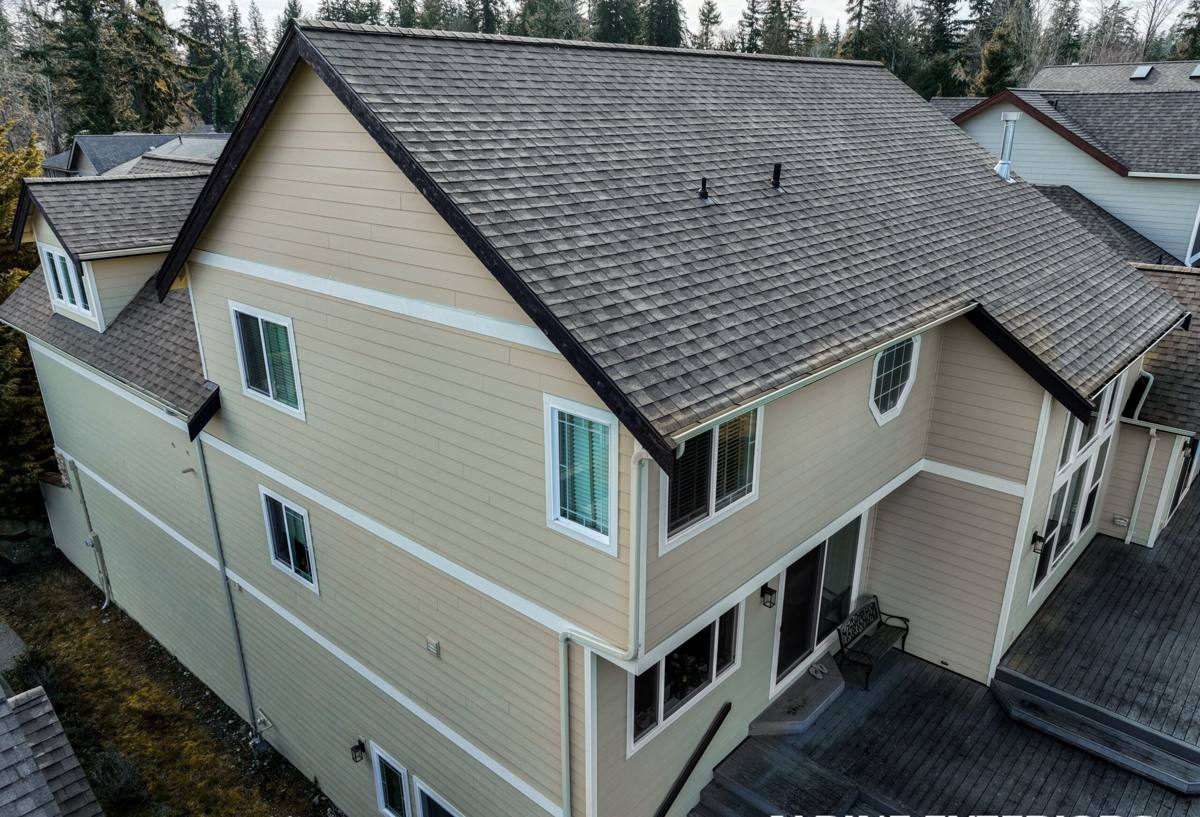
What a Deck in This Climate Actually Needs
Composite decking is the right call for a lot of Ballard homes specifically because it holds up to these conditions better than solid wood, but only if it's specified and installed correctly. That means:
- A capped composite board, so the moisture-resistant shell is on all four sides, not just the surface
- Stainless steel or coated hardware rated for coastal/marine exposure, not standard interior-grade fasteners
- A hidden fastener system that doesn't puncture the board's cap and create a water entry point
- Correct slope and gapping so water sheds off the deck surface instead of pooling
- Open airflow underneath the deck so the substructure can dry out between storms
Skip any one of these and you're not really getting what composite decking is supposed to deliver — you're getting a wood deck's problems with a composite price tag.
Comparing Decking Materials for a Ballard Property
Homeowners usually compare composite against pressure-treated wood, cedar, and PVC. Here's how they hold up against the specific conditions Ballard deals with:
| Material | Salt Air / Moisture | Moss & Mold Resistance | Ongoing Maintenance | Typical Lifespan |
|---|---|---|---|---|
| Pressure-treated wood | Absorbs moisture, prone to warping and splitting over time | Needs regular cleaning and re-sealing to resist growth | Annual staining/sealing recommended | 10-15 years with upkeep |
| Cedar | Naturally rot-resistant but still absorbs water at cuts and fastener holes | Moderate; greys and can host mildew without sealing | Periodic sealing, sanding, refinishing | 15-20 years with upkeep |
| Capped composite | Shell resists moisture absorption on all sides | Good; smooth cap sheds grime, doesn't feed mold like raw wood fiber | Periodic washing, no staining or sealing | 25-30 years, manufacturer-dependent |
| PVC | Fully synthetic, essentially impervious to moisture | Very good | Occasional washing | Long-lived, higher upfront cost |
Composite is the middle ground most Ballard homeowners land on: real wood look and feel, none of the yearly refinishing wood demands, and a lower upfront cost than full PVC systems.
What a Correct Composite Decking Installation Involves
Substructure First
The decking boards are the part everyone sees, but the framing underneath is what determines whether the deck lasts. That means checking existing ledger board attachment and flashing, joist spacing rated for the composite product being installed (composite often needs tighter joist spacing than wood), and confirming posts and footings are sound before a single new board goes down. On older Ballard homes, this step sometimes uncovers framing that was never properly flashed in the first place — better to find that now than after the new deck is finished.
Fastening and Board Layout
Hidden fastener clip systems keep the board surface clean and unpunctured, which matters for both looks and water resistance. Board layout should account for expansion gaps, since composite moves with temperature more than people expect, and end cuts should be capped or sealed per the manufacturer's spec so the cut edge isn't left exposed to standing moisture.
Drainage and Ventilation Underneath
A deck built tight to the ground with no airflow underneath will trap the moisture that Seattle's rain puts into the soil around it. Correct grading, gapping between boards, and in some cases a below-deck drainage system keep water moving away from the structure instead of sitting under it all winter.
Trim, Fascia, and Picture-Framing
Fascia boards and picture-frame trim finish the edges and hide the substructure, but they're also exposed to the most direct weather on the deck. These get the same capped-composite treatment and fastening standards as the field boards — cutting corners here is where a deck starts looking rough first, since edges take the brunt of driving rain.
Cost Factors for a Ballard Composite Deck
Composite decking costs more upfront than pressure-treated wood and less than full PVC systems, but the real range on any given project comes down to a handful of factors:
| Factor | Why It Moves the Price |
|---|---|
| Board tier (entry-level vs. premium capped) | Higher tiers carry longer warranties and better fade/stain resistance |
| Substructure condition | Rotted framing, old ledger flashing, or undersized footings need repair before decking goes down |
| Square footage and layout | Multi-level decks, angles, and picture-framing add labor beyond a simple rectangle |
| Railing system | Composite, cable, or metal railing all price differently and affect the overall look |
| Drainage and under-deck work | Below-deck drainage systems or added ventilation add cost but protect the investment |
| Permitting | Most new or rebuilt decks in Seattle require a permit, which adds a fixed cost and timeline |
We'll walk through which of these apply to your project during the estimate, so you're pricing an actual plan rather than a vague per-square-foot number.
Our Process, Start to Finish
- On-site visit to assess the existing structure (if any), grading, drainage, and sun/shade exposure
- Structural check of ledger attachment, framing, and footings against current code
- Material and layout selection based on your home, budget, and how the space will be used
- Permit submission and scheduling, handled on our end
- Demolition of the old deck (if replacing) and construction of the new substructure
- Composite board installation with hidden fasteners, correct gapping, and finished trim
- Final walkthrough to confirm railings, stairs, and finish details before we call it done
Keeping a Composite Deck Ahead of Seattle's Wet Season
Composite decking cuts the maintenance work way down compared to wood, but "low-maintenance" isn't "no-maintenance," especially with a moss season as long as this region's. Watch for these signs that a deck needs attention before small issues become structural ones:
- Green or black film building up faster than a normal seasonal wash removes it
- Standing water on the deck surface more than a few hours after rain stops
- Rust streaks around fastener heads or hardware
- Gaps opening up at the ledger board where the deck meets the house
- A musty smell coming from underneath the deck
- Boards that feel soft, spongy, or noticeably different underfoot in one spot
Any of these point to a substructure or drainage issue rather than a problem with the decking material itself — worth a look before it's ignored through another wet winter.
Why It Matters to Hire a Crew That Already Works in Ballard
Ballard has its own mix of older homes on original framing, newer infill construction, and lots with slope or drainage quirks tied to being close to the water. A crew that already works this neighborhood knows what Seattle's permitting process expects for deck rebuilds, has seen how the local grading and drainage patterns typically run, and isn't guessing about what marine air does to hardware over time. That kind of local track record also means fewer surprises once a project is underway — knowing, for example, that a lot near the water may need extra attention to drainage and footing depth before framing even starts, or that an older King County home may have connections and flashing details that don't match current code. The result is a deck that's actually built for the conditions it will sit in for the next two to three decades, not one built off a generic spec sheet.
If you're thinking about a new composite deck or replacing one that's not holding up in Ballard's weather, we're happy to come take a look. The estimate is free, there's no pressure, and you'll get a straight answer about what your project actually needs.