 Seattle Siding
 Why West Seattle Decks Wear Differently
West Seattle sits on a peninsula with water on more than one side, which means homes here get a steadier dose of salt-laden marine air than houses further inland in King County. Add Seattle's driving rain — the kind that comes in sideways off the Sound rather than straight down — and a moss season that can run from early fall through late spring, and you have a deck environment that's genuinely tougher than the regional average. None of this is dramatic on any given day. It's the accumulation that gets decks: hardware that corrodes a little faster, wood that never fully dries out between storms, and shaded corners where moss gets a permanent foothold. A deck built without those specifics in mind will still look fine for a year or two. The problems show up later, and they show up in the places you can't see until you go looking.
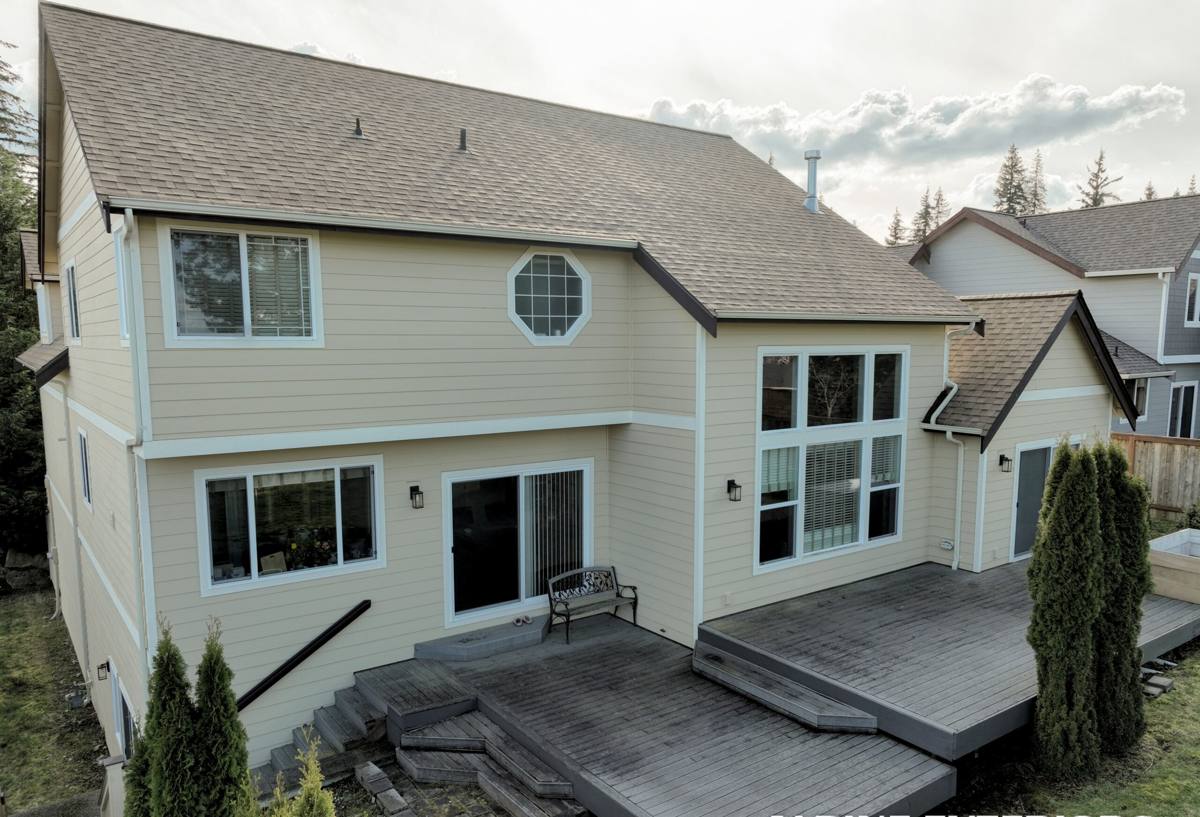
What Salt Air, Rain, and Moss Actually Do to a Deck
Salt Air and Metal Hardware
Airborne salt speeds up corrosion on anything metal — screws, joist hangers, post bases, hidden fastener clips. On decks with more direct exposure to wind off the water, cheap or mismatched hardware can start showing rust streaks down the decking within a couple of seasons. Once a fastener starts corroding, it's not just cosmetic; it loses holding strength over time, and a joist hanger that's rusted through is a structural problem, not a maintenance one.
Standing Water and Moss
Moss needs shade and moisture, and a lot of West Seattle yards have both for a good chunk of the year. On a deck, moss doesn't just look bad — it holds water against the surface of the board, makes footing slick, and works its way into seams and around fastener heads where it keeps that spot damp long after the rest of the deck has dried. Because the wet season here runs long, decks rarely get the extended dry stretch that would let moss die back on its own the way it might in a drier climate.
Wood Movement, Rot, and the Ledger Board
Framing lumber expands and contracts as it cycles between wet and dry, and that movement is more constant here than in climates with a real dry season. The single most common failure point on any deck is the ledger board — the piece that attaches the deck to the house. If the flashing behind it isn't done correctly, water gets behind the band board and starts rotting the framing from the inside. It's invisible until someone pulls a board or a deck starts to feel spongy near the house, and by then it's a structural repair, not a quick fix.
Choosing a Decking Material That Actually Holds Up Here
There's no single "right" decking material — it depends on budget, maintenance tolerance, and how exposed the deck is. What matters is picking with this climate in mind rather than going by what looks best in a showroom.
| Material | Moisture Resistance | Maintenance | Typical Feel Here |
|---|---|---|---|
| Pressure-treated wood | Good if detailed and sealed correctly | Needs periodic cleaning, moss treatment, and re-sealing | Lowest upfront cost, most hands-on upkeep |
| Cedar | Naturally decay-resistant but still needs upkeep | Regular cleaning and refinishing to hold its color | Good looks, moderate maintenance |
| Composite decking | Very good — doesn't absorb water the way wood does | Occasional washing; moss still needs attention on the surface | Higher upfront cost, low ongoing work |
| Capped/PVC composite | Best resistance to moisture and staining | Lowest maintenance of the group | Highest upfront cost |
Wood decks aren't a bad choice for West Seattle — they just need a homeowner who's willing to stay on top of cleaning and sealing, or a maintenance plan set up from the start. Composite and capped composite trade a higher material cost for a lot less of that ongoing work, which is why they've become the more common choice for decks that get heavier moss and rain exposure.
Framing and Structural Details That Matter More Here Than Elsewhere
Ledger Flashing
The flashing detail where the deck meets the house is where most long-term deck failures start. Done right, it sheds water away from the band board instead of letting it sit against it. This is one area where doing it "close enough" costs a homeowner far more later than doing it correctly the first time.
Fastener and Hardware Grade
Not all hardware is rated the same. Hot-dip galvanized and stainless steel fasteners and connectors both hold up substantially better in a marine climate than standard coated hardware, especially on treated lumber, which is chemically more corrosive to metal than untreated wood. On decks with more direct wind exposure, we lean toward the higher-grade option even where it's not strictly required.
Drainage and Slope
A deck surface should have a slight slope away from the house so water sheds instead of pooling. Framing below the deck also needs enough airflow to let joists dry out between rain events rather than staying damp — cramped, poorly ventilated framing is exactly where rot and moss both get started first.
How We Build a Deck for West Seattle Conditions
- Site assessment — we look at sun exposure, wind direction, drainage, and how sheltered or exposed the deck location actually is before recommending materials.
- Design and permitting — sizing, layout, and paperwork handled before any material is ordered.
- Ledger attachment and flashing — the connection to the house is built and flashed first, correctly, since everything else depends on it.
- Framing — joists, beams, and posts set with hardware graded for the exposure level of that specific deck.
- Decking installation — boards fastened and spaced to allow for drainage and seasonal movement, not just a tight, clean look on day one.
- Railings and stairs — built to code height and spacing requirements.
- Final walkthrough — we go over what the deck needs going forward, including anything specific to its sun and moisture exposure.
Permits, Guardrails, and Local Code Basics
Most decks attached to a house, or built above a certain height, require a permit in Seattle, and there are code requirements around guardrail height, baluster spacing, and stair geometry that apply regardless of which neighborhood you're in. We handle the permit process as part of the job rather than leaving it to the homeowner, and we build to the code requirements that apply at the time of construction rather than cutting corners to save a step. If you're unsure whether your project needs a permit, that's a fair question to ask before work starts, not after.
Keeping a West Seattle Deck Ahead of Moss Season
A deck built correctly still needs some seasonal attention — the difference is how much and how often. Here's a basic maintenance checklist for a deck in this climate:
- Clear leaves and debris off the deck surface and out of gaps between boards before the wet season sets in
- Treat moss with a cleaner appropriate to the decking material — pressure washing alone can damage wood fibers and won't stop regrowth
- Check the ledger flashing and any spots where the deck meets the house once a year for signs of water intrusion
- Inspect visible fasteners and hardware for rust or corrosion, especially on decks with more direct exposure to wind off the water
- Trim back overhanging branches to let in more sun and airflow, which is the single best thing you can do to slow moss regrowth
- Re-seal or refinish wood decking on a regular schedule rather than waiting until it visibly needs it
Cost Factors for a West Seattle Deck
Every deck is priced around its own specifics, but the same factors drive cost on nearly every project:
| Factor | How It Affects Cost |
|---|---|
| Size and shape | More square footage and multiple levels or angles add material and labor |
| Decking material | Pressure-treated wood costs less upfront; composite and capped composite cost more but less over time |
| Height and stairs | Taller decks and added stairs mean more framing, railing, and code requirements |
| Railing style | Cable, glass, and custom railing systems cost more than standard wood or metal baluster railing |
| Existing structure condition | Rot or flashing issues at the ledger found during the project add repair work before building can continue |
| Permitting | Permit fees and any required engineering review are part of the total for most attached decks |
Why a Crew That Already Works in West Seattle Matters
Exposure to wind and rain isn't uniform across Seattle, or even across West Seattle itself — a deck on higher ground with a clear line to the water sees different conditions than one tucked into a more sheltered, tree-covered lot a few blocks away. A crew that already builds in this specific area has a feel for which of those conditions apply to a given lot, which materials and hardware grades are worth the upgrade, and which corners genuinely can't be cut here even if they'd be fine somewhere drier. There's also the practical side: narrower streets, limited parking, and tighter lot access are common in parts of West Seattle, and a crew that's worked the area already knows how to plan material delivery and site logistics around that instead of figuring it out on the day of the job.
If you're planning a new deck or need an honest look at one that's already showing its age, we're happy to walk the site with you and give you a straight answer on what it needs. Reach out for a free, no-pressure estimate using the form below.