 Seattle Siding
 Beacon Hill's Roofs Take a Different Kind of Beating
Beacon Hill sits up on a ridge south of downtown Seattle, and that elevation is a mixed blessing for roofs. Homes up here catch more wind-driven rain than properties tucked into lower, more sheltered parts of King County, and on the western-facing slopes that open toward Puget Sound, the air carries a faint salt tinge that slowly works on exposed metal — flashing, fasteners, vent caps, gutter hangers. None of that is dramatic on its own. It's the accumulation over years that turns small, ignorable problems into active leaks.
The other constant here is moss. Seattle's wet season runs long, and Beacon Hill's mix of mature street trees and shaded rooflines means many homes never fully dry out between October and May. Moss doesn't just look bad — it holds moisture against roofing material, works its way under shingle tabs, and clogs the granule surface that's supposed to shed water. A roof repair that doesn't account for this cycle is a repair that fails again in a season or two.
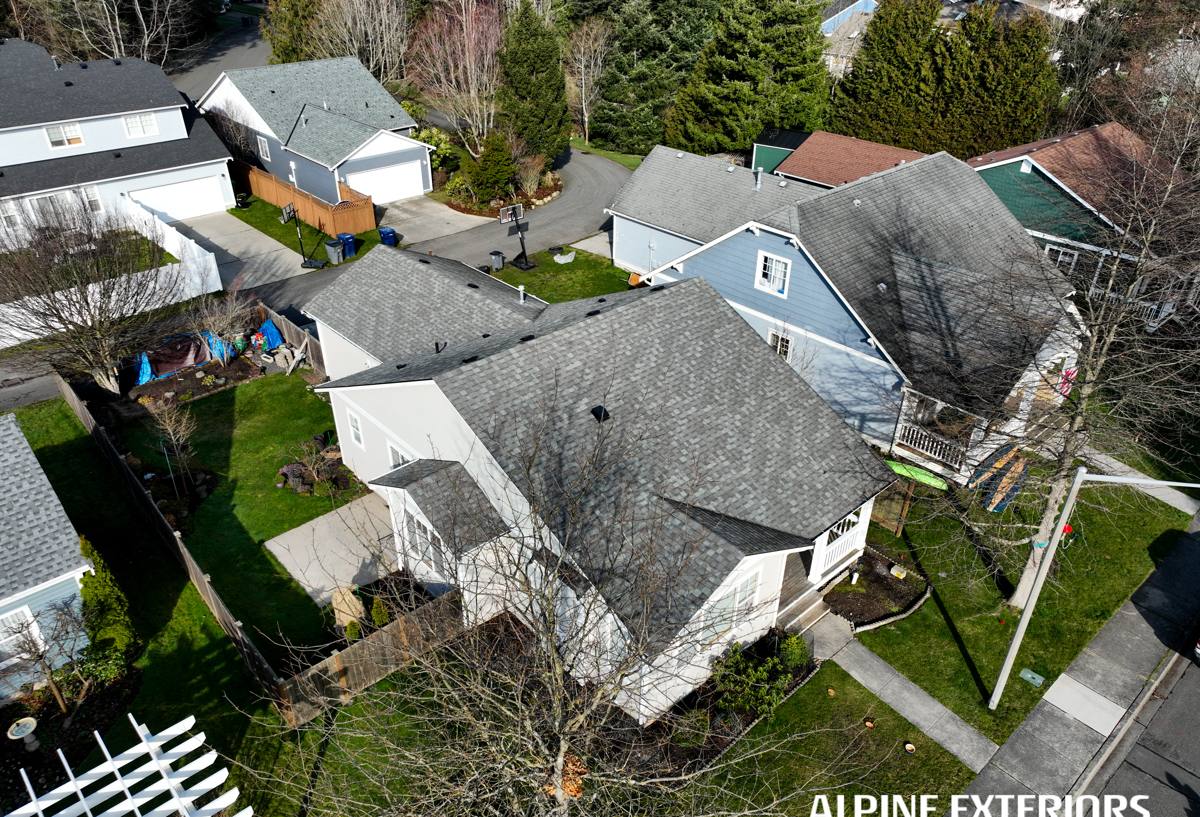
Signs Your Roof Needs Repair — Not a Full Replacement
Most of the roofs we look at in this neighborhood don't need a full tear-off. They need someone to correctly diagnose and fix the specific failure point. Here's what usually points to a repair rather than a replacement:
- A stain on an interior ceiling that appears only during hard rain, not a persistent drip
- A handful of cracked, curled, or missing shingles in one section, with the rest of the field still flat and granulated
- Rusted or lifted flashing around a chimney, skylight, or where a roof meets a wall
- Moss buildup concentrated on the north-facing slope or under tree cover, with the rest of the roof clean
- A soft or spongy feel in a small area when walked, rather than across the whole roof
- Gutters that overflow at the same spot every storm, suggesting a localized blockage or misaligned flashing rather than roof-wide failure
If several of these show up at once, or the roof covering itself is visibly worn across large sections rather than one spot, that's a different conversation — and an honest contractor will tell you that upfront instead of patching something that's past patching.
Moss, Runoff, and the Long Wet Season
Why moss matters more than it looks like it should
A light green film on a roof surface doesn't seem urgent, but moss holds water like a sponge against the roofing material for days after the rain has stopped. On asphalt shingles, that constant damp accelerates granule loss, which is what actually protects the shingle from UV and weather. On wood shake or shingle roofs — still common on some of the older homes up here — trapped moisture is worse, because it can lead to rot in the wood itself, not just surface wear.
Where the water actually goes wrong
Most of the leaks we trace back on Beacon Hill roofs aren't from the open field of the roof — they're from transitions: where a roof meets a chimney, where two roof planes intersect in a valley, around plumbing vents, and at the edges where gutters connect. Moss and debris tend to collect right at these transitions because that's where water naturally slows down and pools. A repair that only addresses the visible shingle damage and ignores the flashing underneath it is a repair that leaks again the next hard rain.
What a Correct Repair Actually Involves
Step 1: Find the real source
Water travels. A stain on a bedroom ceiling might trace back to a roof penetration ten feet away, not the spot directly above it. We start every repair with an actual roof-level inspection — not just a look from the ground — because guessing at the source is how homeowners end up paying for the same repair twice.
Step 2: Match materials, don't just cover the hole
A patch that doesn't match the existing shingle profile, color, or exposure will fail faster than the surrounding roof and often creates a new water path at its edges. We match shingle type, weight, and pattern as closely as the existing roof allows, and where an exact match isn't available, we place the repair where the difference will be least likely to create a new failure point.
Step 3: Flashing, underlayment, and airflow
Most lasting repairs involve more than shingles. Flashing that's rusted or was never properly stepped and counter-flashed at a wall or chimney needs to be replaced, not caulked over. Underlayment beneath the repaired area needs to actually shed water toward the roof edge, not trap it. And if a section is failing early because of poor attic ventilation — a real issue in older Seattle homes with minimal soffit or ridge venting — patching the roof without addressing airflow just delays the next repair.
Common Roof Types on Beacon Hill and What They Need
Beacon Hill's housing stock spans early-to-mid-century bungalows and craftsman homes alongside newer infill construction, so the roofing on any given block varies. Here's how repair needs typically differ by roof type:
| Roof Type | Typical Weak Point Locally | Repair Consideration |
|---|---|---|
| Composition (asphalt) shingle | Granule loss from prolonged moss/moisture contact | Matching shingle age and exposure; check underlayment condition beneath damaged area |
| Wood shake or shingle | Rot from trapped moisture under moss and debris | Individual shake replacement is workable if rot hasn't spread to the sheathing |
| Low-slope or flat sections (additions, porches) | Ponding water and membrane seam failure | Membrane repair or targeted patch rather than shingle-style patching |
| Metal roofing or accents | Fastener corrosion from moisture and coastal air exposure | Re-sealing and fastener replacement at penetration points |
Repair vs. Replace: The Honest Math
We'd rather talk you out of a replacement you don't need than sell you one. But there's a point where repeated repairs cost more over a few years than doing the job once. These are the factors that actually move that decision:
| Factor | Leans Toward Repair | Leans Toward Replacement |
|---|---|---|
| Age of roofing material | Well within expected service life | At or past typical lifespan for the material |
| Extent of damage | Isolated to one section or penetration | Spread across multiple slopes or the whole field |
| Underlying deck condition | Solid, dry sheathing under the damaged area | Soft, rotted, or delaminating sheathing found on inspection |
| Repair history | First or second repair in this area | Same spot has been patched multiple times already |
| Moss/moisture pattern | Localized to shaded or tree-covered sections | Widespread across the roof, indicating systemic moisture retention |
Our Process for a Beacon Hill Roof Repair
- Inspection and diagnosis — we get on the roof (weather permitting) and trace the actual source of the problem, not just the visible symptom.
- Written scope and estimate — you get a clear description of what's being repaired and why, with a straightforward price before any work starts.
- Repair execution — matched materials, proper flashing detail, and attention to the transitions where most leaks actually originate.
- Moss and debris clearing — where buildup contributed to the failure, we clear it from the repair area and surrounding roof so the fix isn't undermined immediately.
- Final check — we confirm the repair sheds water correctly and walk you through what we found and fixed.
Why a Crew That Already Works This Neighborhood Matters
Beacon Hill's streets are hilly, and access to some roofs — steep driveways, tight lot lines, mature trees close to the house — takes more planning than a flat suburban lot. A crew that's worked the area regularly knows how to stage equipment and set up safely without guesswork, and knows what King County's wet season does to different roof types over time, because we've seen the same failure patterns repeat on similar homes nearby. That familiarity shows up in faster, more accurate diagnosis and fewer surprises once we're actually on the roof.
It also matters for anything that touches permitting. Most straightforward repairs don't require one, but larger structural work does go through Seattle's permitting process, and knowing that process ahead of time avoids delays that an out-of-area crew might not anticipate.
Maintenance Between Repairs
A repair holds up longer with a little upkeep in between. This isn't about climbing on your own roof — most of it is ground-level or gutter-level attention:
- Keep gutters clear, especially after fall leaf drop, so water isn't backing up under roof edges
- Trim back tree limbs that overhang the roof to reduce shade, debris, and moss growth
- Watch for granules collecting in gutters or downspouts — a sign of accelerating shingle wear
- Check attic insulation and venting periodically; poor airflow shortens roof life from the inside out
- Have the roof looked at after any major windstorm, even if nothing looks obviously wrong from the ground
- Address small leaks immediately rather than waiting for a dry stretch — damage continues even when it's not raining
If you're seeing signs of a problem, or just want an honest read on where your roof actually stands, we're happy to take a look. Estimates are free, there's no pressure attached, and you'll get a straight answer about what your roof needs — use the form below to get started.