 Seattle Siding
 Composite Decking for Magnolia's Bluff-Top Homes
Magnolia sits above Puget Sound on a peninsula of bluffs and ridges, and a lot of the decks up here aren't just a place to grill — they're the reason the house has a view worth having. That also means those decks take a beating: salt-laden air off the Sound, wind-driven rain that gets pushed sideways instead of falling straight down, and a wet season that can stretch from October well into May. Composite decking has become the default choice for homeowners in this part of Seattle for good reason, but "composite" covers a wide range of products and installation quality, and the difference between a deck that looks good for five years and one that looks good for twenty-five comes down to details most homeowners never get shown.
This page is about one thing: composite decking, done right, for Magnolia specifically — not a generic decking overview. Here we're talking about what your deck actually has to survive up here, in King County's marine climate, and how we build for it.
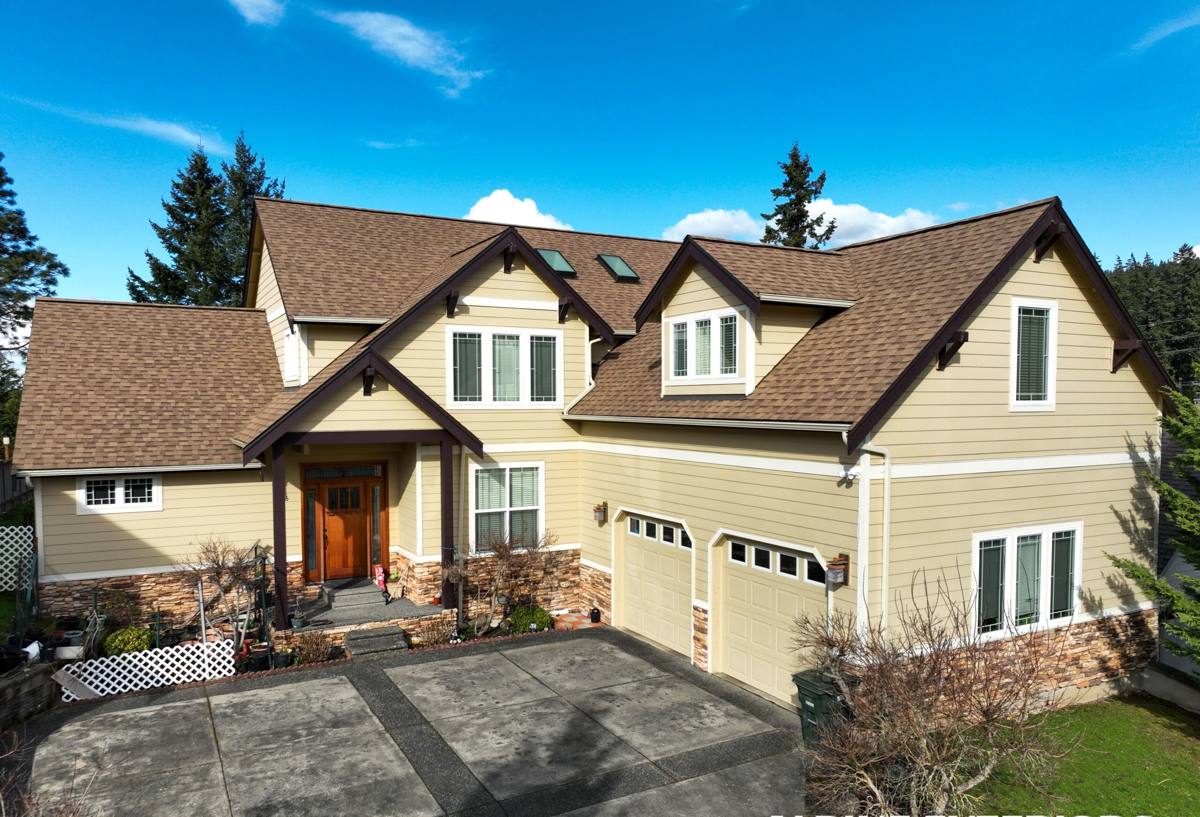
What Magnolia's Climate Actually Does to a Deck
Salt Air and Puget Sound Exposure
Homes closer to the bluff edge and the water get real salt exposure, carried in on wind off the Sound. Salt air accelerates corrosion on any exposed metal fasteners, hardware, and railing components, and it can dull or discolor lower-quality finishes over time. It's rarely dramatic — nobody's deck falls apart from salt air alone — but it's a steady, cumulative stress that separates decking and hardware built for coastal-adjacent exposure from decking that wasn't.
Driving Rain and Wind-Driven Moisture
Seattle rain is rarely a hard downpour, but it's frequent and often wind-driven, which means it gets pushed under railings, into ledger connections, and along the underside of deck boards in ways vertical rain wouldn't. Combined with the sheer number of wet days in a typical Magnolia winter, that means the structural wood underneath your decking — the framing, ledger board, and joists — spends months at a time damp, even when the surface boards themselves are fully weatherproof composite.
The Long Moss Season
Between the shade from Magnolia's mature tree canopy, the marine humidity, and the length of the wet season, moss and algae growth on any horizontal surface is close to guaranteed if it isn't accounted for. On composite decking this shows up as a green or black film in low-light corners and anywhere water tends to sit rather than drain — under furniture, along the house wall, in board grooves that don't shed water cleanly.
Why Composite Makes More Sense Than Wood on a View Deck
We install wood decking too, and it has its place. But for most Magnolia homeowners, especially on bluff-top or view lots where the deck gets heavy use and is highly visible from inside the house, composite is the more sensible long-term choice for a straightforward reason: it doesn't need to be sanded, stained, or sealed every couple of years to keep the wet season from getting into it. Modern capped composite boards have a polymer shell wrapped around a wood-fiber composite core, which means the core material that's actually vulnerable to moisture absorption and rot never gets directly exposed to Seattle's rain.
That doesn't mean composite is maintenance-free — nothing outdoors in this climate truly is — but the maintenance shifts from protecting the material from water damage to keeping the surface clean so moss and mildew don't get a foothold. That's a much easier, much less time-sensitive job, which matters if you're not going to be out there re-staining a deck every other spring.
What a Correct Composite Deck Installation Involves
The board itself is only part of the job. Most of the failures we get called out to fix on existing composite decks in Magnolia trace back to installation shortcuts underneath the boards, not the decking material itself.
Ledger Flashing and Wall Connection
Where the deck attaches to the house is the single highest-risk point for water intrusion on any Seattle deck. A correct ledger connection uses proper flashing that directs water out and away from the house sheathing, not just a ledger board bolted flat against siding. On older Magnolia homes — a lot of the housing stock here dates back several decades — this connection often needs to be rebuilt entirely during a deck replacement, not just matched to whatever was there before.
Joist Protection and Ventilation
Composite boards shed water off the top surface, but the framing underneath is still typically standard lumber, and it's under the deck, out of the sun, where wind-driven rain and condensation linger longest. We use joist tape over the top of joists and beams to keep fasteners from creating a moisture entry point, and we make sure there's enough clearance and airflow underneath the structure for wood framing to actually dry out between rain events instead of staying damp all winter.
Hidden Fasteners and Board Spacing
Hidden fastener clip systems give a cleaner look and avoid the screw-hole water traps that face-screwed boards can develop over time. Board spacing has to account for both composite's expansion and contraction with temperature swings and proper drainage — gaps that are too tight trap moisture and debris, while gaps that are too wide look sloppy and can catch a heel or a small kid's toes.
Footings and Structure on Sloped Lots
A fair number of Magnolia properties sit on grade changes — bluff-adjacent lots, walkout basements, sloped backyards leading down toward the water side of the peninsula. Elevated decks on sloped ground need footings sized and placed for the actual soil and grade conditions, not just a standard flat-lot layout, and taller structures typically need engineered railing and post connections to meet code for the extra height involved.
Choosing the Right Composite Board
Not every composite board is built the same way, and the differences matter more in a climate like ours than they would somewhere dry. The table below is a general guide to how the common tiers compare — actual brand and product availability changes, so we'll walk through current options during your estimate.
| Board Type | Moisture Behavior | Typical Maintenance | Best Fit |
|---|---|---|---|
| Capped composite | Polymer shell fully wraps the core, strong resistance to moisture absorption | Periodic washing to prevent moss/mildew film | Most Magnolia homes, especially shaded or view decks |
| Uncapped composite | Wood-fiber core exposed on cut edges and sometimes the underside, more prone to moisture uptake over time | More frequent cleaning, edge sealing on cuts | Budget-conscious projects with lower moisture exposure |
| Capped PVC (cellular) | No wood fiber content at all, essentially immune to rot and moisture absorption | Lowest maintenance, occasional washing | Ground-level, high-moisture, or heavy-shade areas |
| Pressure-treated wood | Absorbs and releases moisture constantly, needs a sealed finish to slow that cycle | Sanding, staining, and sealing every 2-3 years | Homeowners who prefer real wood and accept the upkeep |
For most of the composite decking we install in Magnolia, we lean toward capped composite or capped PVC boards specifically because they hold up to the moss-and-moisture cycle with the least intervention from you. Color choice matters too — darker boards run warmer in direct summer sun and show pollen and dust differently than lighter tones, which is worth factoring in on decks that get afternoon sun off the water.
Our Process for a Magnolia Composite Deck
The work follows the same order on nearly every job, adjusted for your specific lot and structure:
- On-site assessment — we look at the existing deck or ground conditions, note grade changes and drainage patterns, check how the structure ties into the house, and measure for the new deck footprint.
- Permitting — most deck replacement and new-build projects in Seattle require a permit through the city's building department, and homes on steeper Magnolia lots may need additional engineering review for footings and railings. We handle this as part of the project.
- Tear-out — removal of the old decking and, where needed, damaged framing, with a check of the ledger connection and any hidden moisture damage before we close it back up.
- Structural work — flashing, joist tape, footing and post work, and any framing repairs, all completed before a single composite board goes down.
- Decking installation — hidden-fastener composite board installation with proper spacing, followed by railing, stair, and any lighting or accessory work.
- Final walkthrough — we go over the finished deck with you, including what routine care it actually needs given where it sits on your property.
Living With Composite Decking in a Wet Climate
Composite decking cuts down on maintenance dramatically compared to wood, but low maintenance isn't no maintenance, especially through a Magnolia winter. A short seasonal routine keeps moss and mildew from getting established and keeps the deck looking like a composite deck instead of a mossy one:
- Sweep leaves and debris off the surface regularly through fall — trapped organic matter is what moss and mildew actually feed on
- Wash the deck surface at least once or twice a year with a soft-bristle brush and a composite-safe cleaner, more often in shaded areas
- Keep gutters and downspouts near the deck clear so runoff isn't dumping extra water onto the decking or framing below
- Check that furniture and planters aren't sitting in one spot long enough to trap moisture underneath
- Rinse salt residue off railings and hardware periodically if your deck faces the Sound or gets direct wind exposure
- Do a quick check of railing and stair connections once a year — hardware ages faster than the boards do
Why Hiring a Crew That Already Works in Magnolia Matters
Magnolia isn't a flat, uniform neighborhood to build in. Narrow, winding streets, steep driveways near the bluff, mature trees close to structures, and older homes with framing and grading that don't always match what's on file — a crew that's worked this specific area knows what to expect before we even get a permit pulled. We know how to plan material staging and site access around Magnolia's tighter streets, how to read grade on a bluff-adjacent lot, and what the ledger connection on a house from this era is likely to look like once we open it up.
That local familiarity translates into fewer surprises mid-project, a more accurate estimate up front, and a deck built with this specific climate — not a generic weather pattern — in mind. We're a Seattle crew working King County properties, and Magnolia is part of our regular route, not a special trip out.
Get a Free Estimate for Your Magnolia Deck
If you're weighing a new composite deck or replacing an aging one, we'll come take a look, walk the site with you, and give you a straightforward, no-pressure estimate — including which board tier makes sense for your specific spot on the property. Use the form below to get started.