 Seattle Siding
 Why Custom Windows Are Different in Fremont's Climate
Fremont sits close to the water, and that proximity shapes everything about how windows perform there. Homes along the Lake Washington Ship Canal and the streets rising away from it deal with a steady mix of salt-tinged air, wind-driven rain off the Sound, and the long gray stretch of fall through spring when moss and mildew get a foothold on anything that stays damp too long. A window that would hold up fine in a drier inland climate can start failing in Fremont within a few years if it wasn't specified or installed with this environment in mind.
"Custom windows" doesn't just mean an odd-sized opening or a special shape, though that's part of it. In a neighborhood with a lot of older housing stock, it usually means matching a replacement to a wall assembly, siding profile, and trim detail that isn't standard-issue anymore — and doing it in a way that keeps water out for the next few decades, not just the first winter.
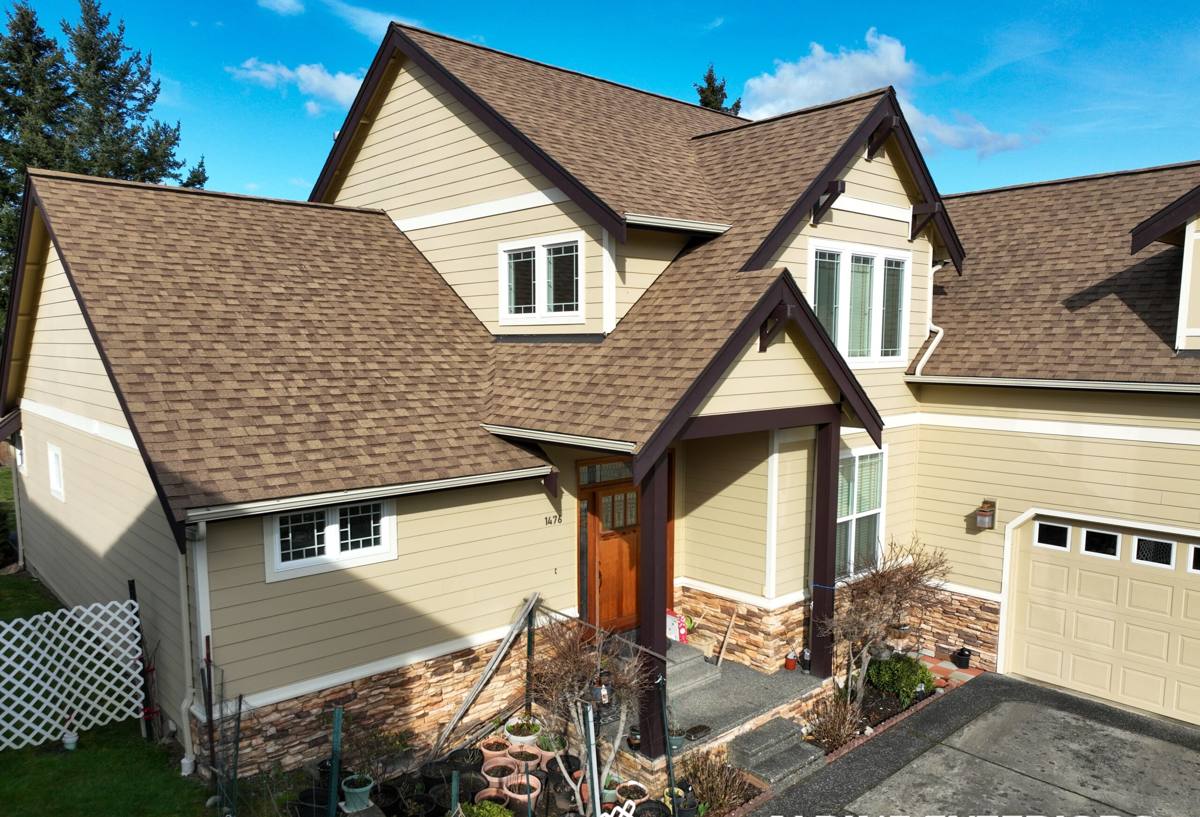
What Salt Air, Driving Rain, and Moss Season Do to Windows Over Time
Three things wear on windows here more than in most parts of the country, and they compound each other:
- Salt air corrosion — even a few miles from Puget Sound, airborne salt accelerates corrosion on unprotected metal hardware, fasteners, and lower-grade aluminum frames. Locks, hinges, and cranks are usually the first thing to show it.
- Driving rain — Seattle's rain is rarely a hard downpour; it's more often weeks of wind-blown drizzle that finds its way sideways into any gap in flashing or sealant. This is a slow-leak climate, not a flash-flood one, which means water damage often builds quietly behind the wall before it's visible inside.
- Moss season — the long stretch of cool, wet, low-sun months lets moss, algae, and mildew colonize anything that stays damp, including window sills, sashes, and the wood trim around older window openings. Once organic growth takes hold on wood trim, it holds moisture against the surface and speeds up rot.
None of these are dramatic on their own. The problem is they're constant, year after year, and a window that's marginal on day one rarely gets better with age in King County.
Fremont's Housing Stock and What It Means for Window Work
Fremont has a mix of early-1900s bungalows and craftsman-style homes alongside newer infill construction, townhomes, and remodeled multi-unit buildings. That mix matters for window work:
Older homes
Original window openings in older Fremont homes are frequently non-standard sizes, with wood trim, casing, and siding details that don't match anything off a shelf. Replacing a window here often means either custom-sizing the new unit to the existing opening or carefully modifying the opening — both of which require more precision than a straightforward swap.
Newer and remodeled homes
Newer construction and additions tend to have more standardized rough openings, but often use modern siding systems (fiber cement, engineered wood panels) where the window's flashing and integration details are more code-specific and less forgiving of shortcuts.
In both cases, the window itself is only half the job. How it ties into the existing wall, siding, and trim is what determines whether it actually keeps water out.
What a Correct Custom Window Installation Actually Involves
A window install that looks fine on install day and one that's still watertight in ten years often use the same window — the difference is in the details most homeowners never see.
Flashing and Water Management
Every opening needs a proper drainage plane: sill pan flashing to catch and direct any water that gets past the window, head flashing to shed water away from the top of the unit, and side flashing that integrates with the building's weather-resistive barrier — not just caulk smeared around the edges. In a climate with this much sustained wet weather, sealant alone is a maintenance item, not a water management strategy.
Integration With Your Siding
The window and the siding around it have to work as one system. That means correct reveal and setback, trim that sheds water instead of trapping it, and attention to how the new window's flange or nailing fin ties into whatever siding is already there — lap siding, shingle, fiber cement, or stucco. This is where a lot of window-only companies fall short, because they're focused on the unit and not the wall it sits in.
Fit and Sealing at the Frame
Custom-sized units need to be shimmed, leveled, and insulated correctly around the full perimeter — gaps that are too tight or too loose both cause problems, from operational issues to air and water infiltration.
Choosing Window Materials for This Climate
There's no single "best" window material — the right choice depends on the home, the budget, and how much upkeep the owner wants to take on. Here's how the common options hold up specifically against Fremont's salt air, rain, and moss conditions:
| Material | How It Handles This Climate | Maintenance | Typical Trade-Off |
|---|---|---|---|
| Vinyl | Good moisture and corrosion resistance; won't rot or rust | Low — occasional cleaning | Fewer custom color/profile options for period-style homes |
| Fiberglass | Excellent — dimensionally stable in temperature swings, resists moisture and salt exposure well | Low | Higher upfront cost than vinyl |
| Wood (clad exterior) | Good if the exterior cladding is intact; the wood interior gives a period-appropriate look older Fremont homes often call for | Moderate — exterior clad face needs monitoring at joints and sills | Any breach in the cladding lets moisture reach the wood core, which is a real risk in a wet climate |
| Aluminum | Prone to corrosion from salt air unless well-finished; conducts cold | Moderate to high in this environment | We use it selectively and only with corrosion-rated hardware and finishes |
For most Fremont homes, we lean toward vinyl or fiberglass for straightforward replacements, and wood-clad when a homeowner wants to preserve a craftsman or bungalow's original character. We're selective about aluminum here specifically because of the salt-air corrosion issue — it's not that aluminum windows can't work, it's that they need a higher-grade finish and hardware spec to hold up long-term this close to the water, and we won't cut that corner just to hit a lower price point.
Our Process, From Estimate to Cleanup
- On-site assessment — we look at the existing opening, siding condition, and any signs of past water intrusion before recommending anything.
- Measuring and specifying — for custom sizes or shapes, we take precise field measurements rather than working off original plans, since older openings often shift slightly over decades.
- Material and style selection — matched to the home's era, your budget, and how much long-term maintenance you want to take on.
- Careful removal — old units and trim are removed without damaging surrounding siding or framing, and we check the opening for hidden rot or moisture damage before anything new goes in.
- Flashing and installation — sill pan, flashing, and air/water sealing done to current best practice, not just what happens to be fastest.
- Siding and trim integration — new trim and siding tie-in finished to match the surrounding wall.
- Walkthrough and cleanup — we go over the finished work with you and leave the site clean.
Why Local Experience in Fremont Specifically Matters
A window crew that regularly works this neighborhood already knows the kinds of openings and siding conditions they'll find before they show up. That translates into fewer surprises mid-project, more accurate estimates, and installation details chosen for this climate rather than generic best practice from a drier region. It also means we're not learning on your house how Seattle's rain patterns behave against a particular flashing detail or how a King County inspector wants a window opening documented — we already know.
Maintenance Checklist for Fremont Homeowners
- Check and clean weep holes at the bottom of window frames each fall, before the wet season sets in
- Clear moss and debris from sills and surrounding trim rather than letting it accumulate
- Inspect exterior caulk lines annually and re-seal any cracked or shrunken sections
- Watch for soft or discolored trim around window openings — an early sign of moisture getting behind the surface
- Lubricate hardware (locks, cranks, hinges) periodically to slow salt-air corrosion
- Keep gutters and downspouts clear so runoff isn't sheeting directly across window openings
Cost Factors to Expect
Every project is different, but these are the main things that move the price on a custom window job in Fremont:
| Factor | Why It Matters |
|---|---|
| Opening size and shape | Non-standard or custom-shaped openings cost more than stock sizes |
| Material choice | Vinyl is typically the most affordable; fiberglass and wood-clad cost more upfront |
| Condition of the existing opening | Hidden rot or water damage found during removal adds repair work before the new window goes in |
| Siding integration complexity | Matching new trim and flashing into existing siding takes more labor than a simple swap |
| Number of windows | Doing several openings at once usually costs less per window than one at a time |
Rather than quote a number without seeing the house, we'd rather walk the property, look at what's actually there, and give you a real range based on your specific windows and siding.
If you're weighing a custom window project in Fremont — whether it's one problem window or a full-house replacement — we're happy to come take a look and give you a straightforward, no-pressure estimate. Use the form below to get started.