 Seattle Siding
 Why Magnolia's Location Changes How Windows Should Be Installed
Magnolia sits on a bluff surrounded on three sides by water, which means homes here take a different kind of weather beating than houses a few miles inland in Seattle. Salt-laden air off Puget Sound works its way into window hardware, fasteners, and unprotected trim year-round. Add King County's long stretch of driving rain each fall and winter, plus a moss season that can run from October well into spring, and you have a combination that finds every weak point in a window opening. None of this means Magnolia homes need exotic products. It means the installation details that get skipped elsewhere — flashing sequence, sill drainage, air sealing — can't be skipped here.
Older homes in this neighborhood, whether original mid-century construction or additions built over the decades, often have window openings that were sealed with caulk alone and never flashed correctly to begin with. That approach can hold up for years in a drier climate. In a marine-exposed neighborhood, it tends to fail quietly behind the wall before anyone sees a stain on the interior sill.
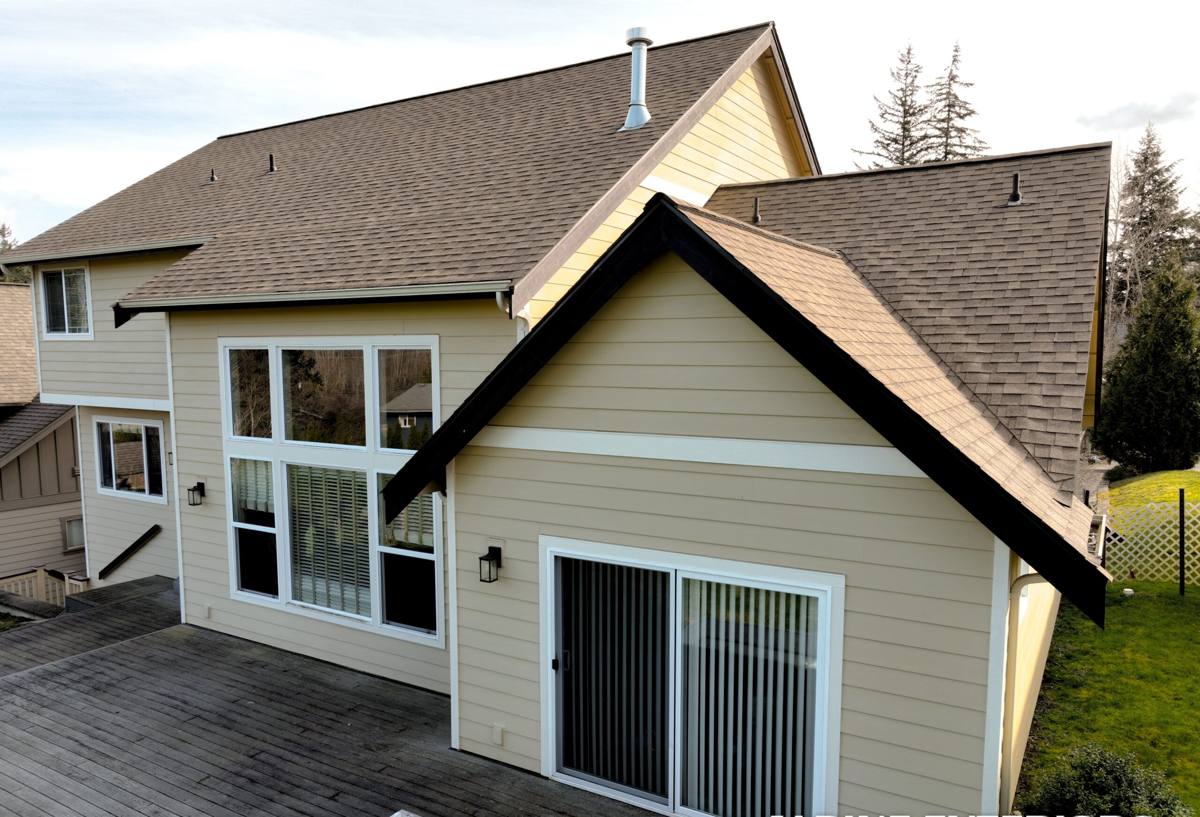
How Salt Air, Rain, and Moss Show Up as Window Problems
Homeowners usually notice window trouble long after it started. Some of the earliest and most common signs we see on Magnolia homes:
- Fogging or a permanent haze between double-pane glass — the seal has failed and moisture is inside the unit
- Corroded or stiff hardware (locks, cranks, hinges) from salt air exposure, even on windows that otherwise look fine
- Soft or discolored wood trim and sills, especially on the sides of the house that face open water or prevailing wind
- Visible moss or dark streaking on sills, brick mold, or the siding just below a window — a sign water is running down the wall rather than off it
- Drafts or a noticeable temperature drop near the window in winter, pointing to failed weatherstripping or gaps in the original installation
- Difficulty opening or closing sashes, which is often wood swelling from long-term moisture intrusion rather than just old paint
Any one of these can be a cosmetic annoyance. Several at once, especially paired with moss buildup right at the window head, usually means water has been getting behind the trim for a while.
What a Correct Window Installation Actually Involves
A window installation is not just fitting a new unit into an old hole. In a climate like this, the sequence matters as much as the product. Done right, the job includes:
Removing the old window without guessing what's behind it
Before anything new goes in, we pull the old unit and inspect the rough opening — sheathing, framing, and any existing flashing or house wrap. This is where hidden rot or past water damage from years of exposure to driving rain shows up, and it needs to be dealt with before a new window goes in, not covered over.
Sill pan flashing
The sill pan is the last line of defense if water ever gets past the window itself. It directs moisture back out rather than letting it pool at the bottom of the frame and soak into the wall assembly. This step is easy to skip and impossible to see once the wall is closed up, which is exactly why it matters.
Proper flashing integration with the wall
Flashing at the head, jambs, and sill needs to be layered correctly with the house wrap so water sheds outward at every point, shingle-style, from top to bottom. This is the single biggest factor in whether a window stays dry through a wet Seattle winter.
Air sealing and insulation
Gaps around the frame get sealed with the right materials — not just caulk squeezed in as an afterthought. Proper low-expansion foam or backer rod and sealant keeps conditioned air in and drafts, moisture, and even pests out.
Correct fastening and shimming
A window that isn't shimmed level and square will bind, leak at the corners, or stress the seals early. This is a common shortcut on rushed jobs and one of the first things we check when we're asked to look at someone else's recent installation.
Exterior trim and sealant finish
The visible sealant bead is the last step, not the main line of defense. If a contractor is relying on caulk alone to keep water out, the flashing underneath probably wasn't done right.
Choosing Window Materials for a Marine Climate
There's no single "best" window material for every home — it depends on exposure, budget, and how the house is built. Here's how the common options hold up specifically against salt air, rain, and moss:
| Material | Salt Air / Corrosion | Moisture Behavior | Maintenance |
|---|---|---|---|
| Vinyl | Handles it well — no metal hardware corrosion on the frame itself | Won't rot; seals and hardware are the main wear points | Low — occasional cleaning, no painting |
| Fiberglass | Very good — dimensionally stable, resists pitting | Excellent; expands/contracts close to glass, reducing seal stress | Low, though a higher upfront cost |
| Wood (unclad) | Poor without diligent upkeep — trim and sills are vulnerable | Needs consistent painting/sealing or moisture gets in | High — repainting and caulk checks needed regularly |
| Aluminum-clad wood | Good on the exterior face; interior wood still needs some care | Solid if the cladding and flashing are installed correctly | Moderate |
We don't push one brand or material as a blanket answer. What we do insist on is matching the product to how exposed the specific wall is — a window on the side of the house that takes the brunt of the wind and rain off the water deserves a different conversation than one tucked under an eave on a sheltered wall.
Our Process for a Magnolia Window Installation
- On-site assessment — We look at each opening individually, not just the whole house as one line item. Sun exposure, wind direction, and existing water damage all factor into the recommendation.
- Honest product recommendation — We'll tell you where a mid-range vinyl window is perfectly adequate and where it's worth spending more, rather than upselling across the board.
- Scheduling around Seattle's wet season — Openings are only exposed for the time it takes to swap the unit; we don't leave a house open to the weather overnight.
- Removal and rough opening inspection — Any rot or prior water intrusion is flagged and addressed before the new window goes in, with photos so you can see exactly what was found.
- Correct flashing, sealing, and insulation — Done in the sequence described above, every time, not just on jobs where it's convenient.
- Final inspection and walkthrough — We check operation, seals, and exterior finish work with you before we call the job done.
What Affects the Cost of Window Installation Here
| Factor | Why It Matters in Magnolia |
|---|---|
| Window material and glass package | Higher-performance glass and frames cost more upfront but reduce long-term maintenance from salt air and moisture exposure |
| Condition of the existing rough opening | Hidden rot from years of driving rain often isn't visible until the old window is removed |
| Number and size of openings | Larger view windows facing open water may need different structural or flashing treatment than standard bedroom windows |
| Access and exposure of the wall | Upper-story or steeply exposed openings can add labor and safety equipment costs |
| Trim and exterior finish work | Matching existing trim or upgrading to a more weather-resistant material adds to the scope |
Every home is different, and giving a number without seeing the openings would be a guess. What we can say honestly is that the biggest cost swings usually come from what's discovered behind the old window, not from the window itself.
Why a Crew That Already Works in Magnolia Makes a Difference
A contractor who's worked on the peninsula's homes knows which walls tend to take the worst of the weather, what kind of framing and trim details show up in the neighborhood's housing stock, and where moss and moisture problems typically start. That's not a substitute for inspecting your specific windows, but it means less guesswork and fewer surprises once an opening is exposed. It also means we're not learning King County's flashing and code requirements on your project — we already build to them as standard practice on every job in Seattle and the surrounding area.
Simple Upkeep That Extends the Life of New Windows
- Rinse salt residue off frames and glass a few times a year, especially on sides of the house facing open water
- Keep moss and debris cleared from sills and tracks before it holds moisture against the frame
- Check exterior caulk lines each fall before the rainy season sets in, and have any cracked sealant redone
- Lubricate hardware (locks, cranks, hinges) periodically to head off salt-air stiffness and corrosion
- Make sure gutters and downspouts near window walls are clear so runoff isn't sheeting directly across the glass and trim
None of this is difficult, but skipping it is how a well-installed window ends up looking neglected years before it should.
If you're dealing with fogged glass, drafts, stuck sashes, or just want a straight answer on whether your current windows are holding up the way they should, we're happy to take a look. The estimate is free, there's no pressure to move forward, and you'll get a clear explanation of what we find — just fill out the form below to get started.