 Seattle Siding
 Queen Anne's Climate Is Harder on Siding Than It Looks
Queen Anne sits on one of the highest points in Seattle, and that elevation cuts both ways. The views are part of what makes the neighborhood desirable, but that same hilltop exposure means wind-driven rain hits these homes at angles that flatter neighborhoods rarely see. Add the marine air moving in off Puget Sound and Elliott Bay, and you've got a steady supply of salt-laden moisture working on every exterior surface, year-round, not just during storms.
Then there's the Pacific Northwest's real siding killer: moss season. King County's long, wet, mild winters create months of ideal conditions for moss and algae to colonize any siding material that holds moisture at the surface or in its substrate. On tree-shaded lots — common throughout Queen Anne's older residential blocks — that shaded dampness can linger for days after a storm passes. Siding that isn't built to shed water fast and dry out completely becomes a long-term host for growth, staining, and eventually rot underneath the finish.
This is the environment any siding product has to perform in, not just survive one bad winter, but decades of freeze-thaw cycles, wind-driven rain, and shade-trapped moisture. It's why the material choice and the installation details matter more here than in a drier climate.
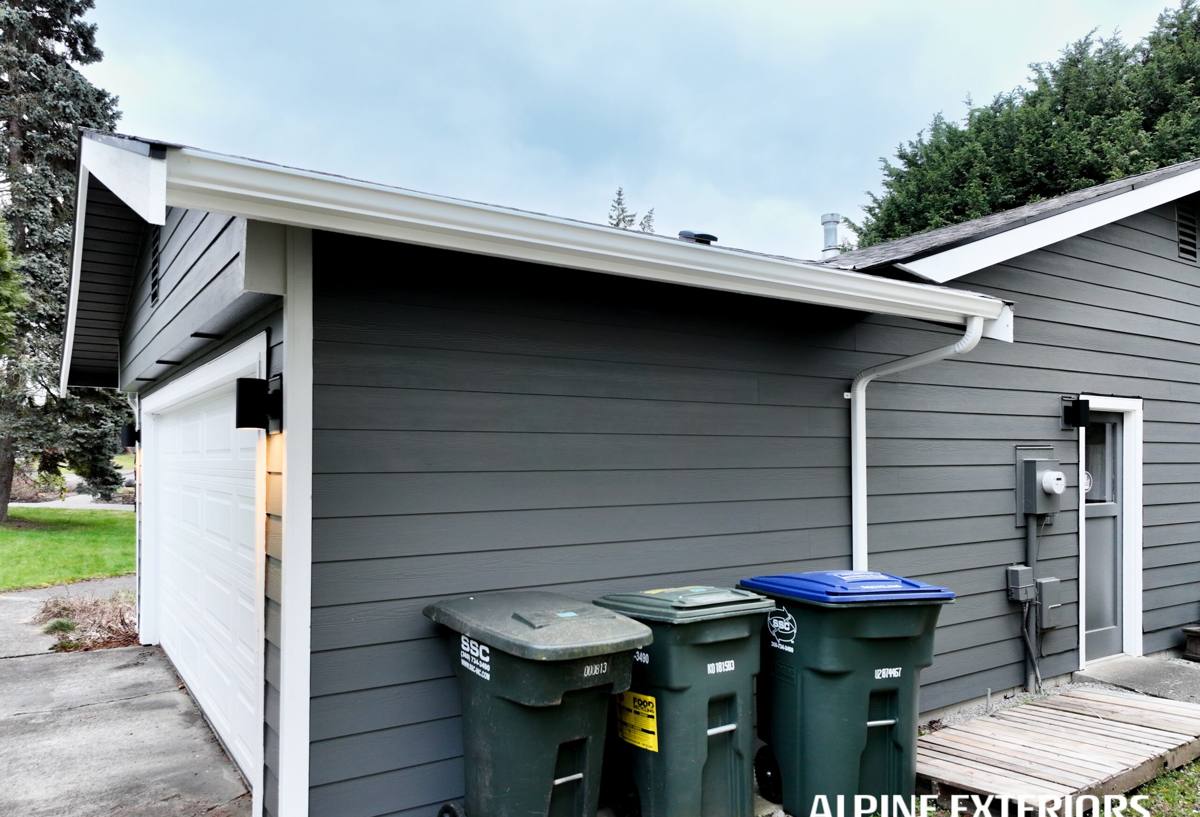
Why We Install Only James Hardie Fiber Cement
We standardized on James Hardie fiber cement siding for every job we do, including here in Queen Anne, and we don't install vinyl, LP SmartSide, cedar, primed spruce, or other fiber cement brands. That's a deliberate professional standard, not a sales pitch, and it comes down to how these materials actually behave in a wet, salt-exposed, moss-prone climate over the long run.
Fiber cement is a mix of Portland cement, sand, and cellulose fibers, cured into a dense, stable board. It doesn't absorb water the way wood does, it doesn't soften or warp in sustained damp conditions, and it's non-combustible. James Hardie also engineers its boards by climate zone — homes in our region use the HZ5 product line, formulated for the freeze-thaw and moisture patterns of the northern, wetter parts of the country, rather than a one-size-fits-all board.
The factory-applied ColorPlus finish is the other piece of the equation. It's baked on under controlled conditions with UV-cured coating layers, which gives it better fade and moisture resistance than a field-applied paint job, and it comes with its own finish warranty separate from the product warranty. In a neighborhood exposed to constant salt air and long wet seasons, a finish that's engineered to hold up matters more than it does in a milder climate.
What This Means Compared to the Alternatives
| Material | How it handles PNW moisture/salt air | Long-term maintenance burden |
|---|---|---|
| James Hardie fiber cement | Dense, moisture-stable board; factory finish resists fading and moss staining | Occasional wash-down; repaint cycle only if ever needed, typically well beyond 15 years |
| Vinyl siding | Doesn't rot, but flexes/warps in temperature swings and can crack in impact; seams can let moisture behind the panel | Low, but limited repair options once damaged or faded |
| Cedar / wood | Absorbs moisture readily; shaded, damp Queen Anne lots accelerate rot and moss colonization | Frequent refinishing, caulking, and moss/mildew treatment |
| LP SmartSide (engineered wood) | Treated wood strand product; performs well when detailing is perfect, but any breach lets moisture into the wood core | Moderate; edge sealing and caulk maintenance is not optional |
| Other fiber cement brands | Similar base material chemistry to Hardie, but climate-zone engineering, finish warranty, and factory QC vary by manufacturer | Varies by brand and finish system |
What a Correct Installation Involves on a Queen Anne Home
The board itself is only part of the system. Most siding failures we get called to inspect trace back to installation shortcuts, not the material. On a wind-exposed, rain-heavy hilltop neighborhood, the details below aren't optional extras — they're what determines whether the siding performs for its full service life.
Water Management Behind the Siding
- A continuous weather-resistive barrier installed over sound sheathing, lapped correctly so water is shed downward and outward at every seam
- A rainscreen air gap where conditions call for it, so any moisture that does get past the cladding can drain and the wall assembly can dry rather than trap water against the sheathing
- Properly flashed and kicked-out window and door openings, so wind-driven rain off the Sound doesn't track behind trim and into the wall cavity
- Correct fastener type, spacing, and penetration depth — Hardie publishes specific fastening schedules by exposure and this is one of the most commonly skipped details on rushed jobs
- Proper clearance at grade, decks, and roof lines so the bottom edge of the siding never sits in standing water or snow-melt runoff
Matching Existing Homes
Queen Anne's housing stock spans a wide range of eras, from early-1900s craftsman and foursquare homes to mid-century builds and newer infill construction, often on narrow or sloped lots. On a partial re-side, addition, or repair, matching board profile, exposure width, and trim detail to the existing home matters both for appearance and for keeping water management consistent across old and new sections. We take that into account during the estimate, not after materials are already on order.
Our Process, Start to Finish
- On-site assessment. We walk the exterior, check existing siding and trim condition, look at sheathing access points where possible, and note wind exposure, drainage patterns, and shade/moss areas specific to the lot.
- Scope and estimate. We give a clear, itemized estimate covering tear-off, any sheathing repair, house wrap, trim, and the specific Hardie product line and profile for the job — no vague allowances.
- Tear-off and inspection. Old siding comes off and we inspect the sheathing underneath for rot or hidden moisture damage before anything new goes up. This is often where a moss or moisture problem that's been building for years finally gets found and fixed at the source.
- Weather barrier and drainage plane. House wrap or building paper goes on correctly lapped, with a rainscreen gap where the wall assembly calls for it.
- Siding installation. Hardie boards are cut, fastened, and flashed to manufacturer spec, with attention to fastener schedule for our wind exposure.
- Trim, caulking, and finish check. Trim and joints are sealed with a compatible sealant, and we check the ColorPlus finish for any touch-up needs at seams and cuts.
- Site cleanup and walkthrough. We clear debris and walk the finished job with the homeowner before calling it done.
Why a Crew That Already Works Queen Anne Matters
Queen Anne has real logistical quirks that a crew unfamiliar with the neighborhood will underestimate. Many lots are steep, narrow, or have limited street parking, which affects staging, scaffolding, and material delivery. A lot of the housing stock predates 1978, which means lead-safe work practices during tear-off aren't optional where old paint is present. Homes with view-oriented upper stories often need taller scaffolding or lift access than a single-story ranch would. And Seattle's permitting through the Department of Construction and Inspections, along with any applicable design or historic guidelines in older parts of the neighborhood, needs to be handled correctly before work starts, not worked around after the fact.
A crew that's done this work in the neighborhood before knows to plan for these things at the estimate stage, not discover them mid-project. That's the difference between a siding job that stays on schedule and one that stalls over a permit or access issue that should have been caught up front.
What Queen Anne Homeowners Should Budget For
| Cost factor | Why it varies here |
|---|---|
| Home size and complexity | Multi-story homes and homes with dormers, bays, or varied rooflines take more cuts, trim, and labor time |
| Access and staging | Steep or narrow lots, limited parking, and view-side scaffolding needs add labor time beyond flat, easy-access sites |
| Sheathing condition | Hidden rot found during tear-off, more common on older homes with a history of moss or moisture issues, adds repair scope |
| Product line and profile | HardiePlank lap siding, HardiePanel, and HardieShingle carry different material and labor costs; matching an existing profile can affect selection |
| Trim and detail work | Craftsman and older-era homes often have more trim detail to match than newer, simpler elevations |
We don't quote from a distance for this reason — an accurate number depends on the specific lot, access, and condition of what's underneath the current siding.
Living With Fiber Cement Siding Through Moss Season
Once correctly installed, Hardie siding is low-maintenance, but "low" isn't "none." A simple annual routine keeps it performing well through King County's wet season:
- Rinse siding with a garden hose or soft wash at low pressure once a year, focusing on shaded, north-facing, or tree-covered sections where moss and algae tend to settle first
- Keep gutters clear so overflow doesn't run down the face of the siding and create a constant damp streak
- Trim back vegetation and tree branches that hold shade and moisture directly against the wall
- Check caulking at trim joints and penetrations every year or two and re-seal if it's cracking or pulling away
- Watch for any paint or finish irregularities at cut edges or seams and have them touched up promptly
None of this is heavy lifting, but skipping it is how even a good product ends up looking neglected after a few Pacific Northwest winters.
If you're weighing a full re-side, a partial repair, or just want an honest read on what your Queen Anne home's siding needs, we're happy to take a look. The estimate is free, there's no pressure, and you'll get a straight answer about what your home actually needs — use the form below to get started.