 Seattle Siding
 Roof Repair Built for Rainier Valley Homes
Rainier Valley sits inland from Puget Sound but still gets the full package of Seattle weather: long stretches of drizzle, heavier atmospheric-river storms a few times a winter, and enough shade from mature trees on many blocks to keep roofs damp longer than homeowners realize. Add in the salt-tinged air that drifts in off the Sound and travels across King County on windy days, and you've got a climate that's steady, corrosive, and moss-friendly all at once. None of that is dramatic on its own, but it adds up over years, and it's why roof repair in this neighborhood tends to be less about storm damage and more about slow, cumulative wear that finally shows up as a leak.
We work on roofs across Seattle, and the repair calls we get from Rainier Valley follow a pretty consistent pattern: moss buildup that's held moisture against shingles for too long, flashing that's worked loose around chimneys and vents, and gutters that overflow during heavy rain and send water where it doesn't belong. None of these are exotic problems. They're just the predictable result of a wet climate meeting a roof that's due for attention.
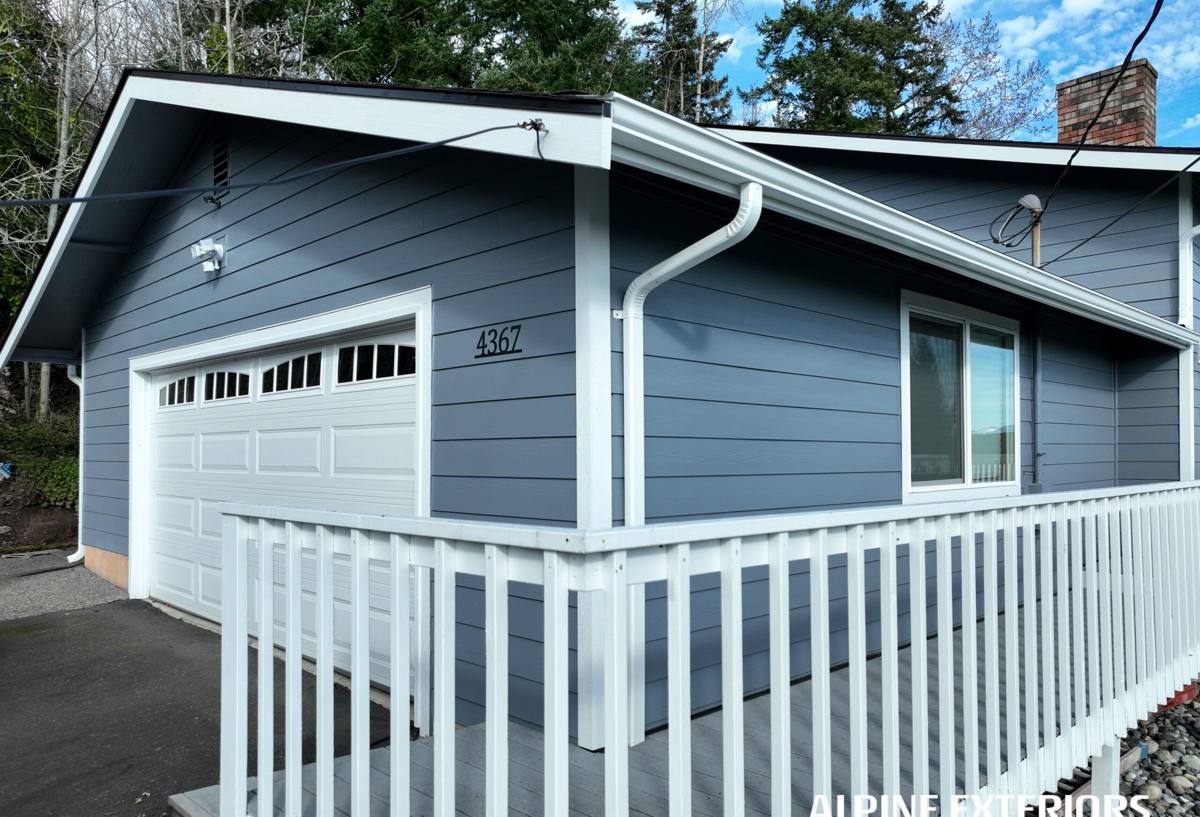
What This Climate Does to a Roof Over Time
Moss and Sustained Moisture
Seattle's moss season isn't a few weeks — it's most of the year. On shaded roofs, especially north-facing slopes or sections under tree cover, moss can take hold and stay green through spring, fall, and much of winter. Moss itself isn't just cosmetic. It holds water against the shingle surface, works its way under shingle edges as it grows, and lifts tabs enough that wind-driven rain gets underneath. A roof that looks "fine" from the ground can already have moisture working into the deck.
Driving Rain and Wind-Driven Water
Straight-down rain rarely causes leaks. What causes leaks is rain pushed sideways by wind, especially during the stronger fall and winter systems that move through the region. That kind of weather finds every weak point: a nail that's backed out, a shingle edge lifted by moss, flashing that's separated a quarter inch from the surface it's supposed to seal. Those gaps don't leak in a light shower — they leak when the wind picks up, which is exactly when homeowners are least able to get up and check.
Salt Air and Metal Fatigue
Rainier Valley is far enough from the water that people don't always think of it as a "salt air" area, but the marine air mass that sits over the whole Seattle basin does carry salt inland, and it doesn't stop at the shoreline. Over years, that air accelerates corrosion on exposed metal — flashing, vent caps, nail heads — faster than it would in a dry inland climate. Galvanized flashing that would last decades elsewhere can start showing rust streaks and pinholes sooner here, and once flashing corrodes, it's not sealing anything even if it still looks intact from a distance.
Signs a Rainier Valley Roof Needs Repair, Not Just a Look
- Dark streaking, green tinge, or thick moss patches, especially on shaded or north-facing sections
- Granules collecting in gutters or at the base of downspouts (a sign shingles are wearing down)
- Water stains on interior ceilings, particularly after a windy storm rather than a calm rain
- Shingles that look curled, lifted, or slightly out of plane compared to the rest of the roof
- Rust streaks below metal flashing or vent stacks
- Sagging or soft-feeling sections when walked (a sign moisture has reached the decking)
- Daylight visible through the roof deck from inside an attic or crawlspace
Any one of these on its own might not mean much. Two or three together usually mean the roof has been dealing with moisture longer than it should have.
What an Honest Roof Repair Actually Involves
A real repair isn't patching the spot where water showed up inside the house — that spot is often several feet from where water actually entered, since it travels along rafters and sheathing before dripping down. A correct repair starts by finding the actual entry point, then addressing everything that let it happen.
Our Process
- Inspection from the roof, not just the ground. Photos from the yard don't show lifted flashing or moss growing under a shingle edge. We get up there.
- Trace the leak to its source. We follow water paths along the decking and framing rather than assuming the interior stain marks the exact spot above it.
- Assess the surrounding area, not just the failure point. If moss caused the leak, we check how far the moss has spread and whether nearby shingles are also compromised.
- Repair with matching, compatible materials. Flashing, underlayment, and shingles are replaced with materials suited to this climate, not whatever's cheapest or fastest.
- Check for hidden moisture damage. Soft decking or damp insulation gets addressed before new roofing goes over it — sealing a leak over wet wood just hides the problem for a season.
- Clear the roof of moss and debris as part of the job, not as an upsell, since leaving moss in place next to a fresh repair defeats the purpose.
Common Rainier Valley Repair Scenarios
| Issue | Typical Cause | What's Involved |
|---|---|---|
| Leak near chimney or skylight | Corroded or separated flashing | Remove and replace flashing, check step flashing under adjacent shingles |
| Ceiling stain after windstorms | Wind-driven rain under lifted shingles | Locate lift point, re-secure or replace shingles, reseal edges |
| Moss-heavy shaded slope | Sustained shade and moisture retention | Moss removal, inspection for granule loss, spot shingle replacement |
| Gutter overflow staining fascia | Clogged or undersized gutters | Clean/repair gutters, check fascia and roof edge for water damage |
| Rust streaks below vents | Corroded metal flashing or caps | Replace vent flashing, inspect surrounding shingle seal |
Repair vs. Replacement: How We Make the Call
Not every roof with a leak needs a new roof, and we don't default to recommending replacement just because a repair call turned into a bigger conversation. The honest factors are age, extent of moisture damage, and how much of the roof is affected.
- Isolated issue on a roof under 15-20 years old: usually a straightforward repair
- Moss and wear spread across multiple sections: repair may only buy a year or two before the next section fails
- Soft or rotted decking found during repair: that section needs to be rebuilt regardless of the rest of the roof's condition
- Roof nearing the end of its expected lifespan with recurring leaks: we'll say so plainly, with the reasoning, rather than patch it repeatedly
Repair costs for typical Rainier Valley jobs — flashing replacement, localized shingle repair, moss remediation with minor shingle work — generally run from a few hundred dollars for a small, contained fix up to a couple thousand for more involved flashing or multi-section repairs. Anything approaching full re-roofing costs is a sign the conversation should shift to replacement, and we'll tell you that directly instead of stacking repairs on an aging roof.
Why It Matters That We Already Work This Neighborhood
Rainier Valley's roofs aren't unique in King County, but the combination of tree cover on many lots, a mix of older and newer housing stock, and the same marine climate as the rest of Seattle means a crew that works here regularly recognizes patterns fast — which roofs tend to hold moss longer, which flashing details tend to fail first, and what a "normal" amount of wear looks like at a given roof age in this climate. That's not something you get from a crew that mostly works dry-climate jobs and treats every Seattle roof as an anomaly.
It also means a shorter distance to your job, which matters when a leak needs to be looked at before the next storm rolls through rather than scheduled around a long drive across town.
Maintenance That Prevents the Next Repair Call
Most of the repairs described above are preventable, or at least catchable early, with a little regular attention:
- Have moss removed before it spreads across a full slope, not after
- Keep gutters clear so water sheds off the roof edge instead of backing up under shingles
- Trim back tree limbs that keep sections of roof shaded and damp longer than the rest
- Get flashing checked every few years, especially around chimneys, skylights, and vents where metal ages faster than shingles
- Have the roof looked at after any major windstorm, even if nothing looks obviously wrong from the ground
Get a Straight Answer on Your Roof
If you're seeing moss, a stain on the ceiling, or just want a roof that's a few years old checked before winter storms roll in, we're happy to take a look and tell you honestly what it needs — a repair, a bit of maintenance, or nothing at all. Reach out for a free, no-pressure estimate using the form below.