 Seattle Siding
 Board & Batten in a Neighborhood Built on Character
Ravenna's housing stock runs from Craftsman bungalows and 1920s-30s cottages to mid-century remodels and newer infill construction tucked along its tree-lined streets near the ravine and park that give the area its name. Board & batten siding shows up across all of those eras — as a full exterior, as an accent on gables and dormers, or paired with lap siding to break up a facade. It's a look homeowners choose on purpose: strong vertical lines, deep shadow reveals at the battens, and a texture that reads as more custom than flat panel siding.
That said, board & batten is not simpler to install correctly than horizontal lap siding — in some ways it's less forgiving. The vertical orientation, the batten-over-panel assembly, and the number of seams and fastener points all raise the stakes on drainage and flashing detail. In a wet Seattle neighborhood, getting those details right is what separates board & batten that looks sharp for decades from board & batten that starts showing problems in five or six years.
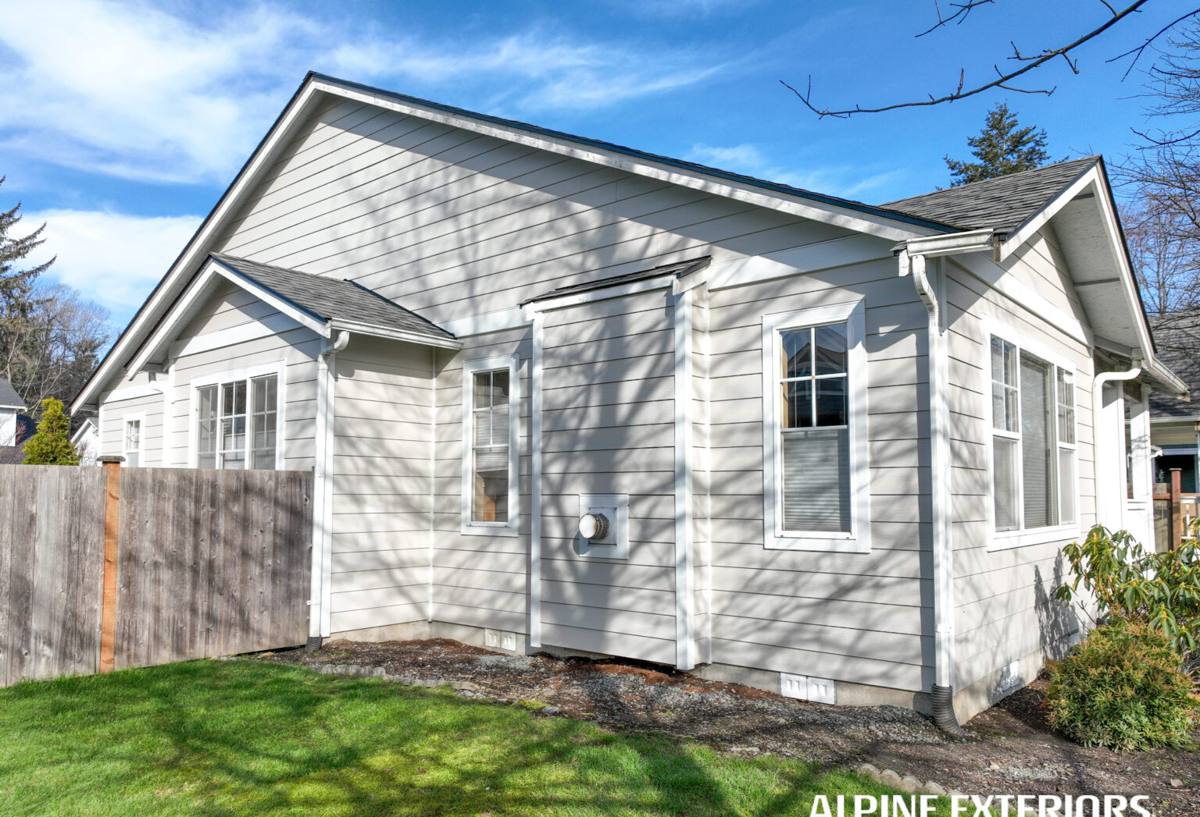
What Ravenna's Climate Actually Does to Vertical Siding
King County sees a long, low-intensity wet season, and Ravenna's mature tree canopy adds its own microclimate on top of that: more shade, slower drying after rain, and a longer moss season than you'd get on an open, sun-exposed lot. Add in the driving rain that comes with Puget Sound storm systems — rain pushed sideways against gable ends and upper walls rather than falling straight down — and you've got conditions that test every seam in a vertical siding system.
A few specific ways this plays out on board & batten:
- Driving rain gets forced into the vertical joints between boards and battens if those joints aren't properly lapped, caulked, or backed with a drainable water-resistive barrier.
- Shaded walls under tree cover stay damp longer after storms, which is exactly the condition moss and algae need to establish on any siding surface, painted wood trim included.
- Long dry spells are rare here, so any siding material that swells and shrinks with moisture cycling — or that isn't dimensionally stable — is working against itself nearly year-round instead of just seasonally.
None of this means board & batten is a bad choice for Ravenna. It means the material and the installation both have to be matched to how wet this neighborhood actually stays.
What a Correct Board & Batten Installation Involves
The water-resistive barrier and drainage plane
Behind every board & batten assembly should be a continuous, properly lapped water-resistive barrier, ideally with a drainage gap so any moisture that does get past the siding can run down and out instead of sitting against the sheathing. This is invisible once the job is done, which is exactly why it's the step corners get cut on — and the step that determines whether the wall stays dry underneath.
Fastening and batten spacing
Battens need consistent spacing and fastening pattern, driven into framing or proper blocking — not just into the panel — with fasteners sized and placed to manufacturer spec. Over-driven or under-driven fasteners on fiber cement crack the material or leave gaps that let water track in over time.
Flashing at every horizontal transition
Every window head, door head, and horizontal trim break needs flashing that directs water out and away from the wall assembly, not one that just tucks water behind the next course. On a vertical siding system this matters even more than on lap siding, because there are fewer natural overlaps doing the shedding work for you.
Clearance and gaps
Board & batten siding needs proper clearance from grade, roofing, decks, and other transitions, plus factory-specified gaps at panel ends and butt joints that get sealed with the right sealant — not just butted tight and caulked over as an afterthought.
The James Hardie Board & Batten System We Install
We install James Hardie fiber cement exclusively — no LP SmartSide, no vinyl, no Cemplank or Allura, no primed spruce or cedar boards. That's a deliberate standard, not a limitation of what's available to us. Fiber cement doesn't expand and contract with moisture the way wood-based or engineered-wood products do, it's non-combustible, and it holds a factory finish far longer than field-applied paint on wood trim — all things that matter more, not less, in a shaded, wet neighborhood like Ravenna.
| Product | How it's used | Why it fits here |
|---|---|---|
| HardiePanel vertical siding + battens | Full board & batten look with engineered panel and separate batten strips | Consistent panel dimension, factory-primed or ColorPlus finish, engineered for Pacific Northwest moisture exposure |
| Hardie Artisan vertical siding | Smoother, more refined batten reveal for a higher-end custom look | Tighter tolerances and a deeper shadow line for homes where the vertical siding is the design statement |
| ColorPlus factory finish | Baked-on finish applied and cured under factory conditions | Resists fading and moisture intrusion at the finish layer far better than field-painted trim exposed to Seattle's wet season |
All of it carries James Hardie's HZ5 engineering for this climate zone and a transferable limited warranty, which matters if the home ever changes hands — a real consideration in a neighborhood where houses tend to hold value and turn over.
Mistakes We See on Poorly Installed Board & Batten
Most board & batten failures we get called out to assess trace back to a handful of repeat problems, and they're rarely about the siding material itself:
| What we find | What it causes |
|---|---|
| Battens face-nailed with no blocking behind them | Loose battens, water tracking behind the board, eventual sheathing damage |
| No drainage gap or WRB behind the panels | Trapped moisture that doesn't dry out in a shaded, wet climate |
| Butt joints caulked without proper flashing or backing | Caulk failure within a few years, then direct water entry at the seam |
| Wrong fastener spacing or type for fiber cement | Cracked panels, popped fasteners, rust streaking on lighter colors |
| Missing kick-out flashing at roof-to-wall intersections | Concentrated water dumping directly onto the siding face and trim |
Every one of these is a labor and detailing issue, not a materials issue — which is exactly why the crew installing the siding matters as much as the siding itself.
Our Process for a Ravenna Board & Batten Project
- On-site assessment of the existing wall assembly, moisture conditions, tree cover, and drainage around the home.
- Removal of failing siding and inspection of the sheathing underneath for any hidden rot or damage before anything new goes up.
- Repair of any damaged sheathing or framing found during tear-off — never siding installed over a compromised substrate.
- Installation of a continuous, properly lapped water-resistive barrier with a drainage gap.
- Flashing at every window, door, and horizontal transition before a single panel goes up.
- Panel and batten installation to James Hardie's fastening schedule and spacing specs.
- Final walk-through covering caulking, touch-up, and cleanup before we call the job done.
We don't skip the tear-off inspection step to save time. On a shaded, wet lot, what's happening behind the old siding tells us more than what we can see on the surface.
Living With Board & Batten in a Shade-Heavy, Wet Climate
Correctly installed James Hardie board & batten is low-maintenance, but "low-maintenance" isn't "no-maintenance" in a neighborhood with this much tree cover and moisture. A few habits keep it looking right:
- Keep gutters and downspouts clear so water isn't overflowing onto siding below the roofline.
- Rinse moss and algae off shaded walls with a garden hose and soft brush rather than a pressure washer, which can force water behind panels and battens.
- Trim back branches and shrubs that keep siding shaded and damp longer than the rest of the wall.
- Check caulking at butt joints and trim annually — it's the one component that ages faster than the siding itself.
- Repaint or refresh ColorPlus finish only if it's truly needed — the factory finish typically outlasts field-applied paint by years.
Cost Factors for a Board & Batten Project
Board & batten generally costs somewhat more than plain lap siding to install, mainly because of the extra material (separate battens) and labor (more fastening points, more seams to flash and seal correctly). Rough cost drivers on any project:
| Factor | Why it moves the price |
|---|---|
| Tear-off and disposal of existing siding | More labor if the old material is layered, painted, or hazardous to remove |
| Sheathing repair | Hidden rot found during tear-off adds carpentry work before siding can go up |
| Full-house vs. accent application | Board & batten on gables or a single facade costs far less than a full exterior |
| Trim and flashing detail | Homes with many windows, dormers, and rooflines need more flashing labor per square foot |
| Finish selection | ColorPlus factory finishes cost more up front than primed panel but reduce future repainting |
We give exact numbers only after seeing the specific home — anyone quoting a firm price sight unseen on board & batten hasn't accounted for what tear-off will reveal.
Why a Crew That Already Works in Ravenna Matters
Board & batten done right depends on reading the specific wall in front of you — how much shade it gets, how the roofline directs water onto it, what's likely hiding behind decades-old siding on a Craftsman versus a newer build. A crew that's already worked houses in Ravenna has seen how this particular mix of tree canopy, driving rain, and older housing stock actually behaves over time, not just in general Seattle-area terms. That local pattern recognition is what catches the kick-out flashing that's missing, or the sheathing that needs attention before new siding goes over it, instead of finding out three years later.
If you're weighing board & batten for a home in Ravenna, we're glad to walk the property, look at what's there now, and give you a straight assessment — no pressure, no obligation. Reach out below for a free estimate.