 Seattle Siding
 Storm Damage Roof Repair in Ravenna: What Local Homes Are Up Against
Ravenna is one of Seattle's older, more established neighborhoods, and that shows up on the roofline. A lot of homes here were built decades ago, added onto over the years, and roofed more than once by more than one crew. Mature trees line many of the streets and yards, which is part of what makes the neighborhood pleasant to live in — and part of what makes roofs here work harder than roofs in newer, more open subdivisions. Overhanging limbs drop debris year-round, shade keeps sections of the roof damp longer after a storm, and root systems can shift foundations enough to open up small gaps at flashing points over time.
When a windstorm or a heavy rain event moves through, the damage isn't always dramatic. More often it's a lifted shingle tab, a bent piece of flashing, a gutter pulled loose, or moss that got shoved into a seam and held water there. None of that looks urgent from the ground. All of it can lead to a leak within a season or two if it's not corrected. This page is about what storm damage repair actually involves for a Ravenna roof specifically — not a generic checklist, but what we look for and how we approach it given the way this neighborhood's homes and climate interact.
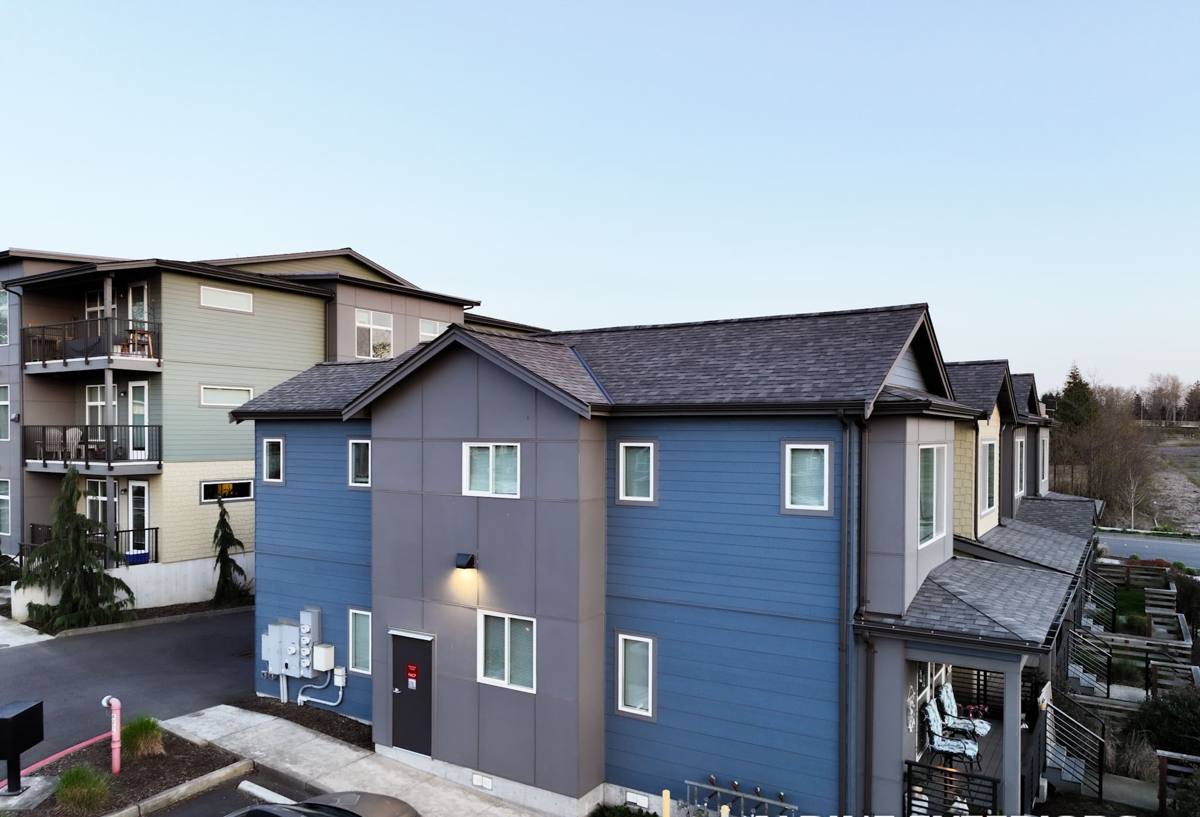
How Seattle's Climate Wears Down a Ravenna Roof
King County doesn't get the hail or tornado damage some other parts of the country deal with. What it gets instead is relentless, low-grade exposure: driving rain that comes in sideways off wind gusts, marine air off Puget Sound that keeps everything slightly damp for months at a stretch, and a moss season that can run from fall through spring. None of these are single dramatic events, but the cumulative effect on a roof is real, and it's different from what a roof in a dry climate deals with.
Wind-Driven Rain
Seattle storms rarely produce the straight-down rain that shingles and flashing are designed to shed easily. Wind pushes rain sideways and up under laps, tabs, and flashing edges that would stay dry in a calmer climate. A roof that's perfectly sound in a light rain can still leak in a wind-driven storm if seals, laps, or flashing have started to fail.
The Long Moss Season
Shade, moisture, and mild temperatures are exactly what moss needs, and Ravenna's tree canopy gives it plenty of both. Moss doesn't just sit on top of shingles — it holds water against the roofing material, works into laps and seams, and over time lifts shingle edges enough for wind and rain to get underneath. A roof that looks "fine" but is carrying a moss mat is usually further along toward a leak than it appears.
Marine Air and Corrosion
Being close to Puget Sound means the air across most of Seattle carries some salt content, and that has a slow but steady effect on exposed metal — flashing, fasteners, gutter hardware, and vent caps. Corroded fasteners back out slightly over time, and corroded flashing eventually pinholes. It's a gradual process, not a storm-triggered one, but storms are usually what expose the weak point once it's already there.
What Actually Counts as Storm Damage
Not everything wrong with a roof after a storm was caused by that storm, and it matters for both the repair plan and any insurance conversation. Part of doing this correctly is being honest about which is which.
Storm-Caused
- Shingles or tabs physically torn, creased, or blown off by wind
- Flashing bent, lifted, or separated from a wind gust or falling debris
- Impact damage from a falling limb, even a small one
- Gutters or downspouts pulled loose or dented by wind or debris
- A sudden active leak that started during or right after a specific storm
Pre-Existing, Storm-Exposed
- Moss and organic growth that has been building for one or more seasons
- Fasteners and flashing that have corroded gradually from years of marine air exposure
- Underlayment that's degraded from age and finally gave way once wind pushed water past it
- Seals and cement flashing that dried out and cracked over time
Both categories are worth fixing. The distinction matters most for setting expectations — a storm can be the thing that finally reveals a problem that's been building for years, and the honest answer is often "the storm didn't cause this, but it's why you noticed it."
What a Correct Repair Actually Involves
A lot of storm-damage repair work in Seattle amounts to a quick patch: a few shingles swapped, some roofing cement smeared over a gap, and a bill. That kind of repair can look fine for a season and then fail right back at the same spot, because it treats the visible symptom instead of the underlying cause.
Full Assessment Before Any Repair
Before we touch anything, we look at the roof as a system — not just the spot that's leaking. That means checking the surrounding shingles, the flashing at any nearby penetration (vents, chimneys, valleys), the condition of the underlayment where it's exposed, and whether moss or debris is holding water anywhere upstream of the damage. A leak at one spot is often being fed by a problem a few feet away.
Matching the Repair to the Actual Failure
Torn shingles get replaced with matching material, properly nailed and sealed — not just laid over the old ones. Bent or corroded flashing gets replaced, not bent back into shape and re-caulked, because caulk over failed flashing is a temporary fix at best. Underlayment that's been compromised gets cut back to sound material and properly lapped, not just covered.
Moss and Debris Removal Done the Right Way
Moss removal has to be done carefully — aggressive scraping or pressure washing can strip granules off shingles and shorten the roof's remaining life faster than the moss would have. We remove growth by hand where it's built up, clear debris from valleys and gutter lines, and address the moisture source (usually shade and poor airflow) rather than just treating the symptom once.
Our Process, Start to Finish
- Initial contact and photos. If you can safely get a phone photo of visible damage from the ground, it helps us prepare before we arrive.
- On-site inspection. We walk the roof (weather and safety permitting) and check attic access from inside where relevant, since interior staining often tells us more than the exterior does.
- Written scope and honest recommendation. You get a plain explanation of what's damaged, what's pre-existing wear, and what actually needs to happen — not an upsell to a full replacement when a repair will hold.
- Repair or interim protection. If parts or scheduling require a short wait, we can install temporary protection so the exposure doesn't turn into interior damage in the meantime.
- Completed repair. Work is done to match existing roofing where possible and to correct the actual cause of the failure, not just the visible symptom.
- Final walk-through. We show you what was done and what to watch for going forward, especially heading into the next wet season.
Repair vs. Full Replacement: How We Help You Decide
Storm damage doesn't automatically mean a new roof, and it doesn't automatically mean a five-minute patch either. The right call depends on a few factors we walk through with every homeowner.
| Factor | Favors Repair | Favors Replacement |
|---|---|---|
| Age of existing roof | Roof is under roughly 12-15 years old | Roof is near or past its expected service life |
| Extent of damage | Localized to one section or slope | Damage is spread across multiple areas |
| Underlying condition | Underlayment and decking are sound | Soft decking or widespread underlayment failure found |
| Moss/organic history | Growth is recent and surface-level | Long-term moss mat has degraded shingle granules broadly |
| Matching materials | Existing shingle line is still available | Discontinued material makes patch repairs visually mismatched |
Cost for a legitimate storm-damage repair in this area typically runs from a few hundred dollars for a contained, single-area fix up into the low thousands for more involved flashing and decking work — the range depends entirely on what we find once we're actually on the roof, and we'll walk you through the reasoning behind the number rather than just handing you a total.
Why a Crew That Already Works Ravenna Matters
Roofing and storm repair work in Seattle isn't one-size-fits-all across the city, and a crew that regularly works Ravenna specifically brings a few practical advantages.
Familiarity With the Housing Stock
Older Ravenna homes often have roof framing, venting, and flashing details that differ from newer construction — things like older chimney flashing methods or non-standard valley details on additions built at different times. A crew that's seen it before knows what to check for instead of discovering it mid-repair.
Faster Response When Weather Turns
After a windstorm moves through King County, response time matters. A crew already working in and around the neighborhood can typically get eyes on a damaged roof faster than one dispatching from across the county, which matters when an active leak is involved.
Permit and Code Familiarity
Seattle has its own permitting requirements that can come into play for larger repair or replacement work, separate from unincorporated King County rules. Knowing which applies — and handling it — avoids delays and rework.
A Homeowner's Post-Storm Roof Checklist
After any significant wind or rain event, a quick check can catch a small problem before it becomes a bigger one. From the ground or a safe vantage point, look for:
- Shingle pieces or granules in the gutters or on the ground around the house
- Gutters or downspouts pulled away from the fascia or visibly dented
- New or worsening water stains on interior ceilings, especially near chimneys or skylights
- Visible sagging or an uneven roofline on any section
- Flashing that looks lifted, bent, or separated around vents and chimneys
- Thick moss growth, especially on north-facing or shaded slopes
- Overhanging limbs that came down or now hang closer to the roof than before
None of these require you to get on the roof yourself. If you see any of them, it's worth having someone take a closer look before the next round of weather.
Materials and Our Standards on Repairs
When we repair storm damage, we match materials to what's already on the roof wherever it's still available, and we hold to a few standards regardless of brand: proper nailing patterns rather than relying on adhesive or sealant to do a fastener's job, correctly lapped underlayment rather than surface patching, and flashing sized and formed to actually shed water rather than just cover a gap. Some repair shortcuts are faster and cheaper up front but shift the maintenance burden onto the homeowner within a year or two — we'd rather explain the trade-off up front than have you deal with a repeat leak.
If you're dealing with storm damage on a Ravenna roof, or you just want an honest read on whether something you noticed after the last windstorm is worth addressing now, we're happy to take a look. The estimate is free, there's no pressure attached to it, and you can use the form below to get started.