 Seattle Siding
 Why Shoreline Decks Wear Out Faster Than Homeowners Expect
Shoreline sits right up against Puget Sound, and that proximity to salt water changes how a deck ages here compared to a deck in a drier, inland climate. Salt-laden air corrodes exposed fasteners, hinges, and metal connectors years before a homeowner would expect it based on the wood's appearance alone. The wood can still look fine on the surface while the screws holding it together are rusting from the inside out.
Add in King County's long, wet fall-through-spring stretch of driving rain, and you get moisture working its way into end grain, screw holes, and any joint where two pieces of decking meet. Unlike a climate with hard freezes that crack wood open quickly and obviously, our version of damage is slower and quieter: constant dampness that never fully dries out, feeding rot from the inside of a joist or ledger board long before it shows on the surface.
Then there's moss. Shaded decks under mature trees, or decks on the north side of a house, can stay damp for weeks at a stretch during our long moss season. Moss and algae hold moisture against the wood surface, make boards dangerously slick, and if left alone for a few seasons, start breaking down the wood fibers themselves. None of this is unique to any one Shoreline block — it's a function of being this close to the water and this far north, and it affects wood decks across the whole area.
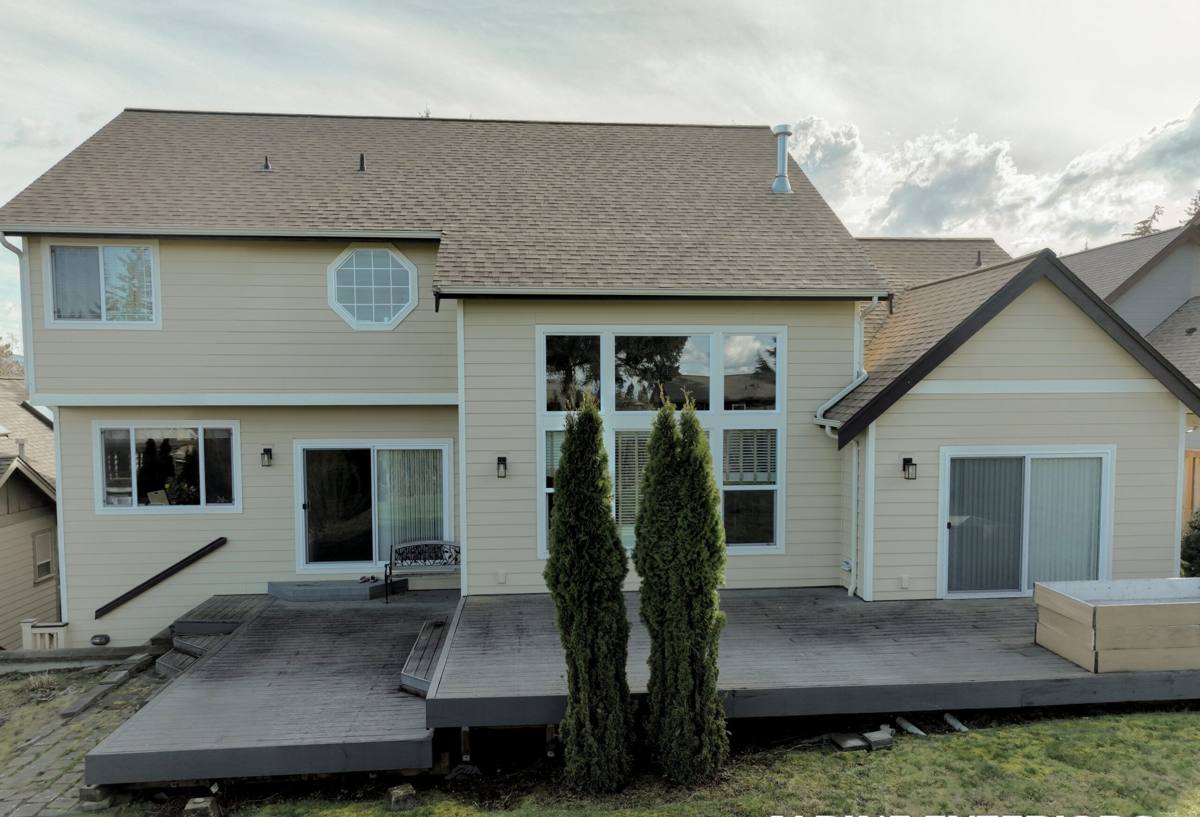
Signs a Deck Needs Repair, Not Just a Cleaning
A pressure wash and a fresh coat of stain fixes the way a deck looks. It does nothing for the structure underneath. Here's what tells us a deck needs actual repair work rather than routine upkeep:
- Boards that feel soft, spongy, or springy underfoot, especially near the house or along the perimeter
- Rust streaks running down from screw or nail heads
- A visible gap or crack where the ledger board meets the house siding
- Railings or guardrail posts that wobble or flex when pushed
- Stair stringers that feel like they're twisting or sagging under weight
- Water that pools on the deck surface instead of draining off
- Moss or algae that comes back within days of cleaning, even in dry weather
- Wood that's gone gray and rough well beyond normal weathering, or that's starting to splinter and delaminate
Any one of these on its own might be minor. Several together usually mean the deck's structure, not just its finish, needs attention.
What a Correct Deck Repair Actually Involves
A deck is a system, not just a surface of boards. A repair that only replaces what's visible from the top can leave the actual problem — usually moisture getting into something structural — completely untouched. We look at the whole system before recommending any fix.
Ledger Board and Flashing
The ledger board bolts the deck to the house and carries a significant share of the deck's total weight. It's also the single most common failure point we find, because older flashing details let water run behind the ledger and into the house's rim joist. A repair here means pulling the decking back far enough to actually inspect the ledger and its flashing, not just re-caulking a visible gap and calling it done.
Joists, Beams, and Posts
These are the deck's skeleton. Rot at the ends of joists (where they meet the ledger or a beam) and at the base of posts (where they meet a footing or the ground) is where we find the most structural damage, because those are the spots where water collects and doesn't dry out between rains.
Footings
A post sitting on a cracked, heaved, or undersized footing will eventually shift, throwing the whole deck slightly out of level even if every board above it is sound. Footing problems are less common than rot, but they're not something a surface repair will ever fix.
Decking, Railings, and Stairs
These are what everyone notices first, and they're often what actually needs replacing — but only after we've confirmed the framing underneath them is sound. Replacing decking over a rotten joist just delays the real repair.
Repair or Replace? How We Make the Call
Homeowners understandably want to know whether a deck can be repaired or needs to come out entirely. The honest answer depends on which components are affected and how far the damage has spread.
| Deck Component | Repair Usually Makes Sense | Replacement Is Usually the Better Call |
|---|---|---|
| Decking boards | A handful of boards are soft, cracked, or badly weathered | Most boards show the same wear, or the pattern shows the whole surface aged together |
| Ledger board | Flashing has failed but the ledger itself is still solid wood | The ledger is soft, delaminating, or the rim joist behind it is compromised |
| Framing (joists/beams) | Rot is isolated to one or two joist ends | Rot shows up at multiple joists or along a beam |
| Posts and footings | Posts are sound but hardware or flashing needs updating | Footings are cracked, undersized, or posts have shifted |
| Railings and guardrails | Balusters or a section of railing are loose or damaged | Posts are rotted at the base or the whole railing no longer meets code |
In broad terms, targeted repairs on an otherwise sound deck tend to run a few hundred to a couple thousand dollars depending on scope, while a full rebuild is a much larger investment — but the only honest way to know which category a given deck falls into is an actual inspection. We'll always tell you plainly if repair is throwing money at a deck that's near the end of its life.
Our Deck Repair Process
- On-site inspection. We walk the deck, check for soft spots by hand and by probing, and get underneath it whenever access allows to look at the ledger, joists, and posts directly rather than guessing from the surface.
- Diagnosis and written scope. We tell you specifically what's failing and why — not just "the deck needs work" — and give you a written scope that separates cosmetic items from structural ones.
- Permit check. If the repair involves the ledger connection, structural framing, or a majority of the railing system, we handle the permit conversation with the City of Shoreline before work starts.
- The repair itself. We replace failed components with corrosion-resistant fasteners and hardware rated for our climate, correct any flashing details that let water in, and match new decking to the existing material where a full replacement isn't warranted.
- Final walkthrough. We show you what was replaced and why, and flag anything else worth watching so there are no surprises at the next inspection.
Decking Material Choices When We Rebuild a Section
When a repair calls for replacing a run of decking rather than the whole structure, the material choice matters for how long that repair lasts.
Pressure-Treated Lumber
Still the most common decking material and the least expensive to repair with. It holds up well when properly sealed and maintained, but it does require re-staining or sealing on a regular schedule in our climate — skip that maintenance for a few years and it's exactly the kind of wood that develops the soft, rotted spots we described above.
Cedar
Naturally more rot- and insect-resistant than pressure-treated lumber and a common choice regionally, but it's a softer wood that shows dents and wear faster, and it still needs periodic sealing to perform well through our wet season.
Composite Decking
Composite boards resist rot and don't need staining, which is appealing given our moss and rain exposure. Our standard practice is to install composite decking over pressure-treated framing rather than relying on composite for structural members — composite is a surface product, not a substitute for properly maintained joists, and mixing materials without attention to expansion, fastening, and ventilation underneath is where composite decks develop problems down the road.
Whichever material an owner prefers, the framing underneath it is what actually determines how long the repair holds up — a beautiful new composite surface over a rotten joist is a repair that will need to be redone.
Permits and Code Considerations for Shoreline Repairs
Shoreline is its own incorporated city with its own permitting department, separate from Seattle's — a detail that trips up owners who assume Seattle rules apply just because the two cities border each other. Cosmetic work like swapping individual boards typically doesn't require a permit. Structural work — reattaching or replacing a ledger board, replacing footings, or rebuilding a significant portion of the framing or guardrail system — generally does, and it's also work that current building code applies to, covering things like guardrail height, baluster spacing, and stair rise-and-run. We handle that permit conversation directly with the city rather than leaving it for the homeowner to sort out.
Maintenance Checklist Between Repairs
A repaired deck lasts longer with a little seasonal attention. This is the routine we recommend to Shoreline homeowners once repairs are done:
- Sweep debris out from between boards regularly — trapped leaves and needles hold moisture against the wood
- Check the ledger board area at the house each fall for any sign of gapping or water staining
- Keep gutters and downspouts near the deck clear so runoff isn't draining directly onto it
- Look underneath the deck once or twice a year for soft spots, rust streaks, or standing water at post bases
- Address moss and algae as soon as it appears rather than waiting for a seasonal deep clean
- Re-seal or re-stain wood decking on the manufacturer's recommended schedule, not just when it looks faded
- Test railings and stair connections by hand periodically — don't wait for a wobble to become obvious
Why Hiring a Crew That Already Works in Shoreline Matters
Deck problems here follow patterns tied to this specific stretch of King County: older homes near the water with decades-old ledger attachments that were never flashed the way current practice requires, decks tucked under mature tree cover that stay damp long after a storm has passed, and hardware that corrodes faster the closer a home sits to Puget Sound. A crew that repairs decks across this area day in and day out recognizes these patterns immediately instead of treating every deck as a first-time diagnosis. That familiarity — plus an existing working relationship with the City of Shoreline's permit office — usually means a faster, more accurate first visit and fewer surprises once the decking comes up.
If your deck is showing any of the signs above, or you just want an honest opinion on whether it needs repair or replacement, we're glad to take a look. Fill out the form below for a free, no-pressure estimate.