 Seattle Siding
 Why Shoreline's Climate Puts Real Demands on Siding
Shoreline sits close enough to Puget Sound that homes here deal with a combination of stresses many inland King County neighborhoods see less often: salt-tinged air off the water, wind-driven rain that hits siding sideways instead of straight down, and a wet season that can stretch from fall well into spring. Salt air accelerates corrosion on fasteners and trim metal over time. Driving rain finds any gap in flashing or caulking and pushes water behind the siding rather than letting it run off the face. And the long run of damp, mild weather is exactly what moss, algae, and mildew need to take hold on a north-facing wall or a section of siding that rarely sees direct sun.
None of this means siding is doomed in a climate like this — it means the material and the installation both have to be matched to the conditions. A product that performs fine in a drier region can struggle here, and an installation that would pass inspection somewhere with less rainfall can quietly trap water against a Shoreline wall for years before anyone notices. That's the lens we use on every project in this area.
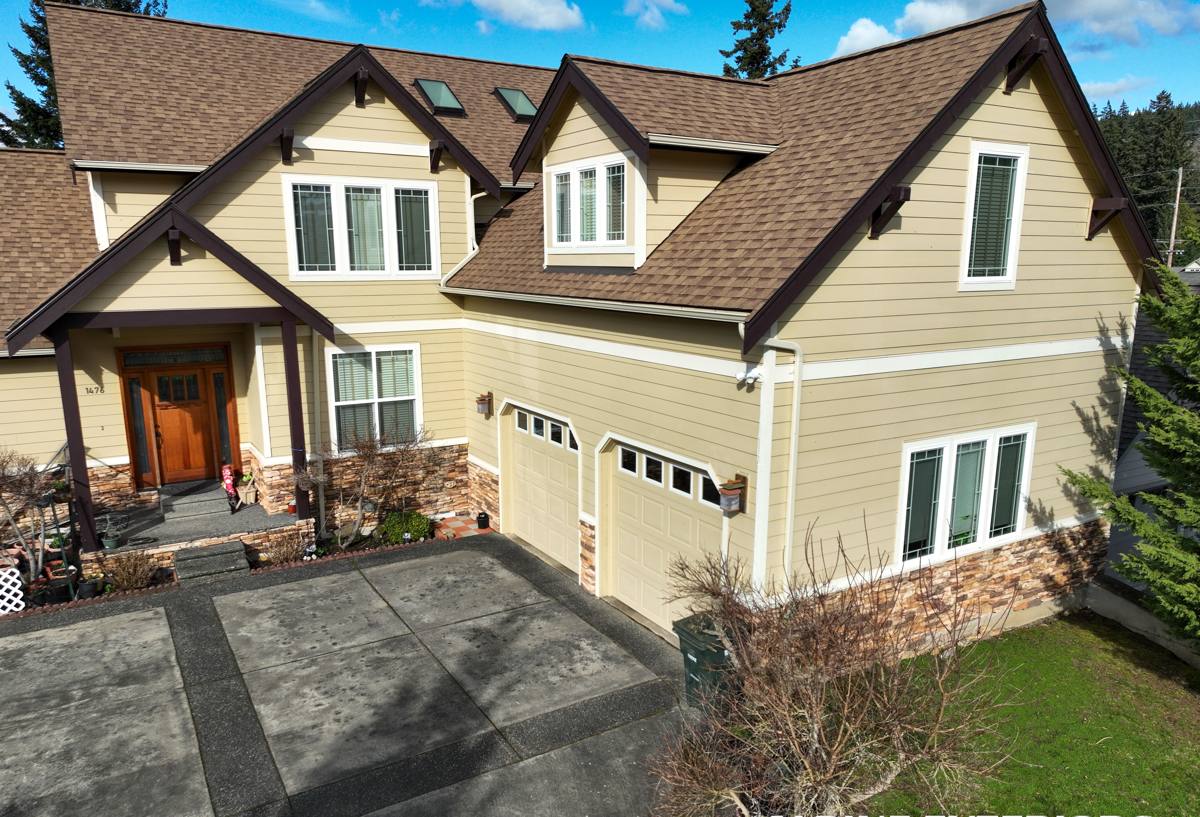
James Hardie Fiber Cement: Built for a Marine Climate Like This
We install James Hardie fiber cement siding exclusively, and in a place like Shoreline that's a practical decision, not just a brand preference. Fiber cement is made from cement, sand, and cellulose fiber, which gives it dimensional stability that wood and many engineered wood products don't have. It doesn't absorb moisture and swell the way wood-based siding can, and it doesn't expand and contract with temperature swings the way vinyl does. In a climate where humidity stays elevated for months at a stretch, that stability matters more than it would somewhere dry.
Hardie's HZ5 product line is engineered for climates with sustained moisture exposure and freeze-thaw cycling — a solid match for the Pacific Northwest. It's also factory-finished with Hardie's ColorPlus coating, baked on under controlled conditions rather than applied on-site. That's a real advantage in a wet climate, since it removes the variable of paint trying to cure properly during a stretch of damp Puget Sound weather. Fiber cement is also non-combustible, which is a separate benefit from moisture performance but one more homeowners are factoring in given recent regional wildfire smoke seasons.
Why We Don't Install the Alternatives
Vinyl siding is inexpensive and low-maintenance in mild climates, but it can warp or buckle with temperature swings and doesn't hold up as well when wind-driven rain works its way behind panels. Cedar and other wood sidings look good and are a legitimate choice for homeowners committed to the upkeep, but in a climate this wet they need more frequent refinishing to keep moisture out, and any lapse in that maintenance shows up quickly as rot. LP SmartSide and similar engineered wood products perform reasonably well but are still wood-based at the core, so cut edges and any break in the factory coating are vulnerable to moisture intrusion — a real risk where siding stays damp for days at a time. We standardized on James Hardie because, installed correctly, it removes most of that moisture risk at the material level rather than relying on maintenance to manage it.
What Correct Installation Looks Like in This Climate
Fiber cement is only as good as the installation behind it, and in a high-moisture coastal climate, the details that get skipped elsewhere are the ones that cause problems fastest.
Flashing and Water Management
Every window, door, and horizontal trim transition needs flashing that directs water out and away from the wall assembly — not just decorative trim sitting over a gap. Housewrap has to be lapped correctly, upper courses over lower ones, so water sheds down and out instead of working its way behind the barrier and into the sheathing.
Fastening and Gapping
Hardie specifies exact nailing patterns, fastener types, and expansion gaps between boards and at trim. In a marine climate, the wrong fastener metal invites corrosion and rust staining down the face of the siding. Skipping the specified gaps can cause buckling as the material responds to seasonal moisture and temperature changes.
Starter Strips and Ground Clearance
Bottom courses need proper starter strips and clearance from grade, decking, and roof lines so splashback and standing water don't sit against the lower edge of the siding — a common failure point on homes close to grade or near paved surfaces that hold moisture longer than landscaped ground.
None of this is optional refinement. It's the difference between siding that sheds decades of Shoreline rain and siding that looks fine for a year or two before moisture finds the seams.
How We Approach a Shoreline Project
Every home and every wall's exposure to weather is a little different, but the sequence stays consistent:
- On-site assessment of current siding condition, moisture damage, and how each elevation is exposed to prevailing wind and rain.
- Removal of old siding and inspection of the sheathing underneath — any soft or water-damaged sheathing gets addressed before anything new goes up, since covering a problem only hides it.
- Installation of a correctly lapped water-resistive barrier and properly integrated flashing at every penetration, window, and door.
- Installation of James Hardie panels or lap siding to manufacturer fastening and gapping specifications, with attention to elevations that take the most direct rain.
- Trim, caulking, and finish work at transitions where most long-term leaks actually originate.
- Final walkthrough and cleanup, including a review of how to spot early signs of moss or maintenance needs going forward.
Fiber Cement vs Other Siding Options in a Wet Coastal Climate
| Material | Moisture Resistance | Typical Maintenance | Notes for This Climate |
|---|---|---|---|
| James Hardie Fiber Cement | Strong — doesn't absorb or swell | Occasional wash, factory finish holds up well | Engineered climate lines suited to sustained moisture exposure |
| Vinyl | Moderate — seams and panels can allow water behind | Low, but can warp or crack over time | Temperature swings and wind-driven rain are its weak points |
| Cedar / Wood | Weak without diligent upkeep | High — regular refinishing required | Rot risk rises quickly if maintenance lapses in a wet climate |
| Engineered Wood (e.g. LP SmartSide) | Moderate — vulnerable at cut edges and coating breaks | Moderate | Wood core still at risk if the factory coating is compromised |
Moss, Mildew, and Long-Term Maintenance
Shoreline's shaded, north-facing, and less sun-exposed walls are the ones most likely to develop moss or mildew over a long wet season. Fiber cement's factory finish resists this better than raw wood, but no siding is completely immune, and a little routine attention goes a long way toward protecting the investment.
- Rinse siding periodically with a garden hose, especially on shaded or north-facing walls, to keep organic growth from establishing.
- Keep gutters clear so overflow doesn't run down the face of the siding during heavy rain.
- Trim back shrubs and tree branches that keep a section of wall shaded and damp longer than the rest of the house.
- Inspect caulking at trim and window edges yearly and re-caulk any cracked or separated joints before the wet season sets in.
- Watch for discoloration or soft spots near the bottom courses, which often signal splashback or drainage issues rather than a siding defect.
Why a Crew That Already Works in Shoreline Matters
Siding installation isn't just about the product — it's about understanding how a specific location's exposure, elevation, and wind patterns should shape the details of the job. A crew that regularly works in Shoreline and the greater Seattle area already knows how homes near the water tend to take weather differently than homes further inland, where flashing details matter most, and what a King County jurisdiction expects for permitting and inspection on a residential re-side. That familiarity shows up in fewer surprises during the project and a finished job that's actually built for the exposure it will face, not a generic installation dropped into a demanding climate.
Cost Factors for a Shoreline Siding Project
Every home is different, but the same handful of factors drive most of the cost variation we see on siding projects in this area.
| Factor | Why It Matters |
|---|---|
| Home size and wall complexity | More corners, dormers, and trim details mean more labor and material cuts |
| Sheathing condition | Water-damaged sheathing found during tear-off has to be repaired before new siding goes on |
| Siding profile chosen | Lap siding, panel siding, and shingle-style Hardie products carry different material and labor costs |
| Trim and detail work | Window and door surrounds, fascia, and transitions add labor time beyond the flat wall areas |
| Site access | Tight lots, slopes, or limited staging area can affect scaffolding and material handling time |
We give straightforward, honest ranges once we've actually seen the house — not a generic quote based on square footage alone, since the condition underneath the old siding and the complexity of the exterior have more to do with the real cost than the size of the home does.
If you're weighing a siding replacement on a Shoreline home and want to know what correct James Hardie installation would actually involve for your specific house, we're happy to take a look. Use the form below to request a free, no-pressure estimate.