 Seattle Siding
 Siding Repair Built for University District's Housing Stock
University District sits in one of Seattle's older, denser residential pockets — a mix of early-1900s craftsman houses, mid-century infill, and the multi-family rentals that cluster around the University of Washington campus. That mix means a lot of siding in this neighborhood is either original wood that's been patched over the decades, or newer replacement siding installed under time pressure between renters. Either way, small problems get ignored until they're big ones, and by the time a homeowner or landlord calls us, water has usually been getting behind the wall longer than anyone realized.
Siding repair here isn't just about cosmetics. King County's climate — long stretches of driving rain, humidity that never fully clears, and moss that colonizes anything shaded or north-facing — turns even a small crack or open seam into an entry point for moisture. Fix it early and it's a patch. Ignore it through a couple of wet seasons and you're often looking at rotten sheathing underneath.
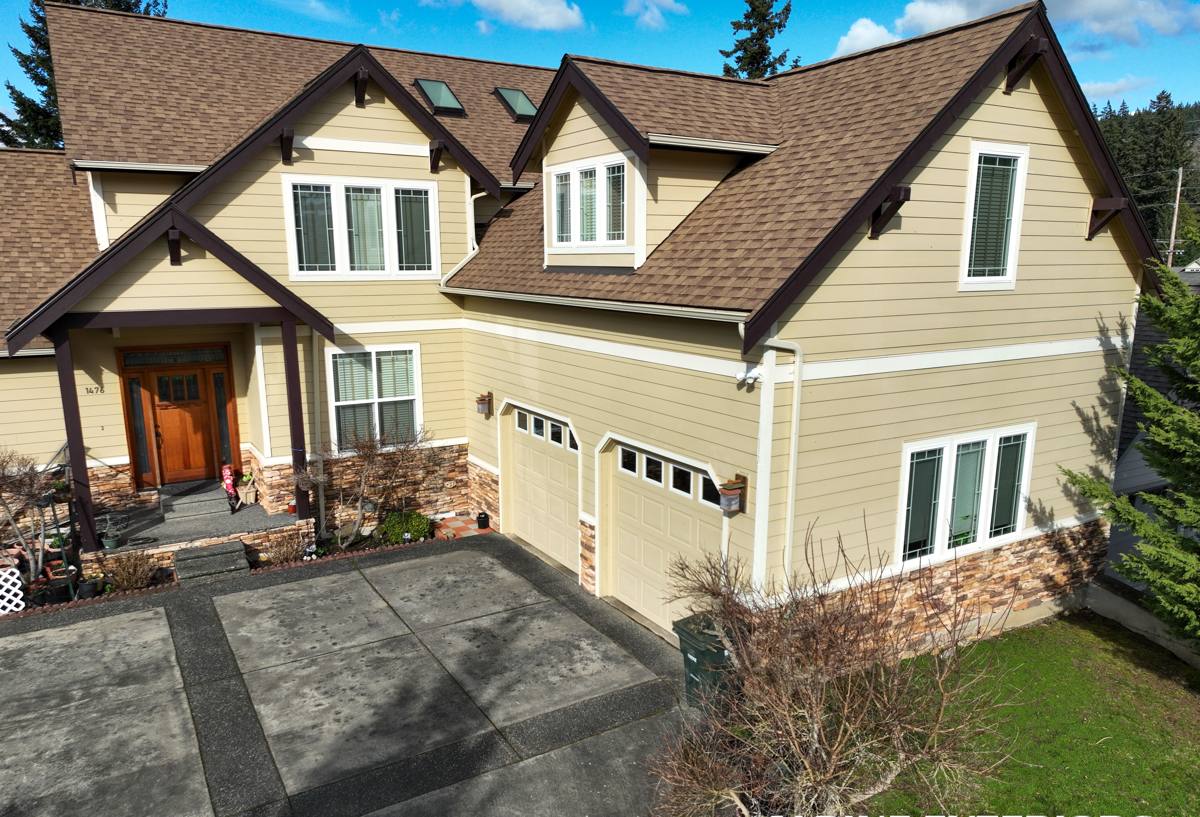
Why Seattle's Climate Is Hard on Siding Specifically
Driving Rain and Wind-Driven Moisture
Seattle rain rarely falls straight down. Wind off Puget Sound and the Sound's marine air push rain sideways into walls, which is exactly the condition lap siding and its flashing details are supposed to handle — when installed correctly. Gaps at seams, missing kick-out flashing, or caulk that's failed give that wind-driven water a path behind the cladding, where it doesn't dry out nearly as fast as it got in.
Moss, Algae, and a Long Growing Season
University District's tree canopy and the region's mild, wet winters mean moss and algae get a long runway to establish themselves — especially on the shaded north and east sides of homes, under eaves, and anywhere siding stays damp longer than a day or two. Beyond the look of it, moss holds moisture directly against the siding surface, which accelerates rot in wood products and can degrade caulk and paint film on any material over time.
Humidity and Slow Drying
Even on dry days, this region's ambient humidity means siding doesn't dry out the way it would in a drier climate. That's part of why the same amount of water intrusion causes more damage here than it would somewhere with hot, dry summers to bake a wall out — there's no reliable dry stretch to undo a wet winter's damage.
Common Siding Repair Issues We See in This Neighborhood
- Water staining or soft spots near window and door trim, usually from failed caulking or missing flashing
- Cracked or split boards from age, impact, or freeze-thaw cycling on older wood siding
- Moss and algae buildup on shaded walls, especially under overhangs and behind shrubs
- Buckled or warped panels where moisture has gotten behind the siding and the substrate has swollen
- Gaps or separation at seams and corners where old caulk has shrunk and cracked
- Localized rot at the bottom courses, where splash-back from grade or hardscaping keeps siding wet
What a Correct Siding Repair Actually Involves
A repair that just covers the visible damage without addressing what let the damage happen is a repair you'll be paying for again in a few years. We treat every repair call as a small diagnostic job first, then a fix.
Find the Real Cause, Not Just the Symptom
Discolored or soft siding is a symptom. The cause is almost always a specific failure point — a gap in flashing, a caulk joint that dried out, a downspout dumping water against a wall, or siding installed too close to grade. We open up the damaged area enough to see what's actually happening behind the surface before deciding what needs to be replaced.
Check the Water-Resistive Barrier
Behind every wall's siding is a weather barrier that's supposed to shed any water that gets past the cladding. If that barrier is torn, missing, or improperly lapped at the damaged section, replacing the siding alone won't solve the problem — the barrier has to be repaired or restored as part of the job.
Match the Material and the Finish
Patching one section of siding with a mismatched product or a different paint sheen is an obvious repair from the street. On the homes we work on, we use James Hardie fiber cement — the ColorPlus factory finish is engineered to match consistently across boards and over time, which makes localized repairs far less noticeable than trying to hand-match a field-painted product.
Rebuild Flashing and Joints Properly
Any repair that touches a window, door, corner, or butt joint needs correct flashing and joint treatment, not just fresh caulk over an old problem. Caulk is a backup layer, not the primary defense against water — the flashing and lap details underneath have to be right first.
Repair vs. Replacement: How We Help You Decide
Not every damaged section needs full replacement, and not every repair is worth doing if the underlying siding is failing broadly. Here's generally how we think through it:
| Situation | Typical Recommendation | Why |
|---|---|---|
| Isolated crack or impact damage, siding otherwise sound | Spot repair | Underlying material and barrier are intact; a targeted fix resolves it |
| Moisture damage limited to one wall section | Section replacement | Lets us also correct the flashing or barrier issue that caused it |
| Widespread rot, warping, or repeated failures across multiple walls | Full re-side | Patching an already-failing system usually costs more over time than replacing it once |
| Old wood or non-Hardie siding nearing end of service life | Case-by-case; often replacement | Some materials are difficult to color-match or reliably repair long-term |
We'll always tell you honestly when a repair makes sense versus when it's a short-term fix on a system that's already on its way out. There's no benefit to us in talking a homeowner into more work than the house actually needs.
Our Siding Repair Process
1. On-Site Inspection
We walk the affected area, check moisture readings where relevant, and look at flashing, caulking, and grading conditions that may have contributed to the damage.
2. A Clear, Written Plan
You get a straightforward explanation of what's damaged, what caused it, and what the repair involves — including whether we think a larger section or full re-side would serve you better than a narrow patch.
3. The Repair Itself
We remove and replace only what needs to come out, correct the flashing or barrier issue underneath, and install matched Hardie material and ColorPlus finish so the repair blends into the rest of the wall.
4. Cleanup and Walkthrough
We clear debris, address any moss or algae on adjacent siding while we're already on-site, and walk the repair with you before we consider the job done.
Why It Matters That We Already Work in University District
University District's housing stock has some specific quirks that matter for a repair job: narrow lots with tight side-yard access, a lot of older single-family homes converted to rentals with siding that's been through multiple ownership changes, and mature street trees that keep certain walls shaded and damp most of the year. A crew that's worked this neighborhood knows to check for moss-driven moisture on the north sides of older craftsman homes, to expect mismatched patch jobs from prior owners, and to plan around tight access for equipment and material staging.
It also means fewer surprises on permitting and scheduling. Seattle and King County have specific requirements around exterior work depending on the scope, and knowing what triggers a permit versus what doesn't saves time and avoids delays once a repair is underway.
Why We Only Repair and Install James Hardie
We standardized on James Hardie fiber cement because it holds up to exactly the conditions University District deals with — sustained moisture exposure, humidity, and the freeze-thaw swings the Pacific Northwest gets in winter. It's non-combustible, its ColorPlus finish is factory-baked for consistent, long-lasting color, and its HZ product lines are engineered for climates like ours. When we're called to repair non-Hardie siding — vinyl, older wood, or other fiber cement — we'll still assess it honestly, but we'll also tell you plainly if the material itself is working against a lasting repair, rather than just patching it and moving on.
If you're seeing water stains, soft spots, cracked boards, or heavy moss on your University District home, it's worth getting a second set of eyes on it before it becomes a bigger repair. We offer free, no-pressure estimates — use the form below to get one scheduled.